
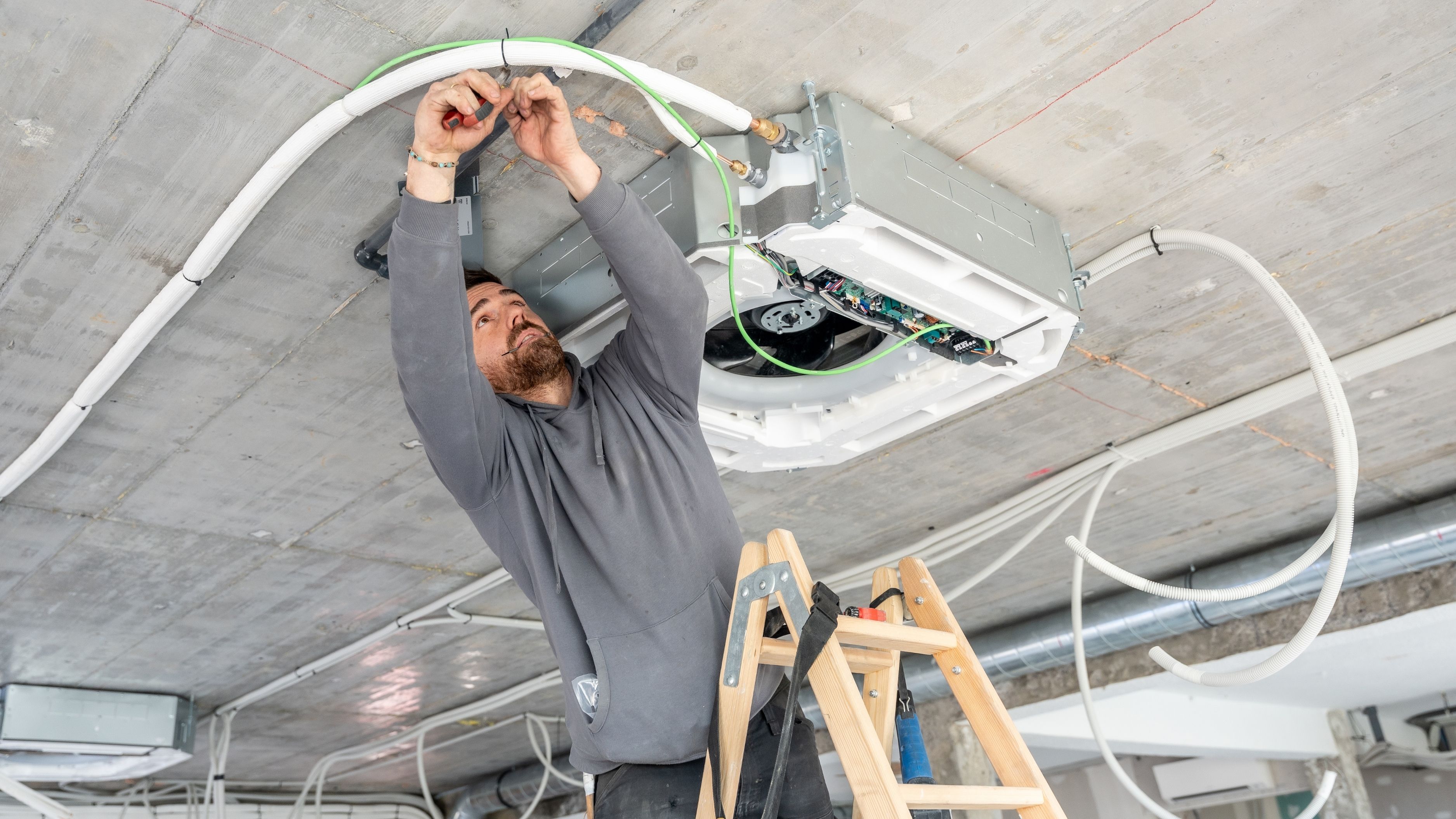
The good news is that a significant portion of airflow imbalance can be corrected without calling anyone. It takes some patience, a little trial and error, and understanding a few basic principles about how forced-air systems distribute heat and cooling through a home. Here's how to work through it methodically.
Why Multi-Story Homes Have Airflow Imbalances
Heat rises. That simple fact creates a built-in challenge for every two-story or multi-story home with a central HVAC system. In summer, heat from the sun and ambient sources accumulates on the upper floors, which means the second floor needs more cooling capacity just to match the comfort level of the ground floor. In winter, warm air from the heating system naturally drifts upward, which means the upper floors tend to overheat while the lower floors stay cooler.
Most HVAC systems are designed with this in mind, but design assumptions don't always match the reality of your specific home – the insulation quality, window placement, ceiling height, sun exposure, and duct configuration all affect how air actually moves through the space. Over time, furniture placement, duct damper positions, and register settings drift away from whatever balance originally existed. The result is the temperature disparity most people in two-story homes just learn to live with, not realizing it's largely fixable.
What You'll Need
This is a job that requires very little in the way of tools or materials:
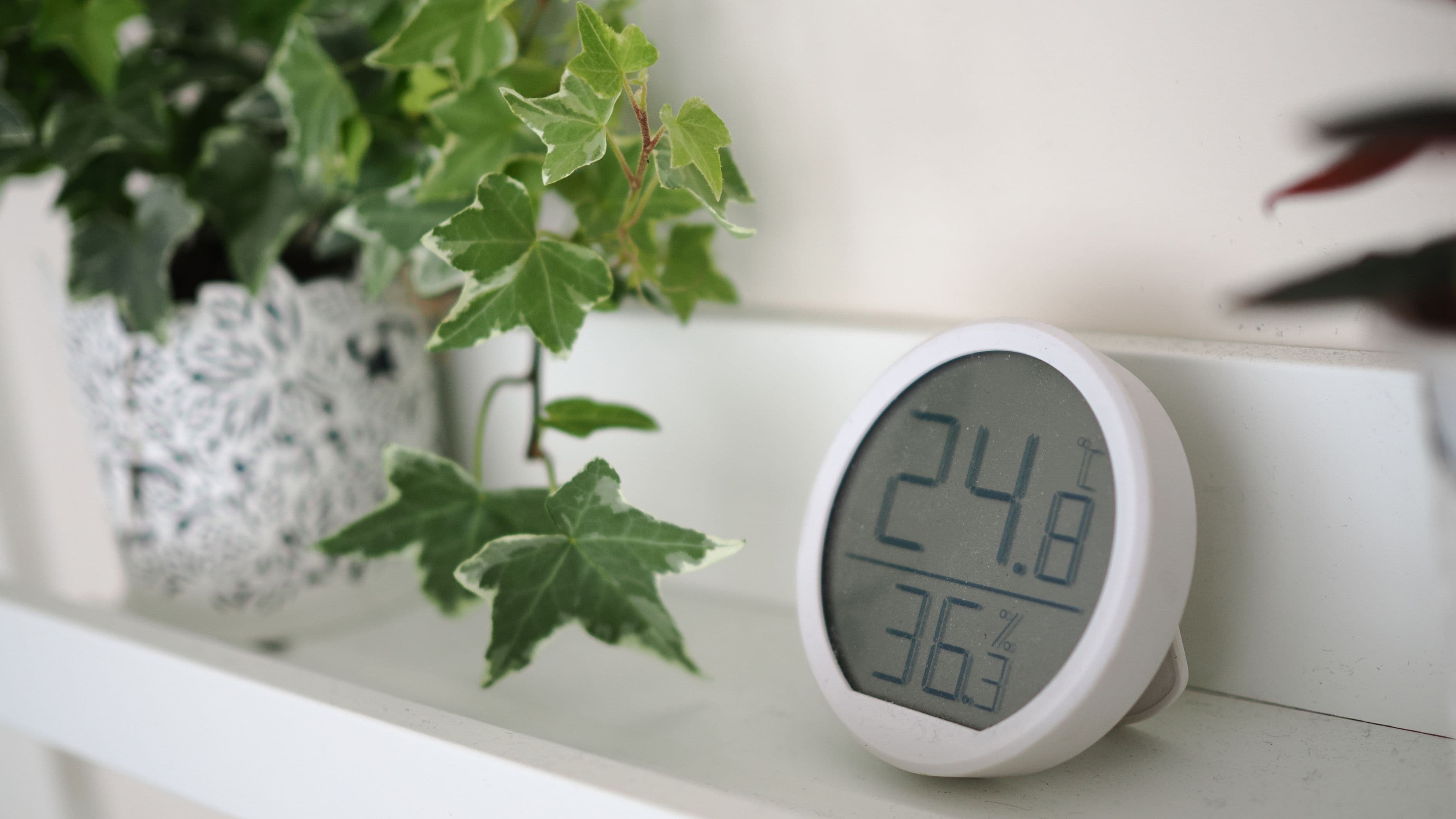
A thermometer (an inexpensive indoor digital thermometer or a laser/infrared thermometer works well)
A flashlight
A screwdriver (flathead, for adjusting register louvers or duct dampers)
Notepad or phone to track temperature readings by room
Patience – this process involves making adjustments and waiting a day or two to assess results before making more
Step 1: Map Your Current Temperature Differences
Before adjusting anything, spend a day taking temperature readings in each room on each floor at the same time of day – ideally when the system has been running for at least an hour. Write down what you find. A difference of two to three degrees between floors is normal and generally acceptable. A difference of five degrees or more is worth addressing.
Pay attention to which rooms are extreme outliers. It's common to find that one or two rooms on a floor are significantly more problematic than the others on the same level. That pattern tells you something – it points toward localized duct or register issues rather than a whole-floor imbalance, which are slightly different problems with different solutions.
Also note what time of day the problem is worst. A room that's uncomfortable only in the afternoon when the sun hits it directly is a solar gain problem, which airflow adjustments can help with but won't fully solve on their own. A room that's uncomfortable all day is more likely a duct or register issue.
Step 2: Check and Clean All Your Registers
Walk through every room and look at every supply register (the vents that blow air into the room) and return air grille (the larger, non-blowing vents that pull air back to the system). Several quick things to check:
Supply registers should be open. It sounds obvious, but in many homes, someone closed a register in a room that felt too hot or too cold at some point, left it, and forgot about it. Closed registers don't just reduce airflow in that room – they increase pressure in the duct system and reduce efficiency throughout the whole home. Open every register fully before doing any balancing work.
Registers shouldn't be blocked. A register under a couch, behind a door, or covered by a rug isn't delivering air to the room effectively. Move furniture away from supply and return registers as much as possible. Return air grilles are particularly important to keep clear – a blocked return restricts the whole system.
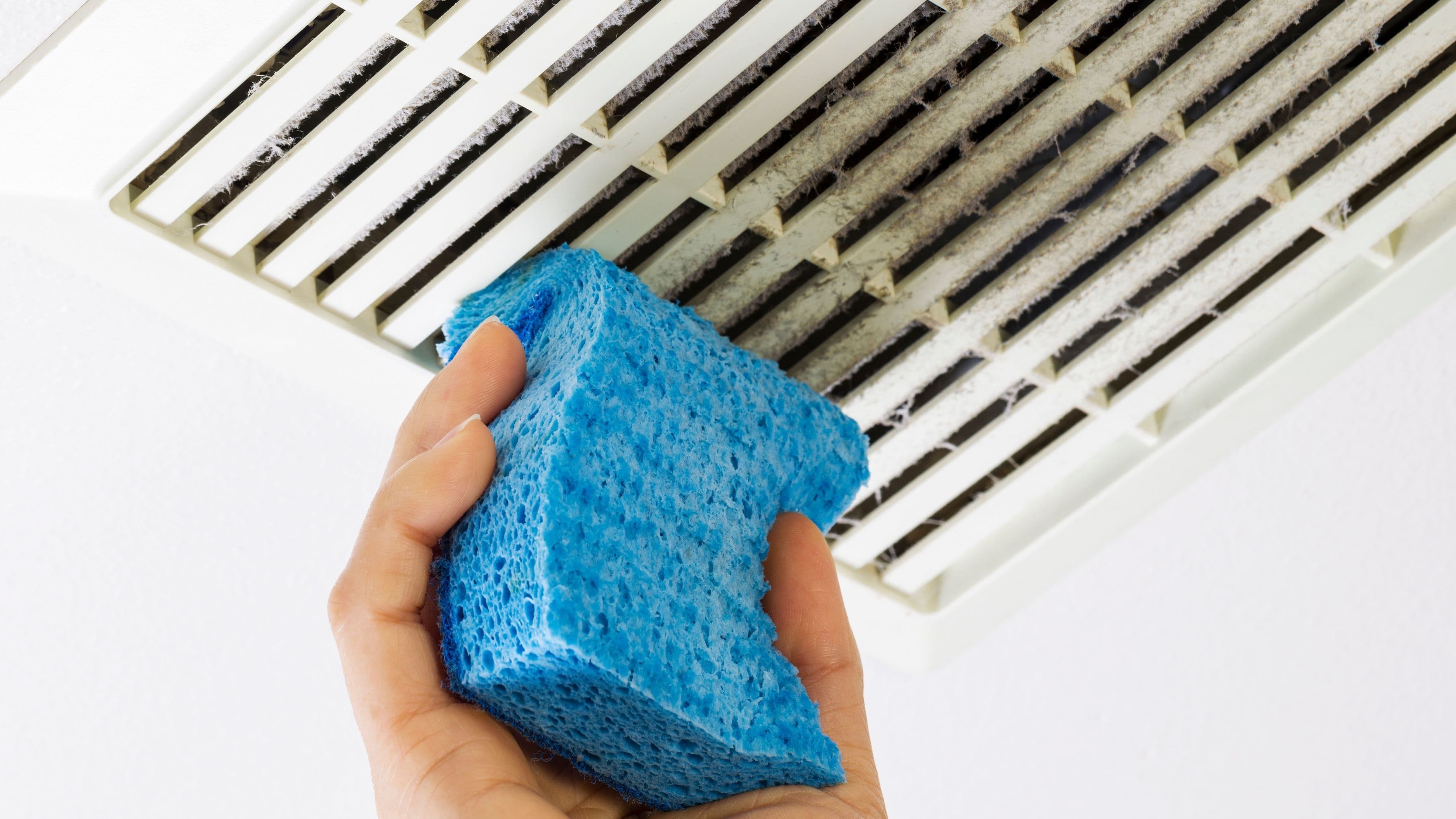
Dusty or clogged registers restrict airflow measurably. Remove register covers and rinse them in the sink or wipe them down if they're caked with dust. While they're off, shine a flashlight into the duct opening and vacuum out any debris near the opening.
Step 3: Adjust Your Supply Register Louvers
Most supply registers have adjustable louvers – the angled slats inside the vent opening. These allow you to reduce (but not fully stop) airflow to individual rooms. This is the first and simplest balancing tool you have.
The basic strategy for a home that's too hot upstairs in summer and too cold downstairs is counterintuitive at first: partially close registers on the lower floor and open them fully on the upper floor. By reducing the airflow going to already-comfortable rooms downstairs, you increase the system pressure slightly and push more air toward the upper floor registers. The system is producing the same total amount of conditioned air – you're just redirecting where it goes.
How much to close lower-floor registers depends on your specific system and home. Start conservatively – close the lower-floor registers by about one-third. Run the system for a full day, retake your temperature readings, and evaluate. If the upper floor improves without making the lower floor noticeably worse, you've found a better balance point. If the lower floor becomes uncomfortable, open the registers back partially.
In winter, reverse this approach: partially close upper-floor registers to push more warm air toward the lower floors, compensating for the natural tendency of heat to rise.
Step 4: Look for Inline Duct Dampers
In addition to the adjustable louvers at registers, many duct systems include manual dampers built into the ductwork itself. These are more powerful than register louvers and are the proper tool for significant airflow redistribution. Not all systems have them, but it's worth checking.
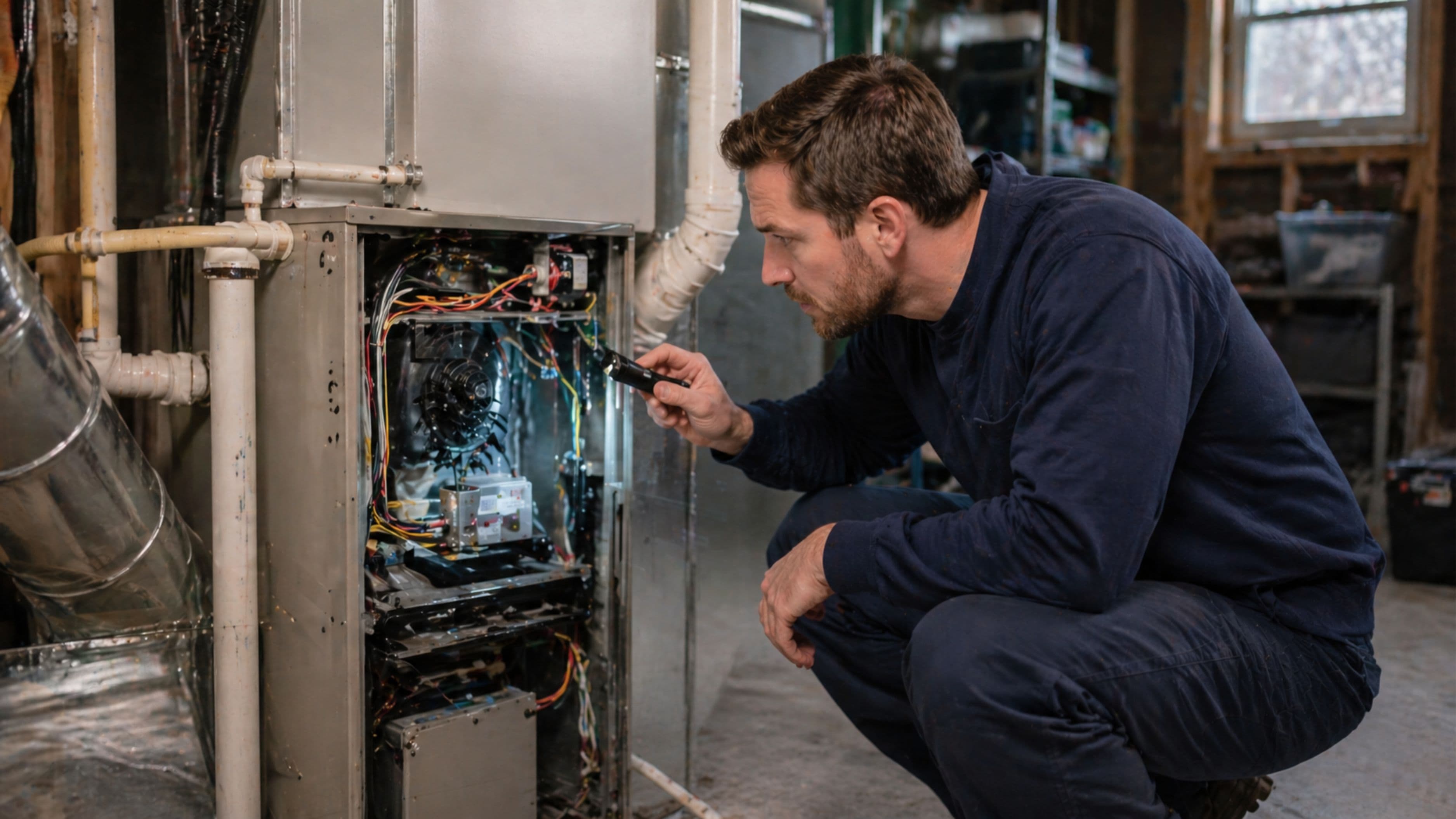
Duct dampers look like a small handle or wing-nut on the side of a round or rectangular duct, typically located in the basement, crawl space, attic, or mechanical room near the air handler. When the handle is parallel to the duct, the damper is open. When it's perpendicular (turned 90 degrees), the damper is closed. Partial positions in between allow partial airflow.
If your system has dampers, they may already be labeled for seasonal adjustment – some HVAC installers mark them "winter" and "summer" with arrows indicating which direction to set them. If yours aren't labeled, the same logic as above applies: in summer, reduce flow to lower-level branches to push more cooling to upper floors; in winter, reduce flow to upper-level branches to push more heat downward.
Adjust dampers gradually and allow the system to run for at least a full day between adjustments before evaluating the result.
Step 5: Check Your Return Air Situation
Return air is the half of the equation that most homeowners overlook entirely, and it's often the source of persistent imbalance that register and damper adjustments can't fully fix.
For an HVAC system to deliver air effectively to a room, that room also needs a way to get air back to the system. In homes with a central return only (one large return grille, often in a hallway), rooms with closed doors get progressively starved for airflow because the conditioned air is delivered but can't return. The room pressurizes slightly, airflow slows, and the room ends up uncomfortable.
The simplest solution if you keep bedroom or office doors closed is to ensure there's a gap of at least three-quarters of an inch to one inch under each door. This allows air to pass from the room back toward the central return even with the door closed. If your doors fit tightly to the floor, a door sweep or threshold gap is worth addressing as part of this project.
Homes with significant closed-door comfort problems benefit more from this fix than from any amount of register adjustment.
Step 6: Consider a Whole-Home Fan or Ceiling Fans
Airflow balance adjustments work on the supply side of the equation. Ceiling fans work on the distribution side, and they're surprisingly effective at making a room feel more comfortable without changing the actual temperature.
In summer, ceiling fans should run counterclockwise (when viewed from below) to push air downward and create a cooling wind-chill effect. In winter, they should run clockwise at low speed to pull air upward and circulate the warm air that pools near the ceiling back down to where you're sitting. Every ceiling fan has a small switch on the motor housing to reverse the direction.
In a room on the upper floor that tends to overheat in summer, a ceiling fan running correctly can make a six-to-eight degree difference in perceived comfort, even without any change in the actual conditioned air delivery.
Seasonal Adjustments Are Normal
One of the most useful things to understand about airflow balancing is that the ideal settings are different in summer and winter. A damper or register configuration that works well in July will likely need adjustment in January. Many homeowners who do this work for the first time find it helpful to mark their damper positions clearly once they've found a good summer setting, then adjust for winter and mark those positions too. Switching between seasonal configurations takes about ten minutes once you know your system.
What to Avoid
Don't close registers completely in rooms you're not using and leave them that way permanently. Fully closed registers increase duct pressure, reduce system efficiency, and can cause long-term issues with the air handler. If you're trying to condition a room less, close the register partially – not all the way.
Don't make multiple large adjustments at once. Change one thing, wait a day, evaluate, then adjust again. Making five changes simultaneously makes it impossible to know what actually helped.
Don't overlook insulation and air sealing as contributing factors. If one room is consistently uncomfortable regardless of airflow adjustments, the issue may be inadequate insulation in the wall or ceiling, or air leaks around windows, doors, or penetrations. Airflow adjustments can only compensate so much for a room that's poorly insulated.
When a Pro Actually Makes Sense
Most airflow imbalance in residential homes is manageable with the steps above. There are a few situations where professional assessment adds real value:
If you've worked through all of these steps and still have a temperature difference of more than five degrees between floors, a technician can perform a proper duct leakage test or airflow measurement to identify whether there's a duct sizing issue, a significant leak, or an equipment capacity problem that DIY adjustments can't address.
If your home has two separate zones with motorized dampers controlled by two thermostats, the zone control board and damper motors are worth having a technician inspect if they're not responding correctly. Zone systems have more failure points than single-zone systems and the diagnostics are more involved.
If you've never had your HVAC system serviced and it's been more than two years, a maintenance visit at the same time as this project is sensible – a dirty evaporator coil or low refrigerant both affect how well the system can keep up with a given load, and those are issues that register adjustments won't fix.
Difficulty, Time, and Cost at a Glance
The register and damper adjustments described here are genuinely beginner-level – if you can locate your registers and vents, you can do this. Plan for two to three weeks of gradual adjustment to find your optimal settings, with only ten to fifteen minutes of active work at each adjustment point. The return-air gap check and ceiling fan direction adjustments take under an hour for a whole home. Total cost is effectively zero unless you're adding new ceiling fans, which run from $50 to a few hundred dollars depending on size and style.
A professional air balancing assessment, if you end up needing one, typically runs $150 to $400 depending on home size and what's involved.
FAQ
Why is my upstairs always hotter than my downstairs in summer? Heat rises and accumulates on upper floors, and those floors are typically closer to the roof – which absorbs solar heat throughout the day. Upper floors also often have less return air capacity, which limits how effectively the system can pull warm air out and replace it with conditioned air. The combination of partially closing lower-floor registers, checking return air paths, and using ceiling fans correctly on the upper floor addresses most of this.
Will closing registers in unused rooms save energy? In most forced-air systems, closing registers actually reduces efficiency rather than improving it. Closing registers increases duct pressure, which makes the blower work harder and can cause air to leak out of duct joints. The energy savings of conditioning one less room are generally offset by the efficiency loss. If you want to condition a space less, close the register partially and keep the door open to allow return air flow.
How do I know if my system has duct dampers? Check the ductwork accessible in your basement, attic, crawl space, or utility closet near the air handler. Look for round metal handles or wing-nut style levers attached to the side of the ducts, usually within a few feet of where ducts branch off from the main trunk line. Not all systems have them – if yours doesn't, register louver adjustments are your primary balancing tool.
How long should I wait between adjustments before evaluating? At least 24 hours, preferably 48. HVAC systems take time to reach a new equilibrium after adjustments, and short-term temperature readings taken immediately after a change don't reflect the steady-state result. Take readings at the same time of day as your original baseline for the most accurate comparison.
My one bedroom is always uncomfortable regardless of what I adjust. What's going on? If a single room is persistently problematic while the rest of the floor is reasonably balanced, check for localized issues: a duct that has come disconnected or developed a significant leak between the air handler and that room's register, a register that's blocked by furniture or installed in a poor location, or insulation and air-sealing issues specific to that room (especially if it's a corner room, above a garage, or directly under an uninsulated roof section). A persistent single-room problem often has a specific cause rather than a general system imbalance.
📚 Sources
U.S. Department of Energy – Duct Systems and Airflow: https://www.energy.gov/energysaver/articles/duct-sealing
ACCA (Air Conditioning Contractors of America) – Manual D Residential Duct Design: https://www.acca.org/standards/standards-public/manuald
Energy Star – Improving Duct Performance: https://www.energystar.gov/campaign/heating_cooling/duct_sealing
This Old House – How to Balance Your Home's Heating and Cooling: https://www.thisoldhouse.com/heating-cooling/22931813/how-to-balance-heating-and-cooling
Family Handyman – HVAC Tips: Fix Hot and Cold Rooms: https://www.familyhandyman.com/article/fix-hot-and-cold-rooms/
Building Science Corporation – Air Distribution System Design and Airflow Balance: https://www.buildingscience.com/documents/digests/bsd-014-air-distribution-basics-for-residential-and-small-commercial-buildings
National Institute of Building Sciences – HVAC System Balancing Fundamentals: https://www.wbdg.org/resources/hvac-systems
Lawrence Berkeley National Laboratory – Residential Duct Systems (LBNL): https://buildings.lbl.gov/projects/residential-duct-systems
Carrier Corporation – Home Comfort Tips – Air Circulation and Balance: https://www.carrier.com/residential/en/us/products/air-handlers/learning-center/improve-airflow/
Angi – Average Cost of HVAC Air Balancing Service: https://www.angi.com/articles/how-much-does-hvac-service-cost.htm