
For a homeowner who reaches for a nail gun a few times a year, it's a legitimate question: is that cost actually justified, or would a pneumatic nailer at half the price do the job just as well with a compressor you already own — or don't own yet?
The honest answer depends on your specific situation. This comparison lays out what battery-powered nail guns do well, where they fall short, and how to figure out whether one makes sense for how you actually work.
How Battery-Powered Nail Guns Work
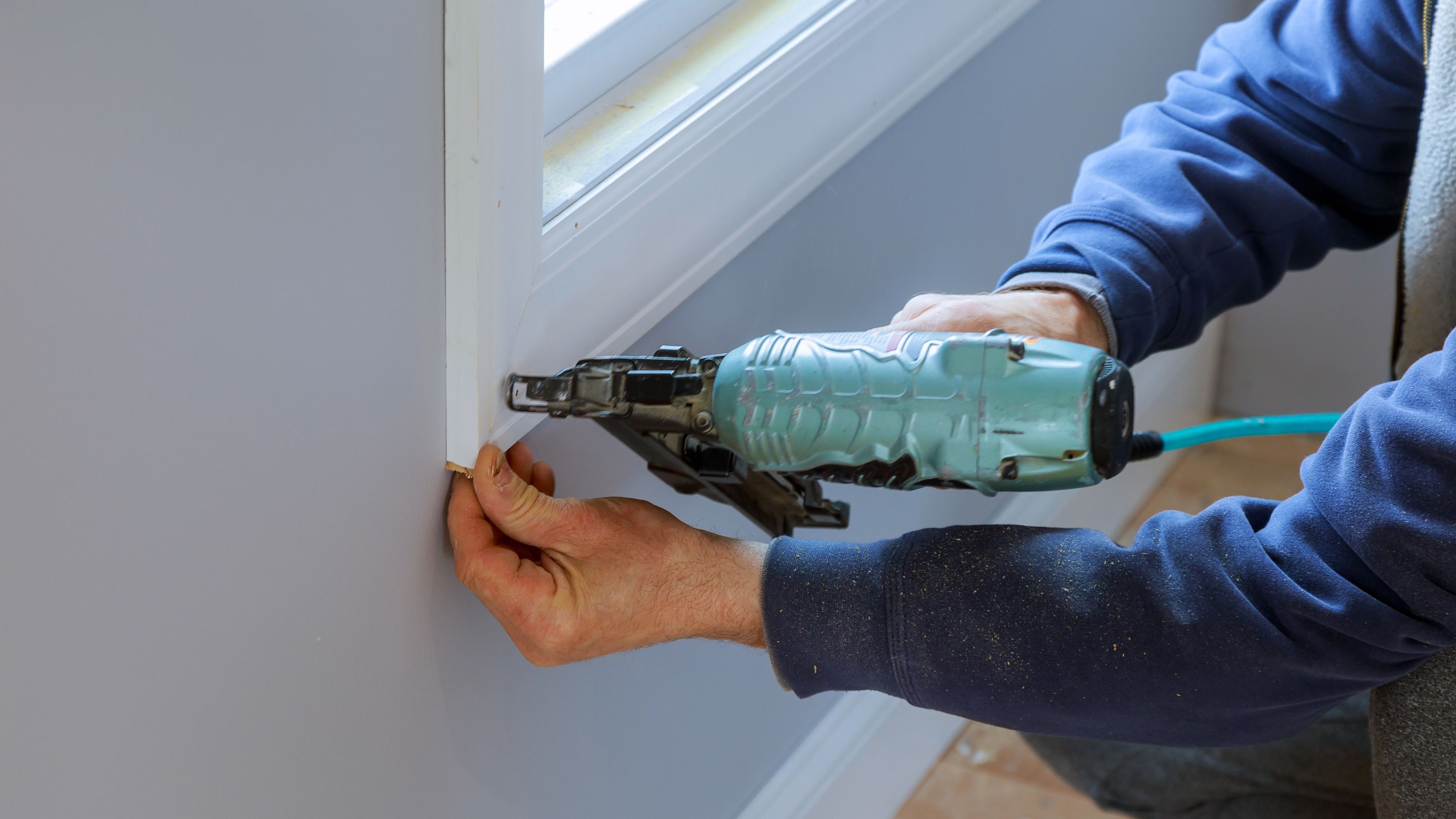
Traditional pneumatic nail guns require an air compressor, a hose, and a clean, dry air supply. They're powerful, consistent, and relatively cheap to buy — but they're also tied to wherever the compressor is plugged in, and they add setup time every session.
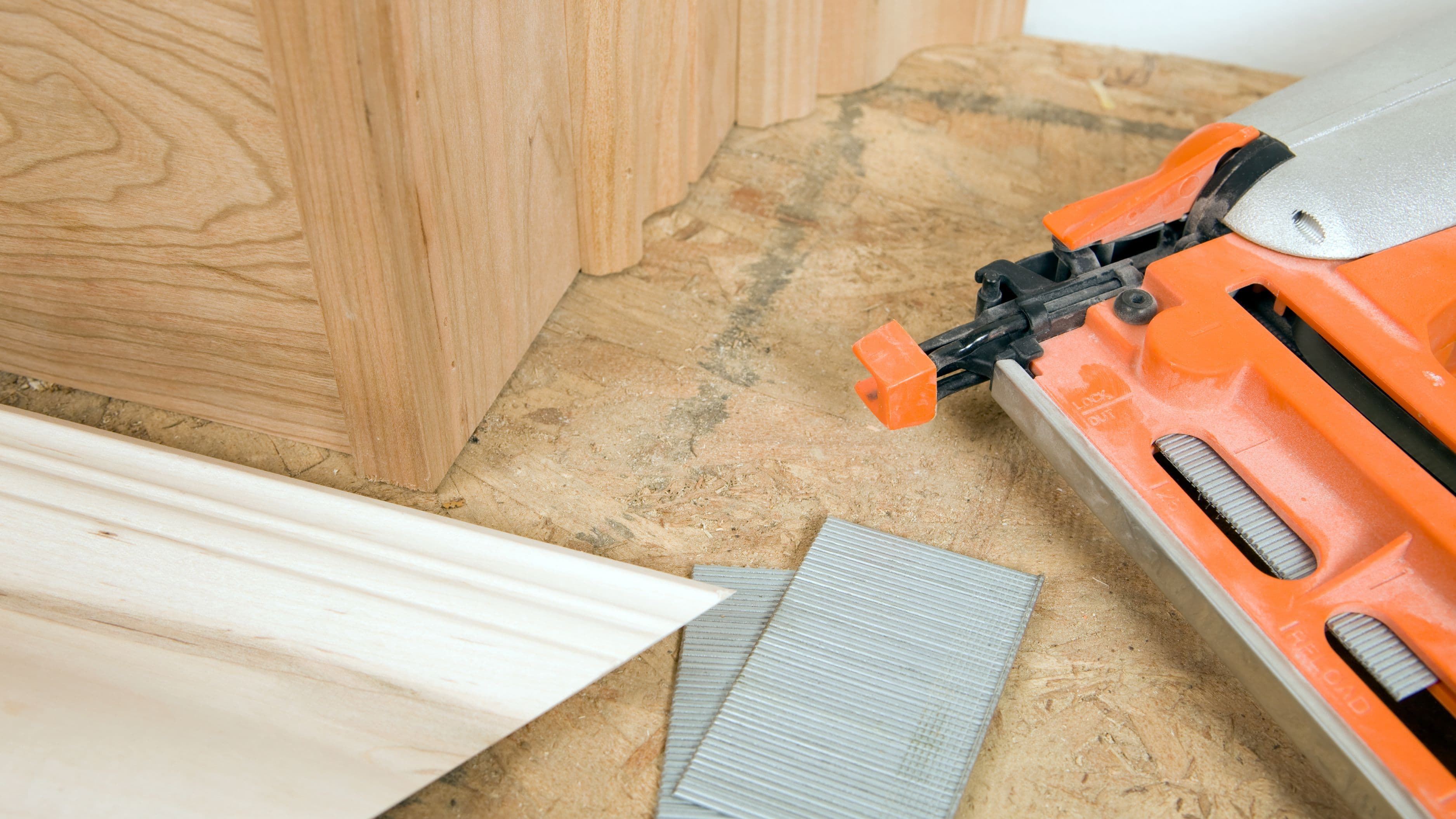
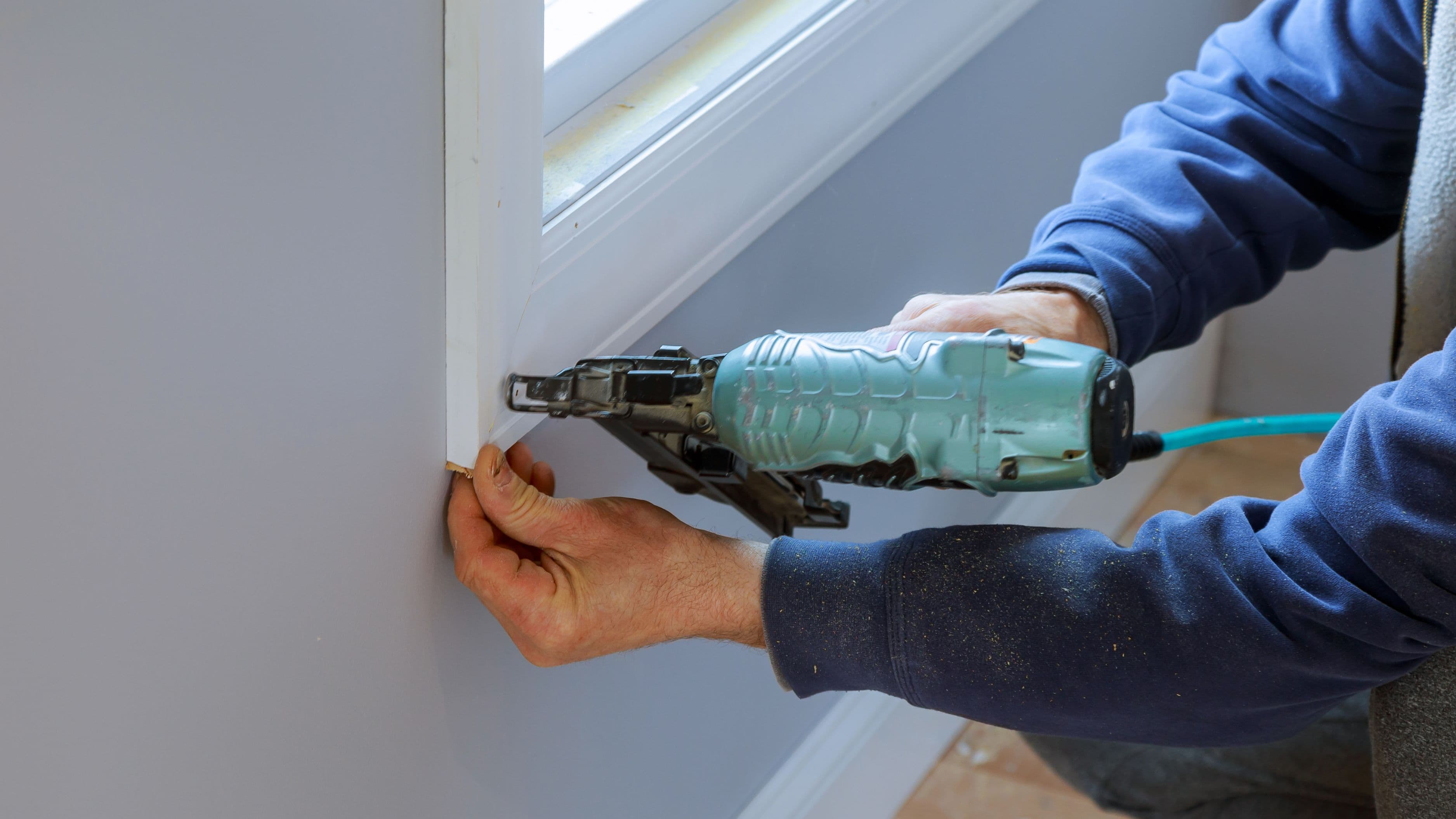
Battery-powered nail guns use either a brushless motor with a flywheel mechanism or a gas-actuated spring system to drive nails. When you pull the trigger, the motor spins a flywheel up to speed in a fraction of a second, which then strikes the driver blade to fire the nail. The result is a fully cordless tool with no hose, no compressor, and no setup beyond sliding in a battery.
Modern brushless battery nailers from the major brands — Milwaukee, Dewalt, Makita, Ridgid — are genuinely powerful. Performance gaps that existed five years ago have largely closed at the mid-range and above. These tools drive nails into hardwood, engineered lumber, and standard framing lumber without the hesitation or shallow drives you'd expect from earlier generations of cordless nailers.
The Real Advantages for Occasional Use
Convenience is the most compelling case. With a battery nailer, you pick it up, check the charge, load a strip of nails, and you're working. No dragging out the compressor, no waiting for tank pressure to build, no hose trailing across the floor or catching on corners. For a homeowner doing occasional trim work, fence repairs, or a weekend project, the time you save on setup and teardown is real — and sometimes it's the difference between actually doing a project and putting it off again because the setup feels like too much bother.
Freedom of movement matters more than you'd think. A compressor hose is a meaningful constraint. It limits where you can work, requires repositioning when you move from one side of a project to the other, and adds a trip hazard on ladders and tight spaces. With a battery nailer, you're completely free to move — up a ladder, around a corner, on a roof, inside a tight closet. For occasional users working alone, this isn't just convenient, it's genuinely safer in some situations.
Quieter operation than pneumatic. Battery nailers are noticeably quieter than pneumatic models. If you're doing interior trim work, working in an attached garage, or live in a neighborhood where compressor noise would draw complaints, this matters. Compressors are loud even before you factor in the crack of nail discharge.
No air quality concerns. Pneumatic nailers occasionally fire moisture or oil from the compressor line into the work surface, which can cause adhesion problems on painted or stained trim. Battery nailers eliminate this entirely.
Where Battery-Powered Nailers Fall Short
Drive consistency in very dense materials. Pneumatic nailers deliver consistent pressure from a steady air supply. Battery nailers depend on the flywheel getting fully up to speed before impact, and in very dense hardwoods or cold temperatures, you can get occasional shallow drives — nails that don't quite sink flush. This is less of a problem with premium brushless models but still worth knowing if you're planning to use one for hardwood flooring or hardwood trim installation.
Battery drain on large projects. A full day of framing or decking can burn through multiple batteries. For high-volume work — building a deck, framing a room addition, installing hundreds of feet of fence — pneumatic still wins on sustained output. A single battery on most cordless finish nailers gives you somewhere between 800 and 1,500 nails per charge depending on the model and material. That's plenty for occasional use but limiting for big production work.
Cold weather performance. Flywheel-based battery nailers slow down in very cold temperatures, which affects drive depth and cycle speed. Below about 40°F, some models become noticeably less reliable. This is worth knowing if you're doing outdoor work in winter months.
Cost. This is the central issue for occasional users. A mid-range battery finish nailer from a major brand runs $150–$250 for a bare tool (no battery or charger). If you're already invested in a battery platform — say, you have Milwaukee or Dewalt batteries from a drill or circular saw — the bare tool price is the real number. If you don't have a compatible battery system, you're looking at $250–$350 for a kit, or the cost of adding a battery from your existing platform.
A comparable pneumatic finish nailer costs $60–$100, and a small pancake compressor capable of running it costs another $70–$120. For occasional trim work, a complete pneumatic setup can be put together for $150–$200. If you don't own a compressor and are buying from scratch, the cost gap is narrower than it first appears — though the pneumatic setup is still usually cheaper overall.
The Platform Question
If you already own battery tools on a specific platform — Dewalt 20V MAX, Milwaukee M18, Makita 18V LXT, Ryobi 18V ONE+ — this changes the math considerably. Adding a bare-tool nailer to an existing platform means you use batteries you already own. A Dewalt or Milwaukee bare finish nailer at $160–$180 becomes a much easier decision when you're not adding battery cost.
Ryobi in particular is worth mentioning for the budget-conscious occasional user. Their 18V ONE+ finish nailers run $100–$130 for a kit (with battery and charger) or less as bare tools, and the performance is genuinely solid for trim work and light framing. If you're not already on a premium platform and are buying starter tools, Ryobi's ecosystem is a reasonable entry point.
The worst position to be in is buying a battery nailer on a platform you don't own any other tools on. You'd be paying full kit price and locking yourself into a battery ecosystem for one tool.
Types of Battery Nail Guns and What They're Used For
Not all nail guns are the same, and different types are better suited to different home tasks. Here's a quick overview so you're buying the right tool:
Brad nailers (18-gauge) drive small, thin nails (typically 5/8 to 2 inches) and are ideal for delicate trim work, attaching thin molding, and small woodworking projects where a larger nail would split the material. This is the most common type for interior finish work and a good first nail gun for homeowners.
Finish nailers (15 or 16-gauge) drive slightly larger nails and are used for heavier trim, baseboards, door and window casings, and crown molding. They're versatile enough for most interior finish carpentry. A 16-gauge finish nailer is arguably the most useful all-around nailer for a homeowner.
Pin nailers (23-gauge) drive headless pins that are nearly invisible in the material. Used for very delicate work where you don't want any visible nail hole at all — attaching thin veneer, small decorative molding, and fine woodworking.
Framing nailers drive large nails (2 to 3.5 inches) into structural lumber. They're needed for framing walls, building decks, and structural work. Battery framing nailers are powerful and work well, but they're heavier, more expensive, and most homeowners reach for a framing nailer rarely enough that renting is often the better choice.
Roofing nailers are specialized for attaching shingles. Battery versions exist, but roofing work is something most homeowners hire out, and if you're doing it yourself the rental option makes more sense for a one-time job.
For most homeowners, a 16-gauge or 18-gauge battery finish or brad nailer covers the majority of useful applications.
When Renting Makes More Sense
If you have one specific project coming up and don't anticipate using a nail gun regularly, renting is worth considering before buying. Most tool rental centers and home improvement stores offer pneumatic nail guns for $25–$50 per day, including the compressor. For a single weekend deck project or a one-time framing job, the rental cost is a fraction of purchase price and you return the tool when you're done.
Battery nailers are less commonly available as rentals, but pneumatic rentals are widely accessible and perfectly capable for any project you'd otherwise buy a battery nailer for. The calculation shifts toward buying when you expect to use the tool multiple times per year and the per-use rental cost starts to approach or exceed the value of owning.
Common Mistakes to Avoid
Buying the wrong gauge for the job. Using a brad nailer (18-gauge) for heavy baseboard installation is a common mistake — the nails aren't strong enough to hold thick material reliably over time. Conversely, using a framing nailer on trim will split the wood. Match the gauge to the application before buying.
Ignoring nail compatibility. Not all nail guns accept the same nail collation angle, length range, or type. Check what nails the specific model accepts and verify you can source that nail size locally before purchasing.
Skipping the depth adjustment. Every nailer has a depth-of-drive adjustment — usually a dial or knob on the nose. Not setting this before your first nails means you'll either overdrive and dimple the surface or underdrive and leave protruding heads. Test on scrap material and dial it in before touching your actual project.
Neglecting to clear jams properly. A jammed nail gun should be cleared with the battery removed and the tool pointed away from you. Never try to clear a jam with a finger or with the battery connected. The flywheel retains energy after the trigger is released and can fire unexpectedly.
Storing with a loaded magazine. Some manufacturers advise against storing a nail gun loaded. At minimum, engage the safety when storing and keep the tool pointed toward a safe surface during handling.
FAQ
Can I use a battery nail gun for framing a room or building a deck? Yes — battery framing nailers are capable of real structural work. But for large framing or full deck builds, battery drain is a real consideration. If you're doing an entire deck solo, you may want either a pneumatic tool (rent a compressor) or two fully charged batteries in rotation. For smaller framing tasks — building a wall, adding a room divider — a battery framing nailer handles it fine.
How many nails per charge can I expect? Most mid-range battery finish nailers give 800–1,500 nails per charge on an 18V/20V battery. Brad nailers tend to get more shots per charge since the nails are smaller. Framing nailers use more energy per nail and get fewer shots. These numbers drop in cold weather and in denser materials.
Are no-brand or off-brand battery nail guns worth considering? For occasional use, some off-brand battery nailers in the $60–$90 range deliver acceptable results for light trim work. The trade-off is reliability over time, parts availability, and battery platform compatibility. If you're not invested in any particular platform, an off-brand can be a reasonable entry point — but check reviews for drive consistency before buying.
What maintenance does a battery nail gun need? Less than pneumatic. No air filter to clean, no oil to add to the airline. The main maintenance tasks are keeping the magazine and nose area clear of debris and dust, checking the driver blade for wear periodically (especially if you notice shallow drives), and storing with the battery removed in cold conditions. A light cleaning after dusty work keeps the mechanism running smoothly.
Is it safe to use a battery nail gun on a ladder? Yes, with appropriate care. The cordless design actually makes ladder work safer than pneumatic because there's no hose to manage. Use both hands when climbing, set the nailer down or hang it on a belt hook rather than carrying it up a rung, and always engage the contact safety before repositioning.
The Verdict
For occasional use, a battery-powered nail gun is genuinely worth considering — especially if you're already on a compatible battery platform and can buy a bare tool. The convenience, mobility, and quick setup are real advantages that make you more likely to actually use the tool when a task comes up, rather than skipping it because dragging out the compressor feels like too much effort.
If you're starting from scratch with no battery platform and no compressor, the cost difference between a complete pneumatic setup and a battery kit is narrower than it used to be — and a pneumatic setup remains the better value for someone who will use it heavily. But for the weekend DIYer who does a handful of projects per year and wants something they can grab and go, a battery finish nailer in the $100–$180 range is a very practical tool to own.
The upgrade is worth it if the convenience will actually change how often you use it. If you'd use a pneumatic just as readily, save the money.
📚 Sources
This Old House – Nail gun buying guide: types and uses: https://www.thisoldhouse.com/tools/reviews/nail-gun-buying-guide
Family Handyman – Cordless nail guns: are they worth it?: https://www.familyhandyman.com/article/cordless-nail-guns/
Popular Mechanics – Best cordless nail guns tested: https://www.popularmechanics.com/home/tools/g39534279/best-cordless-nail-guns/
Home Depot Tool Guide – Nail gun types and applications: https://www.homedepot.com/c/ab/types-of-nail-guns/9ba683603be9fa5395fab901af5d35dc
🔍 Explore Related Topics
16-gauge vs 18-gauge finish nailer differences
How to build a deck with a nail gun