


This guide breaks down the strongest options in both categories, whole-home monitoring systems and point-of-leak sensors, so you can decide which approach, or combination of both, actually fits your house.
The Two Approaches to Whole-Home Leak Protection
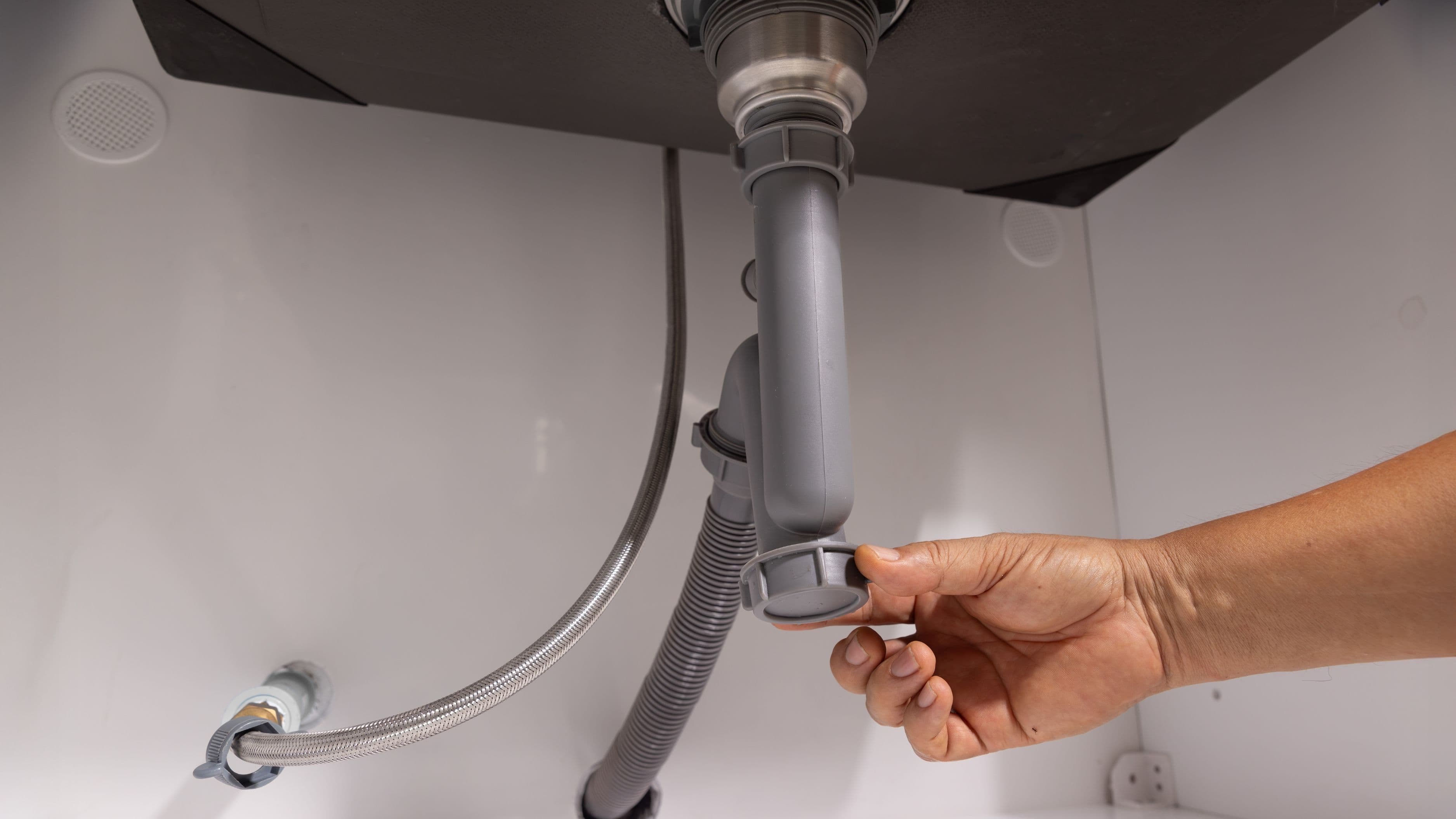
Before comparing specific products, it helps to understand that "whole-home" leak protection generally falls into two categories that work differently. Whole-home monitoring systems install directly on your main water line, tracking flow patterns and automatically shutting off water supply if they detect a leak, a burst pipe, or unusual usage. Point-of-leak sensors, by contrast, are small battery-powered devices placed near specific risk areas, like under sinks, behind washing machines, or near water heaters, that trigger an alert the moment they sense moisture.
A genuinely comprehensive whole-home setup often uses both: a main-line monitoring system for the big, house-threatening leaks, and several point sensors placed at the specific spots where smaller leaks are most likely to start unnoticed.
Whole-Home Monitoring: Moen Flo
Moen Flo installs directly on your main water line and continuously monitors flow, pressure, and temperature to detect leaks ranging from a slow drip to a sudden pipe burst. When it detects an anomaly, it can automatically shut off your home's water supply, which is the feature that sets whole-home systems apart from simple sensors, since it actively prevents damage rather than just alerting you after the fact.
The tradeoff is installation complexity and cost. Flo typically requires professional installation since it's plumbed directly into your main line, and the device itself runs in the $450 to $500 range before installation costs. For homeowners who've dealt with a serious water damage claim before, or who travel often and worry about an undetected leak while away, this upfront cost tends to be easy to justify against the cost of even one significant repair.
Whole-Home Monitoring: Phyn Plus
Phyn Plus takes a similar main-line monitoring approach but leans more heavily on machine learning to distinguish between normal water usage patterns, like a shower or dishwasher running, and abnormal patterns that suggest a leak. Over the first few weeks of use, it builds a usage profile for your specific home, which can make its leak detection more accurate over time compared to a system using fixed thresholds alone.
Like Flo, Phyn Plus requires professional installation and automatically shuts off water when it detects a likely leak. It's priced similarly, generally in the $500 to $600 range, and tends to appeal to homeowners who want a system that adapts specifically to their household's water habits rather than applying a one-size-fits-all detection threshold.
Point-of-Leak Sensors: Wyze Leak Sensor
For homeowners who don't want to commit to a main-line system, or who want an affordable way to cover multiple specific risk areas, small point sensors like the Wyze Leak Sensor offer a much lower-cost entry point. These sensors sit directly on the floor or in a drip pan near appliances and send an instant phone alert the moment they detect moisture, without the need for any professional installation.
The obvious limitation is that these sensors only protect the specific spot they're placed in, and they don't shut off water automatically. A leak happening somewhere other than where a sensor sits will go undetected until it reaches that specific spot, which is why placement matters as much as the number of sensors used.
Point-of-Leak Sensors: Govee Water Sensor
Govee's water sensor functions similarly to Wyze's, offering an affordable, easy-to-place option that alerts your phone through an app when moisture is detected. It's a solid choice for covering multiple areas cheaply, since the low per-unit cost makes it realistic to place several throughout a home, under every sink, behind the water heater, near the washing machine, without a large total investment.
Battery life and Wi-Fi range are the main practical considerations here, since a sensor placed in a distant basement corner needs a strong enough connection to actually send an alert when needed. Testing sensor placement for reliable connectivity before fully relying on it is worth the extra ten minutes it takes.
How to Choose the Right Setup for Your Home
If your home has had a serious leak before, has an older plumbing system, or you're often away for extended periods, a whole-home monitoring system like Moen Flo or Phyn Plus provides genuine peace of mind through automatic shutoff, not just an alert after the damage has already started. The higher upfront cost reflects real protection against the kind of leak that causes major structural or water damage.
If your budget is tighter or your home is smaller with a few clearly identifiable risk spots, a handful of point sensors placed strategically near appliances and water heaters offers solid protection at a fraction of the cost. Many homeowners find the strongest setup is actually a combination: point sensors at specific high-risk spots for immediate local alerts, paired with a whole-home system if the budget allows for the added protection of automatic shutoff during a larger, less localized event.
What to Avoid
Relying on a single point sensor placed in only one location and assuming your whole home is protected is a common and costly mistake, since leaks can start in dozens of places a single sensor will never detect. It's also worth avoiding cheap, no-name sensor brands with poor app reliability, since a leak sensor that fails to send its alert defeats the entire purpose of having one.
Skipping professional installation instructions for main-line systems, or attempting a DIY install on a system designed for professional plumbing work, can lead to leaks of its own or void the manufacturer's warranty. If you're not confident working directly on your main water line, this is a clear case where hiring a licensed plumber for installation is worth the added cost.
FAQ
Do I need a professional to install a whole-home leak detector? Main-line systems like Moen Flo and Phyn Plus generally require professional installation since they're plumbed directly into your home's main water supply. Point-of-leak sensors, by contrast, are designed for simple DIY placement with no plumbing work involved.
How many point sensors does an average home need? Most homes benefit from placing a sensor near every major water-using appliance, typically the water heater, washing machine, dishwasher, and under each sink, which usually adds up to somewhere between 4 and 8 sensors for a typical single-family home.
Can a whole-home system replace point sensors entirely? Not completely. Whole-home systems are excellent at catching larger leaks and pipe bursts through flow monitoring, but a small, slow drip under a specific sink may not always trigger the same response as a dedicated point sensor placed directly at that spot.
📚 Sources
Insurance Information Institute, "Water Damage and Freezing" – https://www.iii.org/article/water-damage-and-freezing
U.S. Environmental Protection Agency, "Fix a Leak Week" – https://www.epa.gov/watersense/fix-leak-week
Consumer Reports, "Smart Water Leak Detectors" – https://www.consumerreports.org/home-garden/smart-home/best-smart-water-leak-detectors-a1147148021/