
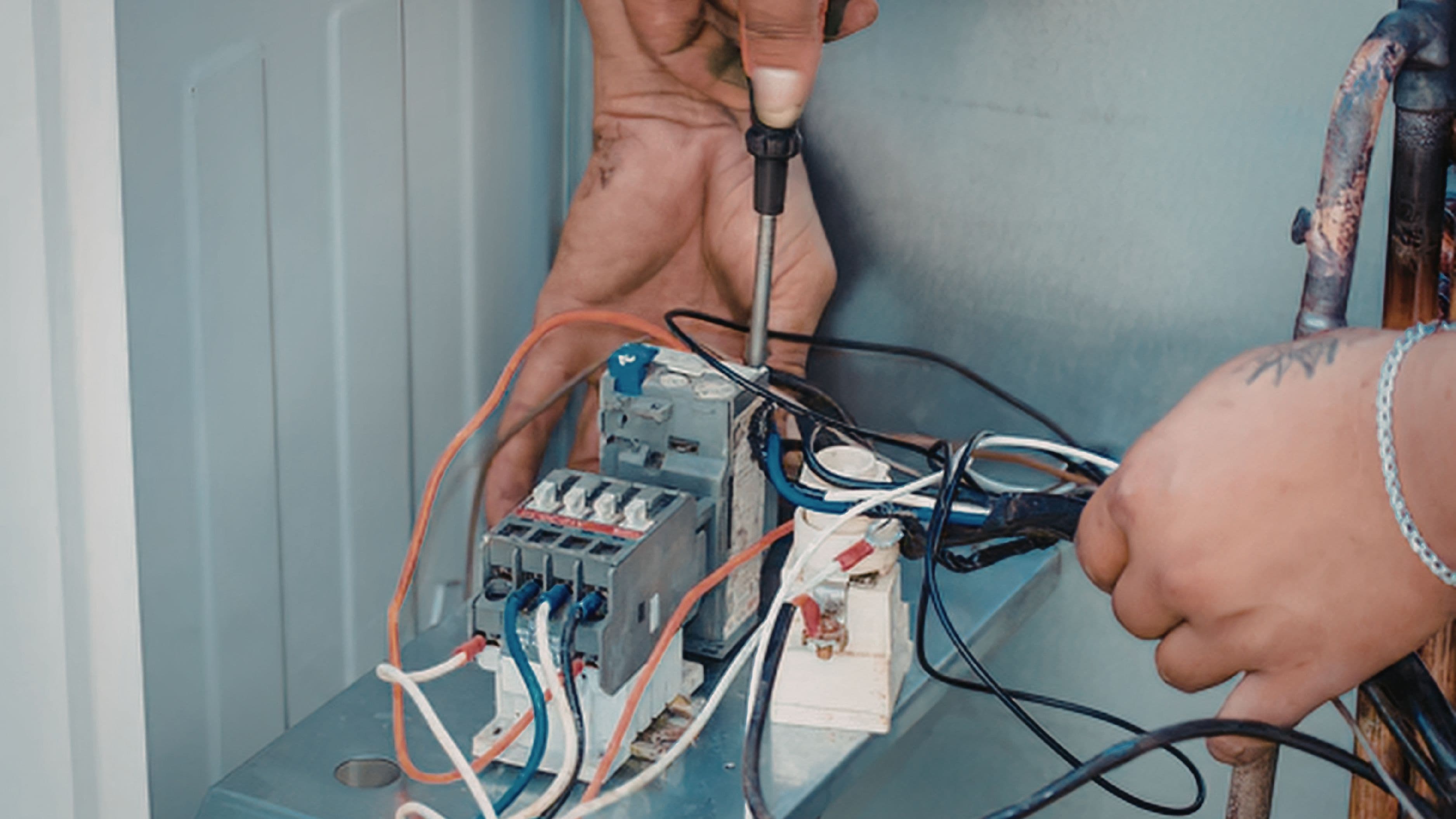
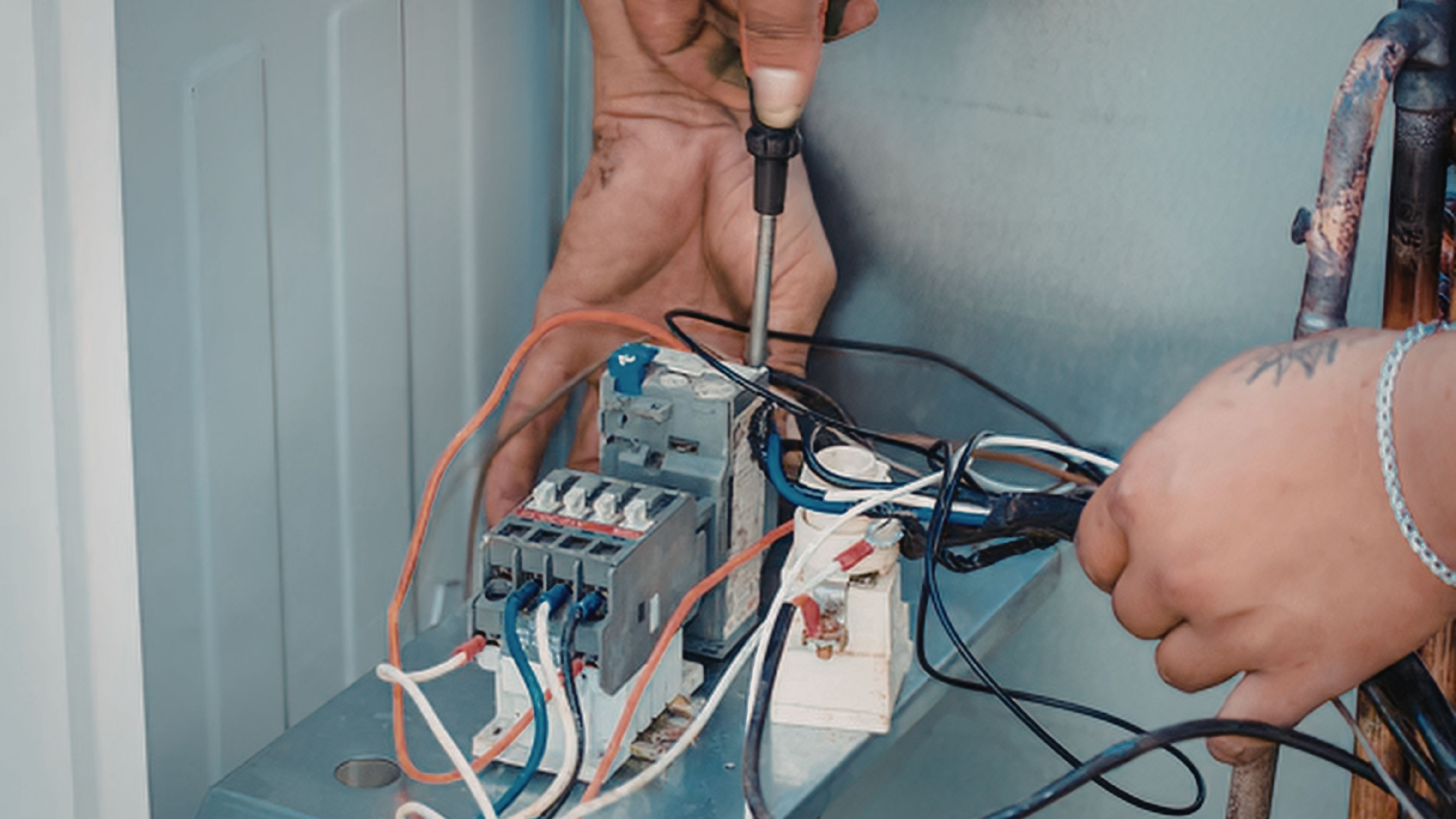
Don't get in the habit of just resetting the breaker repeatedly without figuring out why it keeps tripping. A breaker that trips is telling you something. Ignoring it and forcing power back on is how electrical fires start.
What's Actually Happening When a Breaker Trips
A circuit breaker is essentially a safety switch that monitors the amount of electrical current flowing through a circuit. When that current exceeds the breaker's rated capacity – typically 15 or 20 amps for standard bedroom and living room circuits – the breaker automatically cuts power to prevent the wires from overheating. It's designed to trip before anything dangerous happens.
There are three main reasons a breaker trips: an overloaded circuit (too many devices drawing power at once), a short circuit (a live wire contacting a neutral or ground wire, creating a sudden surge of current), or a ground fault (similar to a short but involving a live wire touching a grounded surface). There's also the possibility that the breaker itself is worn out or faulty – breakers don't last forever. Each cause has a distinct signature, and once you know what to look for, diagnosing the problem is straightforward.
Symptom Overview: What Kind of Trip Is It?
Before diving into fixes, narrow down which type of problem you're dealing with. The timing and pattern of the trip are your biggest clues.
The breaker trips when you run multiple devices at once. This is the classic sign of an overloaded circuit. If running the microwave and the toaster at the same time trips the breaker in the kitchen, or running a space heater and a hair dryer trips the bedroom circuit, the circuit is being asked to carry more current than it's rated for.
The breaker trips immediately when you reset it – or the moment a specific appliance is turned on. This points to a short circuit or ground fault. Something specific is creating a fault condition, and it's doing it immediately. This is more serious than an overload and requires more careful investigation before you proceed.
The breaker trips randomly or for no obvious reason. Intermittent tripping with no clear pattern can mean a loose connection in an outlet or junction box, a worn or failing breaker, or a device with internal damage that creates a fault under certain conditions (temperature, load, etc.).
The breaker trips only when one specific appliance is plugged in. This is usually an appliance problem, not a wiring problem. The device itself is faulty and needs repair or replacement.
Cause 1: Overloaded Circuit
What it is: Every circuit in your home has a maximum current capacity, determined by the breaker rating and the gauge of wire in the walls. A 15-amp circuit can safely carry about 1,440 watts of continuous load (80% of 1,800 watts, which is the safe operating ceiling). A 20-amp circuit handles about 1,920 watts. Appliances that generate heat – space heaters, hair dryers, toasters, electric kettles – draw significant current, and it's easy to exceed the circuit's capacity without realising it.
How to confirm it: Add up the wattage of everything that was running when the breaker tripped. Check the wattage labels on appliances (usually on a sticker on the back or bottom). If the total exceeds the circuit capacity, you've found the problem.
The fix: Spread the load. Move high-draw appliances to outlets on different circuits. In a bedroom, a space heater and a hair dryer on the same circuit is a common overload – plug one into an outlet in a different room or on a different circuit. In the kitchen, a microwave and a toaster on the same 15-amp circuit will frequently trip it; countertop appliances should ideally be spread across the kitchen's multiple circuits.
If your home has older wiring with only 15-amp circuits throughout and your household power demands have grown, having an electrician add a dedicated 20-amp circuit for high-draw areas is a worthwhile long-term fix.
DIY or pro? If the fix is just redistributing appliances, it's DIY. If you need an additional circuit or want to upgrade existing circuits, call an electrician.
Cause 2: Short Circuit
What it is: A short circuit occurs when a hot (live) wire comes into direct contact with a neutral wire inside an outlet, switch, junction box, or appliance. This creates a sudden surge of current – much higher than the circuit is rated for – and the breaker trips immediately to prevent overheating and fire. Short circuits are more serious than overloads because they can generate intense heat very quickly.
How to recognise it: The breaker trips immediately or very quickly after being reset. You may notice a burning smell, discoloration or scorch marks around an outlet or switch face, or see that the breaker feels warm. An appliance that causes the breaker to trip the moment it's switched on is often the source of the short.
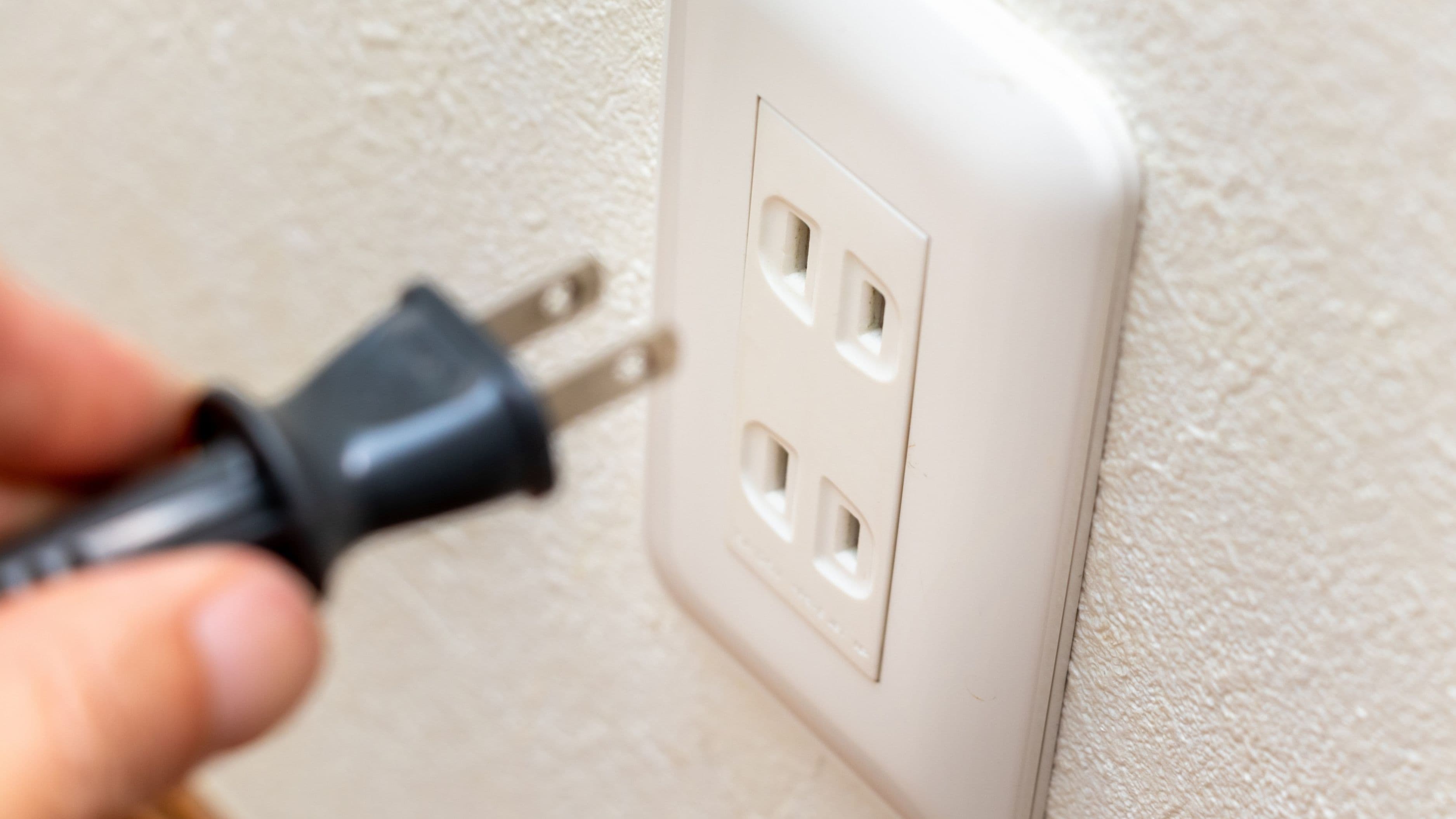
The fix: Start by unplugging everything on the circuit, then reset the breaker. If it holds with nothing plugged in, plug devices back in one at a time to identify which one causes the trip. A device that immediately trips the breaker when plugged in or switched on has an internal short and should be repaired or discarded – don't keep using it.
If the breaker trips even with nothing plugged in, the short is in the wiring – inside an outlet, a switch box, or somewhere in the walls. At that point, stop resetting the breaker and call a licensed electrician. Wiring shorts are not something to probe around with yourself unless you have real electrical experience.
DIY or pro? Identifying and discarding a faulty appliance is DIY. A short in the wiring requires a licensed electrician.
Cause 3: Ground Fault
What it is: A ground fault is similar to a short circuit but involves a hot wire contacting a grounded surface rather than a neutral wire. This can happen inside an outlet, through a damaged appliance cord, or anywhere a live wire is near a conductive surface. Ground faults are particularly common in bathrooms, kitchens, garages, and outdoor areas – anywhere moisture is present.
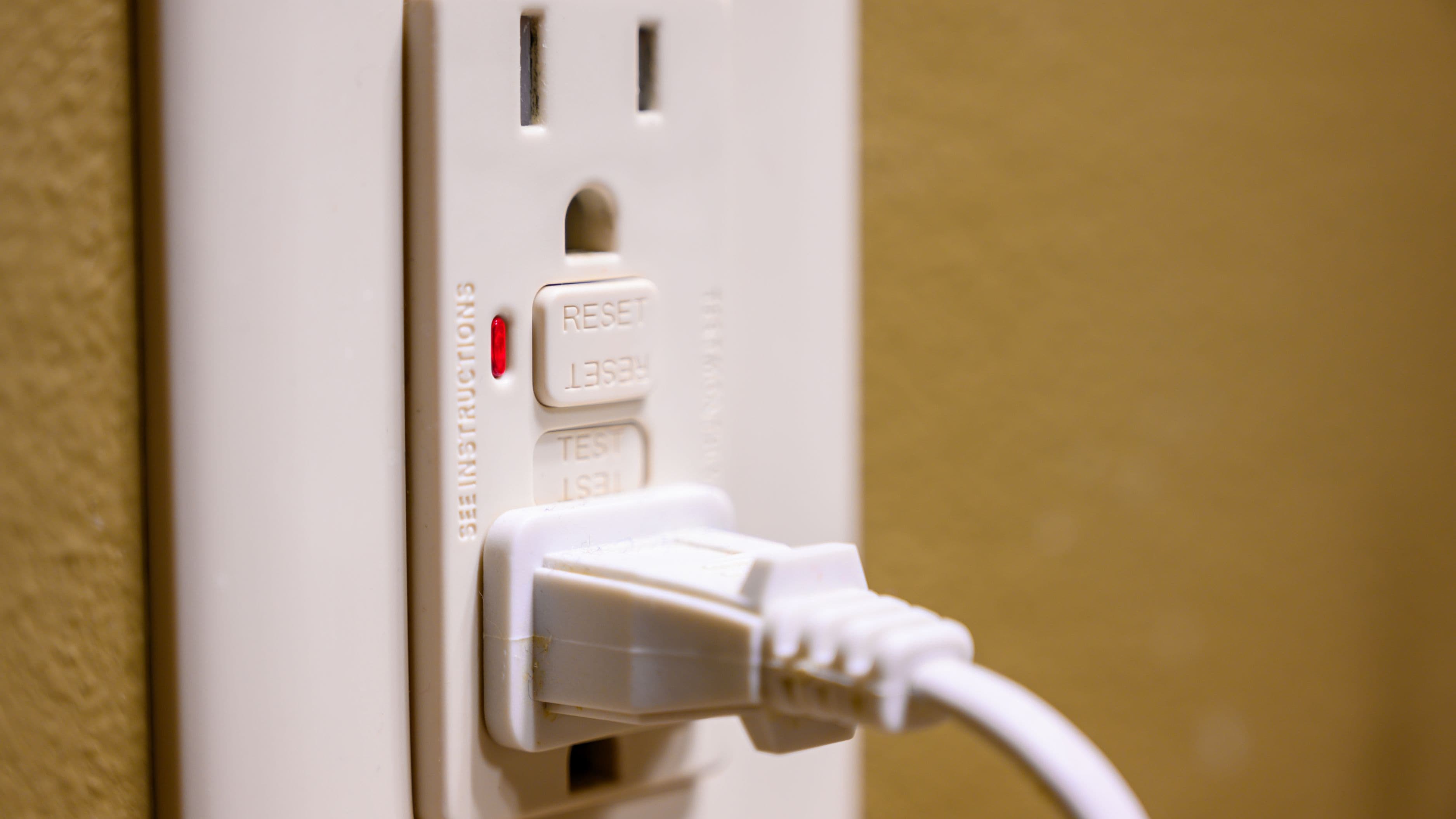
In these areas, electrical code requires GFCI (Ground Fault Circuit Interrupter) outlets – the ones with "TEST" and "RESET" buttons on them. A GFCI outlet is designed to detect a ground fault and trip before the breaker does, which is why bathrooms and kitchens have them. If a GFCI outlet in the room has tripped (the "RESET" button has popped out), pressing it to reset may solve the problem without needing to go to the breaker panel at all.
How to recognise it: Check whether any GFCI outlets in or near the affected room have tripped – they'll have the reset button popped out. If there's no GFCI in the room and the breaker keeps tripping, especially when moisture may be involved, a ground fault is possible.
The fix: Reset any tripped GFCI outlets first. If the problem recurs, inspect cords and appliances in the area for damage, particularly anything that might have gotten wet. A damaged cord with exposed wire near a metal surface can cause a recurring ground fault.
If you have no GFCI outlets in a bathroom, kitchen, garage, or outdoor outlet, that's a code deficiency. GFCI outlet replacement is a straightforward DIY job for anyone comfortable turning off the breaker and following instructions – replacement outlets include wiring diagrams on the packaging, and the process takes about 20 minutes.
DIY or pro? Resetting GFCI outlets and replacing damaged cords is DIY. Installing GFCI outlets is beginner-accessible DIY with the breaker off. Investigating a suspected ground fault in wiring requires a professional.
Cause 4: Faulty Appliance
What it is: An appliance with internal wiring damage, a failed motor, or a defective component can draw excessive current or create a fault condition that trips the breaker every time it runs – or only under certain conditions (when it's hot, when it's running at full load, etc.).
How to confirm it: Unplug everything on the affected circuit and reset the breaker. If it holds, plug appliances back in one at a time and run them. The appliance that trips the breaker when turned on is the faulty one. Test it on a different circuit to confirm – if it trips that breaker too, the problem is definitely the appliance, not the circuit.
The fix: Repair or replace the faulty appliance. Common culprits include older space heaters, aging microwaves, refrigerators with failing compressors, window AC units, and power strips or extension cords that have become damaged or overloaded themselves. Never use an appliance that consistently trips the breaker. It's not a minor electrical quirk – it's a warning that something inside is failing.
DIY or pro? Identifying the appliance is DIY. Appliance repair may be DIY depending on the device; replacement is always an option.
Cause 5: Worn or Faulty Breaker
What it is: Breakers aren't rated to last forever. An older breaker can become weak and trip at a lower threshold than its rated amperage, or it can fail to hold even a normal load. If your home has an older electrical panel and one breaker keeps tripping under loads that shouldn't be a problem, the breaker itself may need replacement.
How to suspect it: You've ruled out overloads and faulty appliances, the circuit has no short or ground fault that you can identify, but the breaker still trips intermittently or at low loads. A breaker that feels physically loose in the panel, trips when you barely touch it, or won't stay reset may be mechanically failing.
The fix: Breaker replacement. This is a job for a licensed electrician in most cases. While the individual breaker itself costs $5–$20, replacing it requires working inside the main electrical panel with the breaker cover removed – and the main bus bars in that panel remain energized even when the main breaker is off. The risk of serious injury is real, and this is firmly in professional territory for most homeowners.
DIY or pro? Call a licensed electrician.
⚠️ Safety Notes
Never work on electrical wiring or inside your electrical panel without turning off the relevant breaker first. Even with the circuit breaker off, verify the circuit is de-energized using a non-contact voltage tester before touching any wiring. Non-contact voltage testers cost $15–$25 at any hardware store and are an essential tool for any home electrical work.
Don't use tape or any other workaround to force a breaker to stay on. Don't replace a breaker with a higher-rated one to stop it from tripping – a 15-amp circuit has 15-amp wiring, and forcing 20 amps through it creates a fire risk.
If you smell burning, see scorch marks around outlets or switches, or notice the breaker panel or the wall near it is warm to the touch, stop what you're doing and call an electrician. Don't reset the breaker. These are signs of active heat buildup in the wiring, which is a fire hazard.
When to Call a Licensed Electrician
The distinction between DIY and professional territory in electrical work is clearer than in many other home systems. You can safely identify and redistribute an overload, replace a faulty appliance, reset a GFCI outlet, and replace a GFCI outlet with the circuit off. You should call an electrician for anything involving wiring inside walls, any suspected short circuit in the circuit wiring, breaker replacement, panel work of any kind, or any situation involving signs of overheating or burning.
A service call for a tripping breaker diagnosis typically costs $100–$300 depending on your area and what the electrician finds. If the problem turns out to be a faulty device or an overloaded circuit, that money buys peace of mind knowing the wiring is safe. If the problem is in the wiring, you'll be glad you called.
Frequently Asked Questions
Is it safe to keep resetting a tripping breaker? Only once, to test. Reset it once, observe whether it holds, and pay attention to what triggers the next trip. Repeatedly resetting a breaker that keeps tripping without finding the cause is how electrical fires start. If it trips more than twice in quick succession, leave it off and investigate before resetting again.
Can a single outlet cause a whole circuit to trip? Yes. A short circuit or ground fault in a single outlet will trip the entire circuit it's on. Outlets in a room are often wired in series, meaning a fault at one outlet affects all the outlets downstream from it. Inspecting individual outlets for scorch marks, discoloration, or a burning smell is a useful first step.
How do I know which outlets are on the same circuit? Plug a lamp or a radio into an outlet, then trip the breaker one at a time from your panel and see which breaker cuts power to that outlet. Label it in your breaker panel. Repeat for other outlets in the room. Most rooms have one or two circuits, though kitchens, laundry rooms, and bathrooms often have dedicated circuits for specific appliances.
My breaker won't stay reset – it trips immediately. What does that mean? An immediate trip on reset almost always means a short circuit or ground fault is still present on that circuit. Don't keep resetting it. Unplug everything on the circuit, then try resetting again. If it still trips immediately with nothing plugged in, the fault is in the wiring and you need an electrician.
The Bottom Line
A circuit breaker that keeps tripping in one room is giving you clear information – your job is to listen. Most of the time, the cause is an overloaded circuit or a faulty appliance, both of which you can identify and fix yourself. When the problem points to wiring, a worn breaker, or anything involving the electrical panel, that's when you step back and call a licensed electrician. The cost of a service call is a small price compared to the risk of ignoring an electrical problem in your home.
📚 Sources
U.S. Consumer Product Safety Commission – Electrical safety in the home: https://www.cpsc.gov/Safety-Education/Safety-Guides/Homes/Electrical-Safety
National Fire Protection Association – NFPA 70: National Electrical Code overview: https://www.nfpa.org/codes-and-standards/nfpa-70-standard-development/70
U.S. Department of Energy – Home electrical systems: https://www.energy.gov/energysaver/electrical-systems
Family Handyman – How to troubleshoot a tripping circuit breaker: https://www.familyhandyman.com/project/how-to-find-and-fix-a-tripping-breaker
Electrical Safety Foundation International – Home electrical safety: https://www.esfi.org/home-electrical-safety