


This guide covers everything you need: where the coils are, what tools to use, and exactly how to clean them safely and effectively.
Why Cleaning the Coils Actually Matters
The condenser coils are part of your refrigerator's cooling system. Their job is to release heat – the heat that gets pulled out of the inside of your fridge – into the surrounding air. When those coils are caked with dust, pet hair, and debris, they can't release that heat efficiently. The compressor has to work harder and run longer to maintain the set temperature, which uses more electricity and puts additional wear on the compressor over time.
The U.S. Department of Energy notes that a well-maintained refrigerator runs significantly more efficiently than a neglected one, and dirty coils are among the top culprits for efficiency loss. In practical terms, clean coils can reduce energy consumption by up to 30% compared to heavily soiled ones, and a compressor that runs less hard tends to last longer. Given that refrigerators are one of the larger draws on a home's electricity, this is a maintenance task that pays for itself.
Tools and Materials You'll Need
You don't need anything specialized for this job. Most of what you need is probably already at home:
A vacuum cleaner with a narrow crevice attachment is the primary tool. If you have a brush attachment, even better. A coil cleaning brush – a long, flexible bristle brush designed specifically for condenser coils – makes the job noticeably easier and costs about $8–$12 at most hardware stores or online. It's not strictly required, but if you have pets or haven't cleaned the coils in years, it's worth having. A flashlight helps you see what you're working with, especially if the coils are at the back of the unit. A few old towels or newspaper sheets to lay down under the refrigerator are useful for catching any debris that falls during cleaning.
Step 1: Locate Your Refrigerator's Condenser Coils
Before you do anything, you need to know where your coils are – and this varies by refrigerator model.
On most older refrigerators and many standard models, the coils are located on the back of the unit, running in a grid pattern across the exterior rear panel. These are the easiest to access: you simply pull the fridge away from the wall and the coils are visible.
On most modern refrigerators – particularly those with a bottom freezer or French door configuration – the coils are located underneath the unit, behind a grille or kick plate at the front bottom. This is now the most common configuration. If you're not sure which type you have, check your owner's manual or look up your model number online. Pull the fridge away from the wall and look at the back; if you don't see coil grids, the coils are almost certainly underneath at the front.
Step 2: Unplug the Refrigerator
This step is non-negotiable. Before you move the appliance or touch anything near the compressor area, unplug it from the wall. The compressor and fan near the coils can cycle on unexpectedly, and you don't want your fingers or the brush near moving parts when that happens. Unplugging takes five seconds and eliminates the risk entirely.
If your refrigerator is hardwired rather than plug-in (unusual but possible in some installations), turn off the dedicated circuit at your breaker panel before proceeding.
Step 3: Pull the Refrigerator Away From the Wall
If your coils are at the back, you'll need to move the fridge far enough to work comfortably behind it – typically 2–3 feet of clearance. Refrigerators are heavy; if yours sits on a hard floor, use an appliance dolly or ask someone to help rather than dragging it and scratching the floor. Many modern refrigerators have rear rollers that make this easier.
Before pulling, check behind the unit for the water line if you have an ice maker – make sure you have enough slack and aren't putting tension on the connection. Lay your towels or newspaper on the floor behind and under the fridge to catch debris before you start.
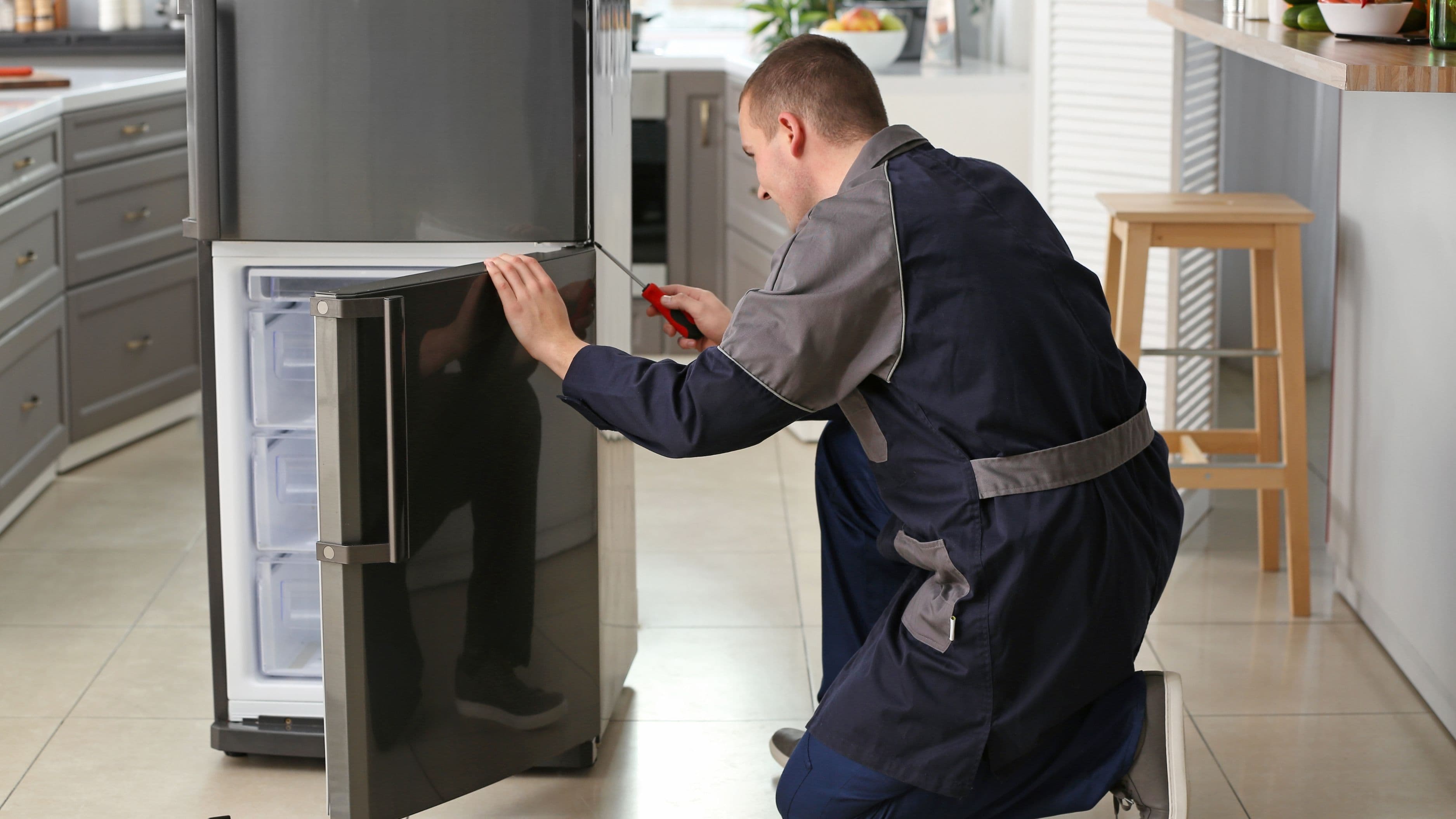
If your coils are underneath at the front, you won't need to move the refrigerator. Instead, remove the kick plate or grille at the base of the unit – it typically snaps off or is held by one or two screws.
Step 4: Vacuum the Coils
With the coils exposed, use the crevice tool on your vacuum to remove the bulk of the dust and debris. Work slowly along the length of the coils, getting the nozzle as close as possible without pressing hard against the coils themselves. Condenser coils are relatively durable but the fins can bend if you apply force, which reduces their efficiency. Use light, consistent pressure and let the suction do the work.
If you have a coil cleaning brush, use it in conjunction with the vacuum: brush debris loose with the flexible bristles while vacuuming simultaneously, or alternate between brushing and vacuuming in sections. The brush is particularly useful for getting into the deeper sections of coil grids where the vacuum alone can't reach effectively. Work in long, smooth strokes following the direction of the coils rather than across them.
For heavily soiled coils with compacted debris – common if this is the first cleaning in several years, or if you have multiple pets – you may need to go over the same area two or three times before you're satisfied. If you're seeing significant improvement but still have stubborn buildup in hard-to-reach spots, that's acceptable. Getting 80–90% of the debris is far more valuable than it might seem; the efficiency gain is not linear but most of the benefit comes from removing the dense surface buildup.
Step 5: Clean the Fan and Surrounding Area
While you have access to the back or underside of the refrigerator, take a few extra minutes to vacuum around the compressor and condenser fan. These areas accumulate the same dust and pet hair as the coils themselves and are worth addressing at the same time.
The condenser fan – the one near the coils, not the evaporator fan inside the freezer compartment – can have debris wrapped around its blades or housing that affects airflow. Use the crevice tool carefully around the fan blades without touching them while the unit is unplugged.
If the floor underneath and behind the refrigerator has a layer of dust and debris (it usually does), vacuum that out too. Debris on the floor directly below the coils can be drawn back up into them quickly once the fan resumes operation.
Step 6: Replace the Grille and Reposition the Refrigerator
If you removed a kick plate or front grille, snap or screw it back into place. Push the refrigerator back toward the wall, being mindful of the power cord and any water lines. Leave at least an inch or two of clearance between the back of the unit and the wall – most manufacturers recommend 1–2 inches minimum for adequate airflow, and some recommend more. Check your owner's manual for the specific recommendation for your model.
Once the refrigerator is in position, plug it back in. The compressor may run for a few minutes as the unit comes back to temperature, which is normal.
How Often Should You Do This?
For most households, cleaning the condenser coils once a year is sufficient. If you have pets that shed heavily, twice a year is a better interval – pet hair accumulates on coils faster than household dust and is denser and harder to remove when compacted. If you've never cleaned your coils and your refrigerator is more than a few years old, doing it now and then establishing an annual routine is the right approach.
A good way to remember it is to tie the task to something you already do annually – end-of-year appliance checks, spring cleaning, or daylight saving time changes when you also change smoke detector batteries.
What to Avoid
Avoid using water or any liquid cleaner directly on the coils or in the compressor area. The condenser coils handle high heat and electrical components are nearby – moisture in that area can cause corrosion or electrical issues. Dry cleaning (vacuum and brush) is the correct method for condenser coils.
Don't use a stiff wire brush or any abrasive tool. The coil fins are thin and bend easily; bent fins reduce the effective surface area of the coil and the efficiency gains you're working toward.
If you see oil residue or a greasy coating on or near the coils rather than just dust, that can indicate a refrigerant leak and warrants a service call from a certified appliance technician. Refrigerant handling requires certification and isn't a DIY repair.
FAQ
How do I know if my refrigerator coils actually need cleaning? The clearest signs are a refrigerator that runs almost constantly, feels warm on the exterior sides or back, takes longer than usual to recover after the door is opened repeatedly, or has caused a noticeable increase in electricity use. You can also simply pull the fridge out or remove the kick plate and look – if there's visible dust and debris on the coils, they're overdue for cleaning.
My coils look clean. Why is my refrigerator still running constantly? Dirty coils are one common cause of this symptom, but not the only one. A worn door gasket that's letting warm air in, a faulty thermostat, a failing compressor, or an overfull freezer blocking the evaporator fan are all possibilities. Clean coils rule out one variable; if the problem persists after cleaning, a technician can diagnose the remaining causes.
Is it safe to move my refrigerator myself? For most standard freestanding refrigerators, yes – with care. Use furniture sliders or an appliance dolly on hard floors to avoid scratching. If your refrigerator has a water line for an ice maker or filtered water dispenser, check that you have enough slack in the line before pulling it fully out. If the line is short or the connection feels tight, stop and add a water line extension before proceeding.
Can I use compressed air to clean the coils instead of vacuuming? Compressed air will dislodge debris but blows it into the air and onto nearby surfaces rather than removing it. If you use compressed air, follow immediately with a vacuum to capture the loosened material before it settles back onto the coils or into the compressor area. Vacuuming alone or brushing combined with vacuuming is the cleaner and more effective approach.
My refrigerator has coils inside the walls – does it still need this maintenance? Some refrigerator models use "no-clean" or "automatic defrost" coil designs integrated into the walls rather than external condenser coils. If you genuinely cannot locate any external coils on the back or underside of your unit, check the owner's manual. These models don't require coil cleaning, though the condenser fan area underneath may still benefit from vacuuming.
📚 Sources
U.S. Department of Energy – Refrigerators and Freezers Energy Efficiency Tips: https://www.energy.gov/energysaver/refrigerators
Consumer Reports – How to Make Your Refrigerator Last Longer: https://www.consumerreports.org/refrigerators/how-to-make-your-refrigerator-last-longer/
Family Handyman – How to Clean Refrigerator Coils: https://www.familyhandyman.com/appliances/refrigerator/how-to-clean-refrigerator-coils/
ENERGY STAR – Refrigerator Maintenance Guidance: https://www.energystar.gov/products/appliances/refrigerators