
The honest answer is that cleaning frequency depends on your specific property. Two cleanings a year is a starting point, not a universal rule. This guide helps you figure out the right schedule for your situation, what damage you're actually preventing, and how to make the cleaning itself as straightforward as possible.
Why Gutter Cleaning Actually Matters
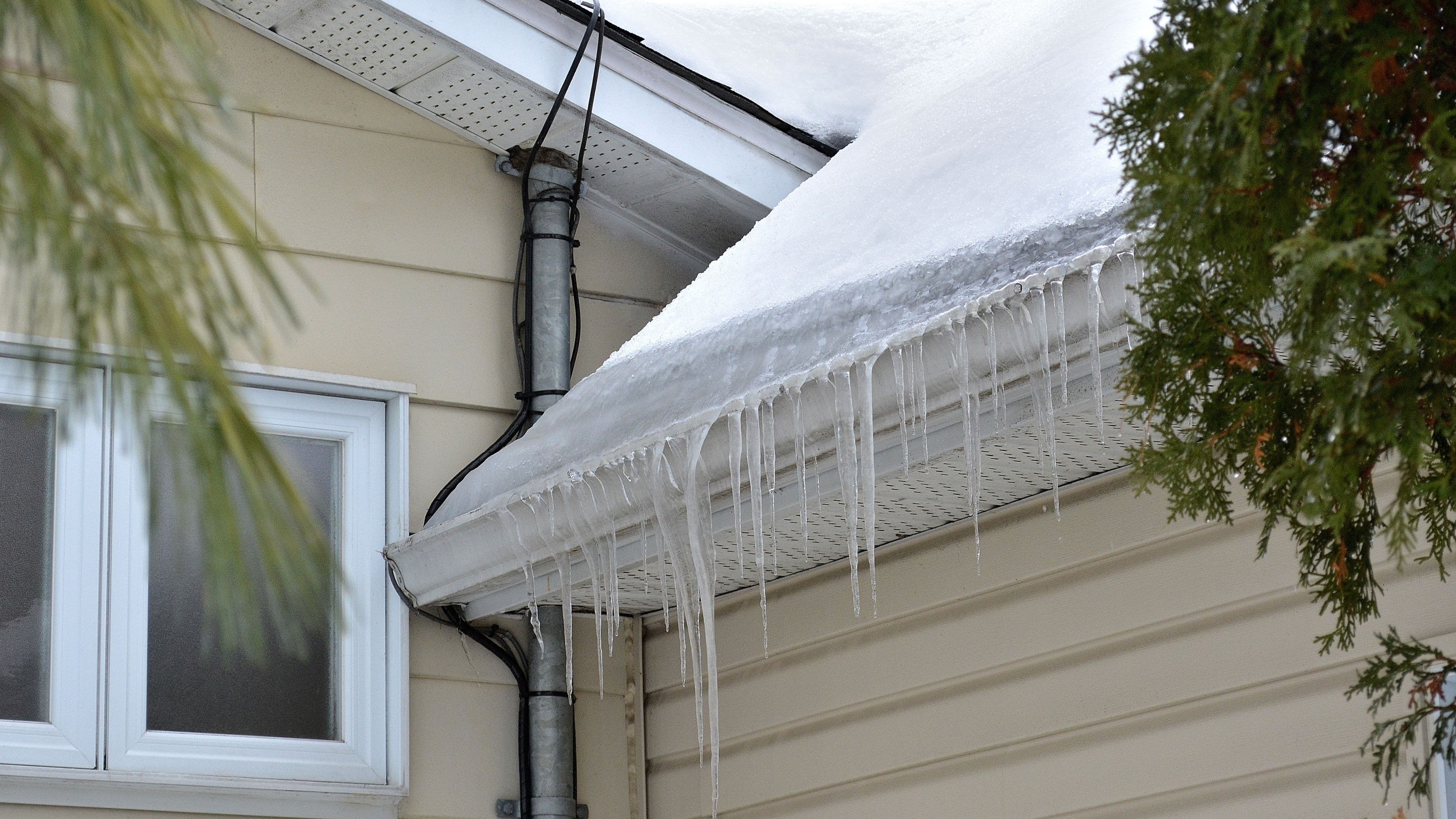
Gutters have one job: move rainwater away from your house. When they're clogged, water backs up and has nowhere to go except over the edge or under the roofline. Over time, that leads to fascia board rot, soffit damage, foundation erosion, basement flooding, and – in cold climates – ice dams that can drive water under shingles and into your attic. None of those repairs are cheap. A fascia replacement runs $600–$2,000 depending on length and material. Foundation waterproofing can run $5,000–$15,000 or more. Routine gutter cleaning costs $100–$250 for a professional service, or a few hours of your own time.
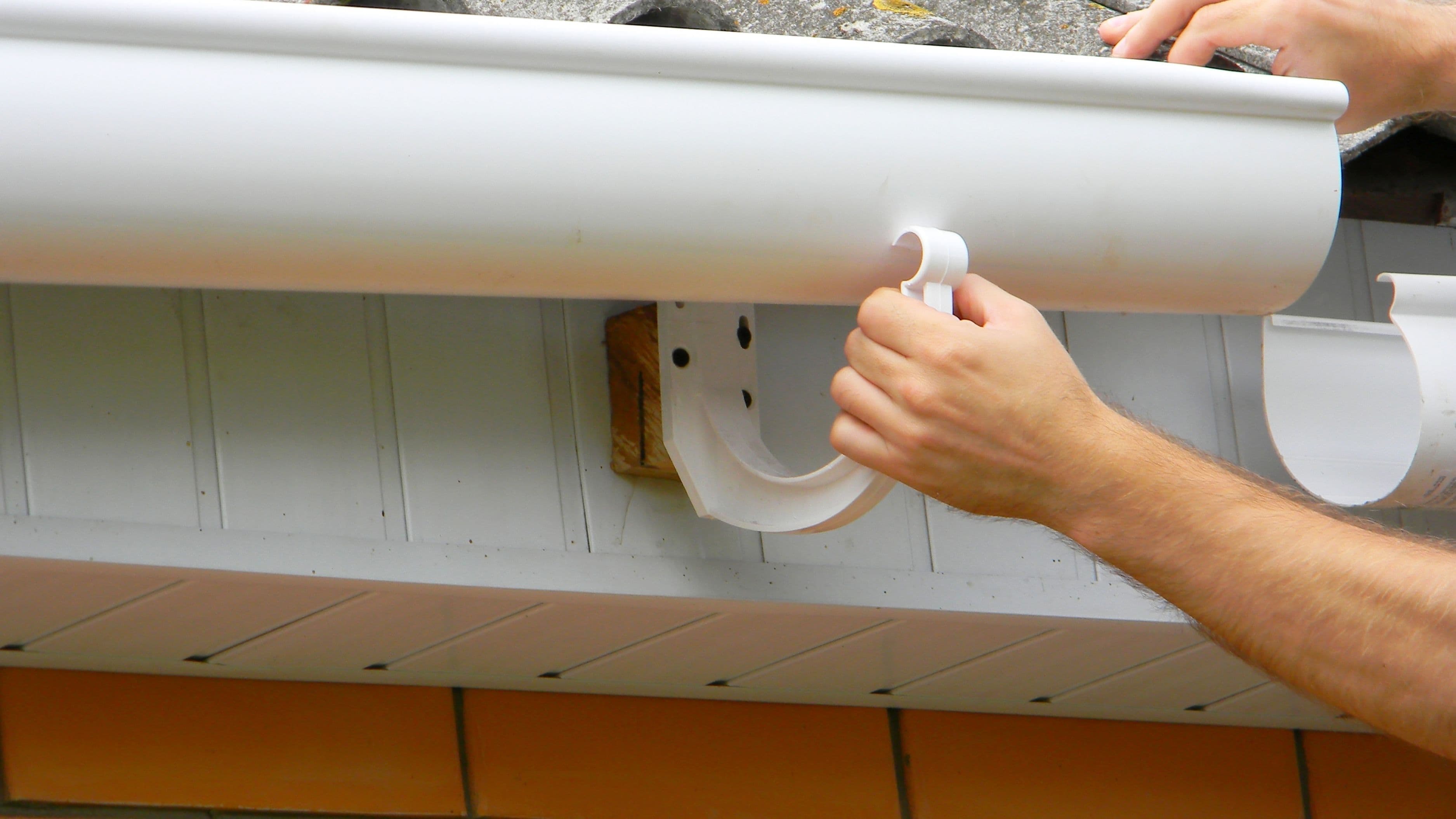
The other thing that happens in clogged gutters is standing water. Standing water is a breeding ground for mosquitoes and attracts birds and rodents looking for a water source. Over enough time, the weight of accumulated wet debris and standing water can pull gutters away from the fascia, requiring either reattachment or full gutter replacement. Keeping them clear is one of the highest return-on-investment maintenance tasks a homeowner can do.
The Twice-a-Year Baseline: When It's Enough
For a home with minimal tree coverage – or trees that are set back far enough that relatively little debris lands on the roof – two cleanings per year covers the bases. The standard timing is late fall, after the majority of leaves have dropped, and late spring, after seed pods, pollen buildup, and any late-spring blooms have cleared. These two windows capture the two heaviest debris periods for most of the country.
The fall cleaning is the more critical of the two. Gutters going into winter clogged with leaves and debris are far more likely to develop ice dams in freeze-thaw climates, and any standing water left in a blocked gutter at freezing temperatures can expand and crack or separate the gutter joints. Cleaning before the first freeze protects the gutters themselves as much as the rest of the house.
The spring cleaning clears whatever blew in during winter – pine needles, small branches, shingle granules dislodged by ice, and the pollen and seed debris that many trees drop heavily in March through May. If you skipped the fall cleaning and went into winter with debris, the spring cleaning also clears anything that's been sitting since the previous season.
When Twice a Year Isn't Enough
Several factors can push your cleaning schedule from twice a year to three or four times. If any of the following apply to your property, you'll want to clean more frequently.
You Have Trees Overhanging or Near the Roof
This is the biggest factor by far. Mature oaks, maples, sweet gums, and similar deciduous trees drop enormous volumes of leaves in fall, but they also drop seeds, pollen catkins, and small branches throughout spring and summer. Pine trees drop needles year-round. If branches overhang your roofline or come within ten to fifteen feet of the house, debris volume is significantly higher than average and you'll likely need three to four cleanings per year. Some homeowners with dense tree coverage find themselves doing a quick pass five or six times a year – essentially after every major wind event or seasonal drop.
The type of tree matters too. Oaks are notorious for dropping small leaf fragments and acorns that pack tightly into gutters and are difficult to flush out. Sweet gum balls are large enough to physically block downspout openings on their own. Pine needles accumulate in a dense, compact mat that holds moisture and decomposes into a fine sludge that's harder to remove than fresh dry debris.
You Live in an Area With High Rainfall
If your area gets heavy rainfall regularly – the Pacific Northwest, Gulf Coast states, parts of the Southeast – gutters clog faster because debris is constantly being pushed around and compacted by rain. High-volume rain events can also overwhelm a gutter system that's only partially blocked, causing overflow that a homeowner might not even notice until the fascia starts to show rot. In high-rainfall climates, cleaning in early fall, after fall peak, in early spring, and mid-summer is a reasonable schedule.
Your Gutters Have a History of Backing Up
If you've noticed gutters overflowing during moderate rain events even when they look relatively clear from the ground, the problem is often a partially blocked downspout rather than a full gutter load. Downspouts can be obstructed by a single large piece of debris that acts as a dam, accumulating everything that follows behind it. If your gutters overflow regularly between cleanings, add a mid-season check to your schedule specifically focused on downspout flow.
You Have a Low-Slope Roof
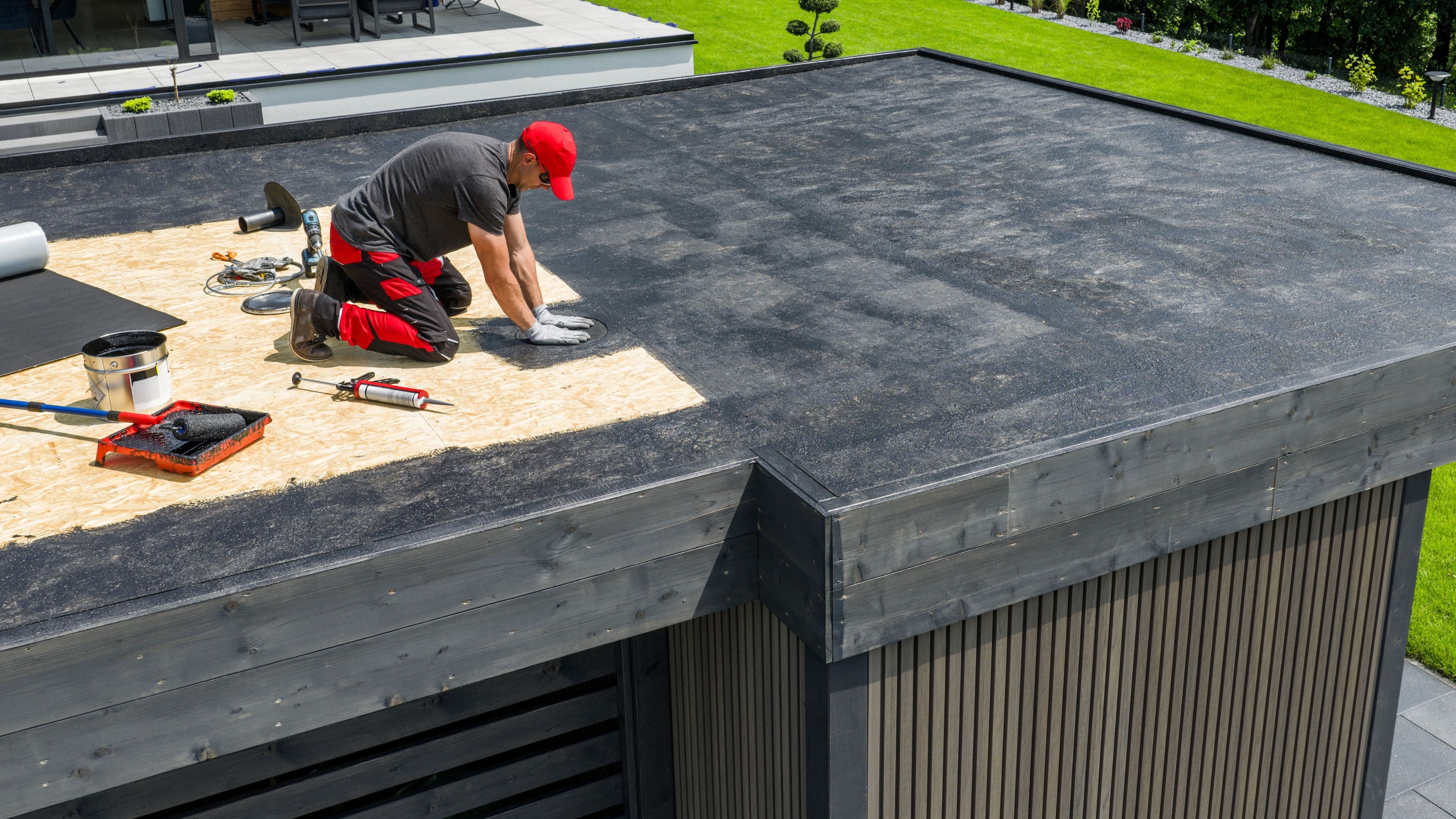
Water moves more slowly on a low-pitch roof, which means debris stays wet longer and doesn't wash toward the gutters as easily. Low-slope roofs accumulate more standing debris on the surface itself, some of which eventually migrates into the gutters. If your roof has sections that are nearly flat, plan for more frequent clearing.
Seasonal Cleaning Schedule by Tree Coverage
Here's a practical framework based on the most common property situations.
Minimal tree coverage (trees 20+ feet from roofline): Two cleanings per year – late fall and late spring. This is adequate for most suburban homes with standard landscaping that hasn't been allowed to overgrow the roofline.
Moderate tree coverage (one or two deciduous trees within 15–20 feet): Three cleanings – late summer or early fall before peak drop, late fall after peak drop, and late spring. The early fall cleaning catches the first wave of debris and reduces the volume you're dealing with in the main fall cleaning.
Heavy tree coverage (multiple trees overhanging or canopy close to roofline): Four or more cleanings. At minimum: late summer, late fall, late winter or early spring, and late spring. Some homeowners in this situation do a quick pass after any major storm that drops significant debris.
Pine trees: Needle drop is year-round, but heaviest in spring and fall. For homes with significant pine coverage, four cleanings per year is a practical minimum. Monthly spot checks are worth doing if the pines are directly over the gutters.
How to Clean Gutters Safely Yourself
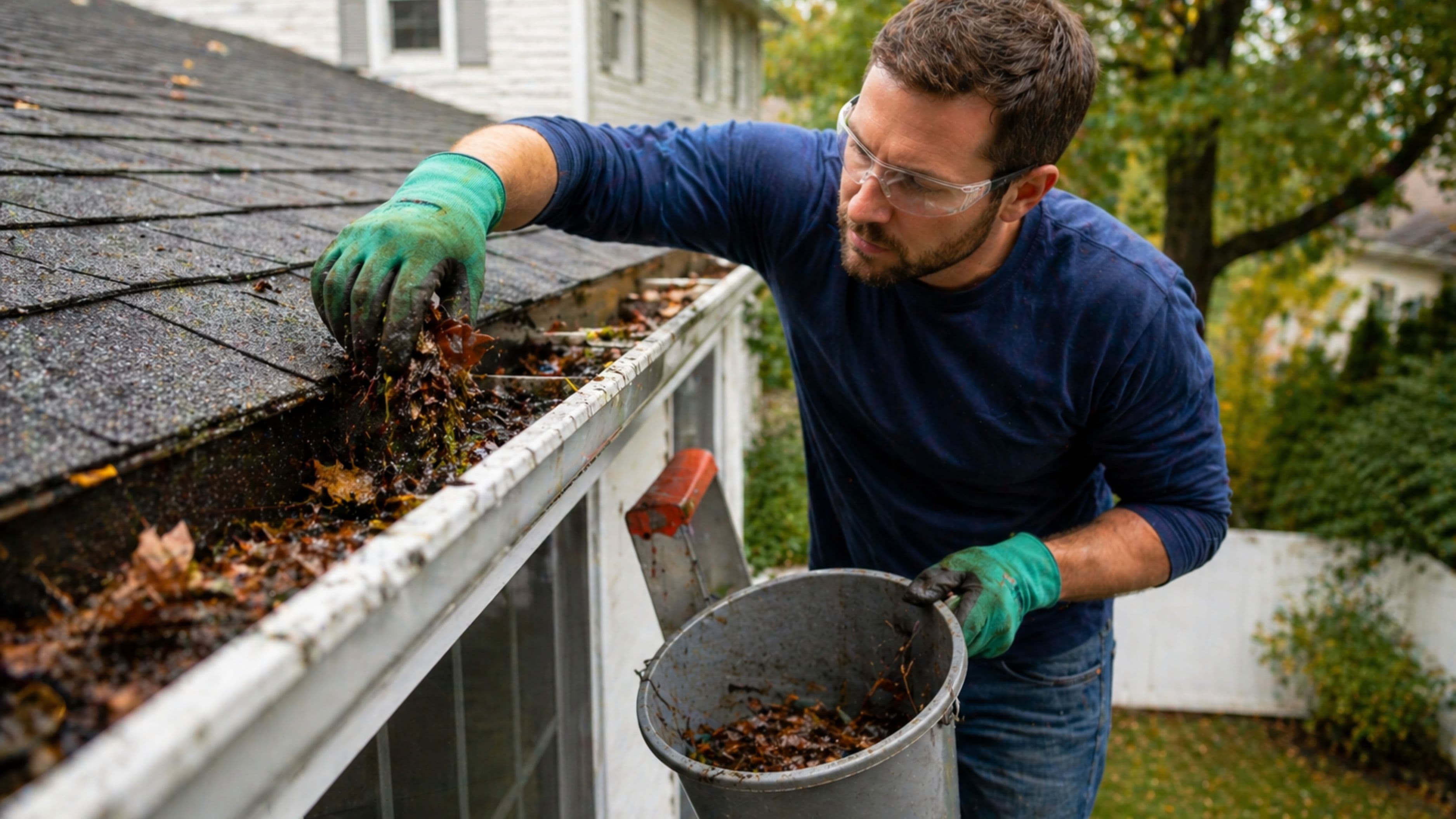
If you're comfortable on a ladder and your gutters are accessible from a standard extension ladder without leaning out at awkward angles, this is a manageable DIY task. The tools you need are a ladder (extension or step ladder depending on your home's height and configuration), work gloves, a gutter scoop or garden trowel, a bucket or tarp on the ground to collect debris, and a garden hose.
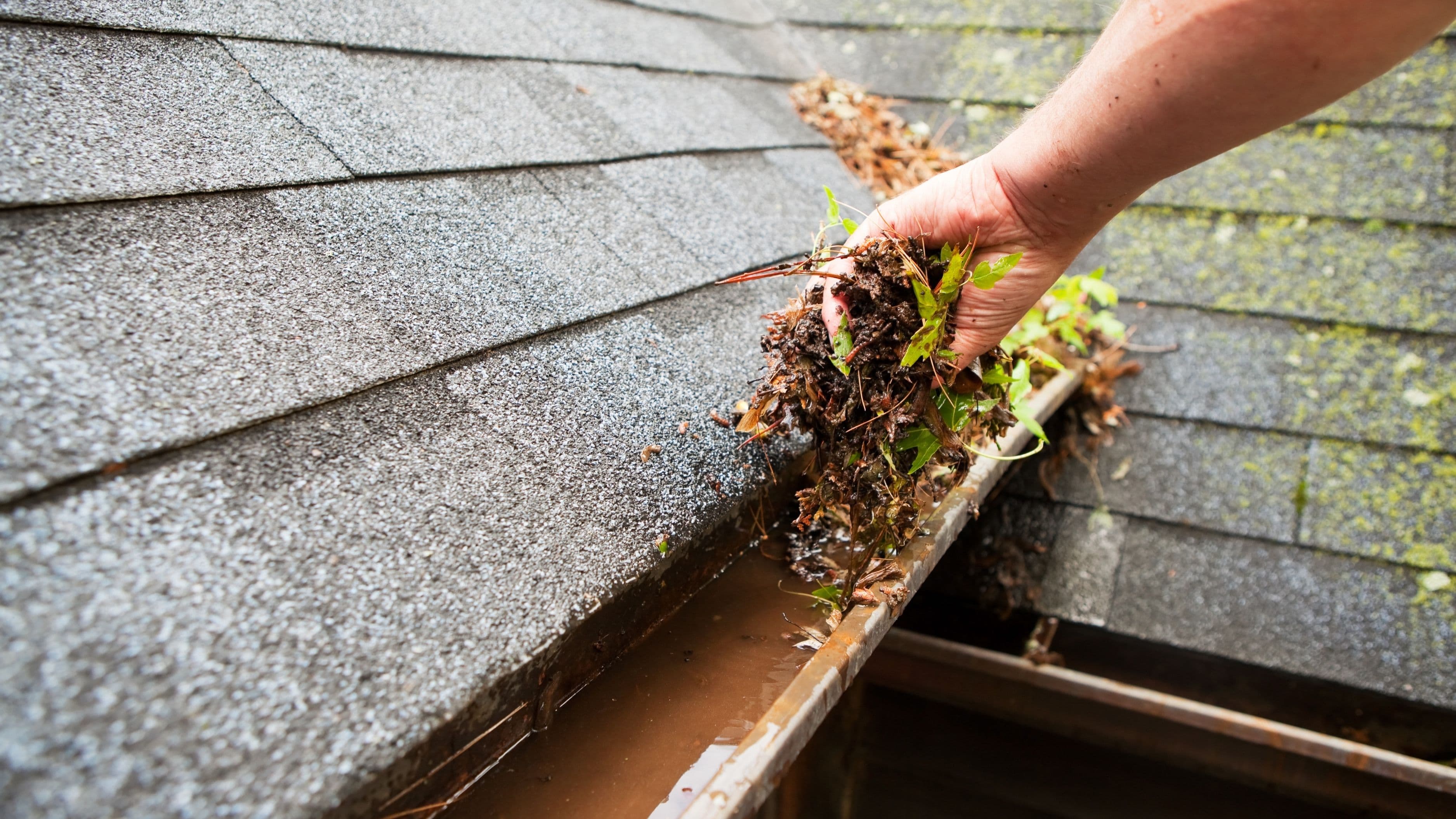
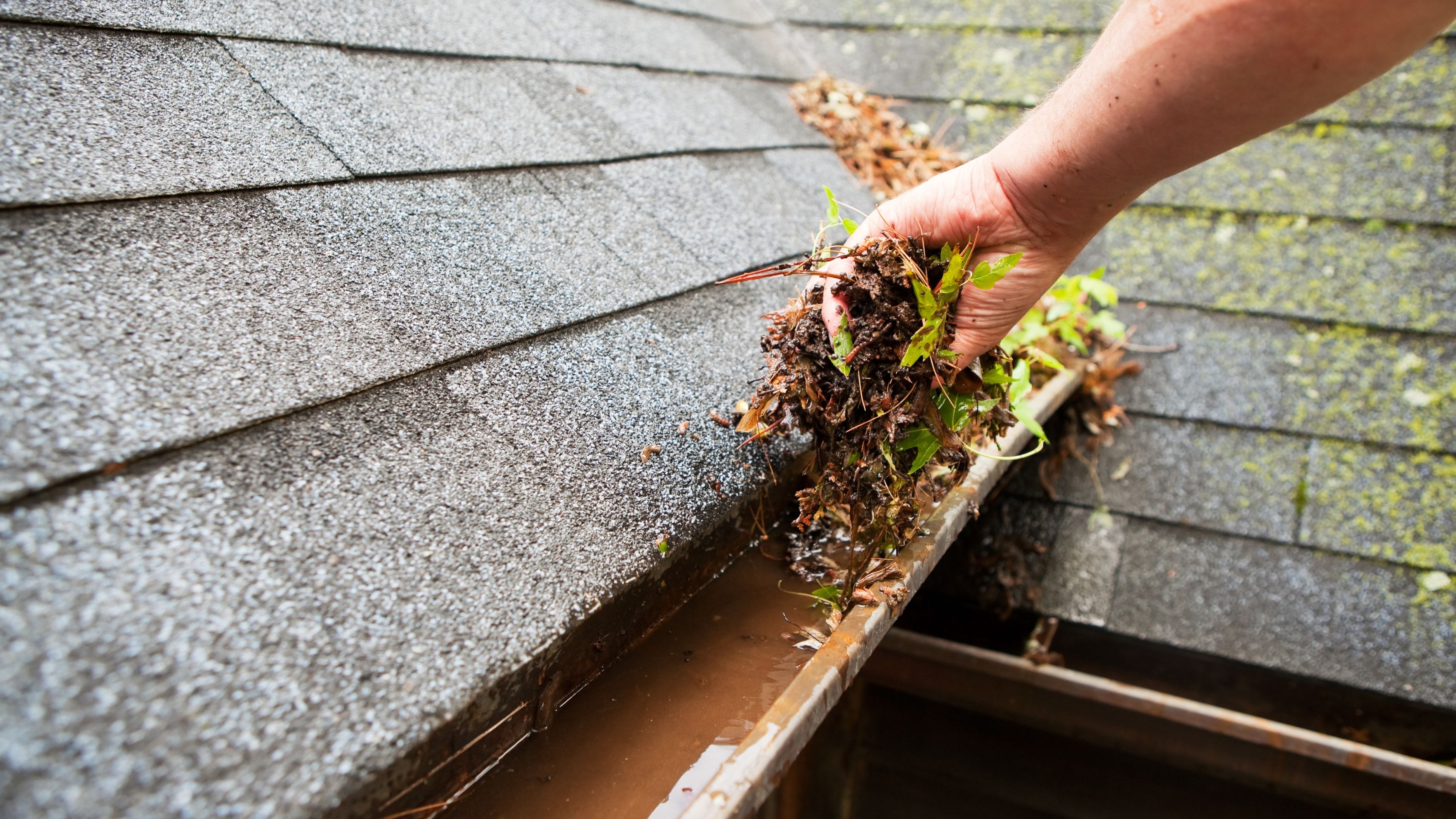
Start at the downspout end of each gutter run and work toward the far end, scooping debris into your bucket. Don't scoop toward the downspout – you'll push debris into it and create a blockage. Once the gutter is cleared of bulk debris, flush it from the far end toward the downspout with your garden hose and watch the downspout discharge. Strong, clear flow means the downspout is clear. Weak flow or backup means there's a blockage in the downspout itself.
To clear a downspout blockage, try flushing it from the top with the hose at full pressure first. If that doesn't clear it, a plumber's snake fed from the bottom up usually does the job. On rare occasions, a downspout is blocked by compacted debris that requires disconnecting and clearing by hand.
Safety First
Always set your ladder on stable, level ground and have someone spot it if possible. Never lean out past the sides of the ladder to reach further – move the ladder instead. Don't stand on the top two rungs of a step ladder or the top rung of an extension ladder. Wear non-slip shoes and avoid working on wet or windy days. If your gutters are above the first story or your roof pitch makes ladder placement awkward, hiring a professional is genuinely the safer call.
Do Gutter Guards Change the Cleaning Schedule?
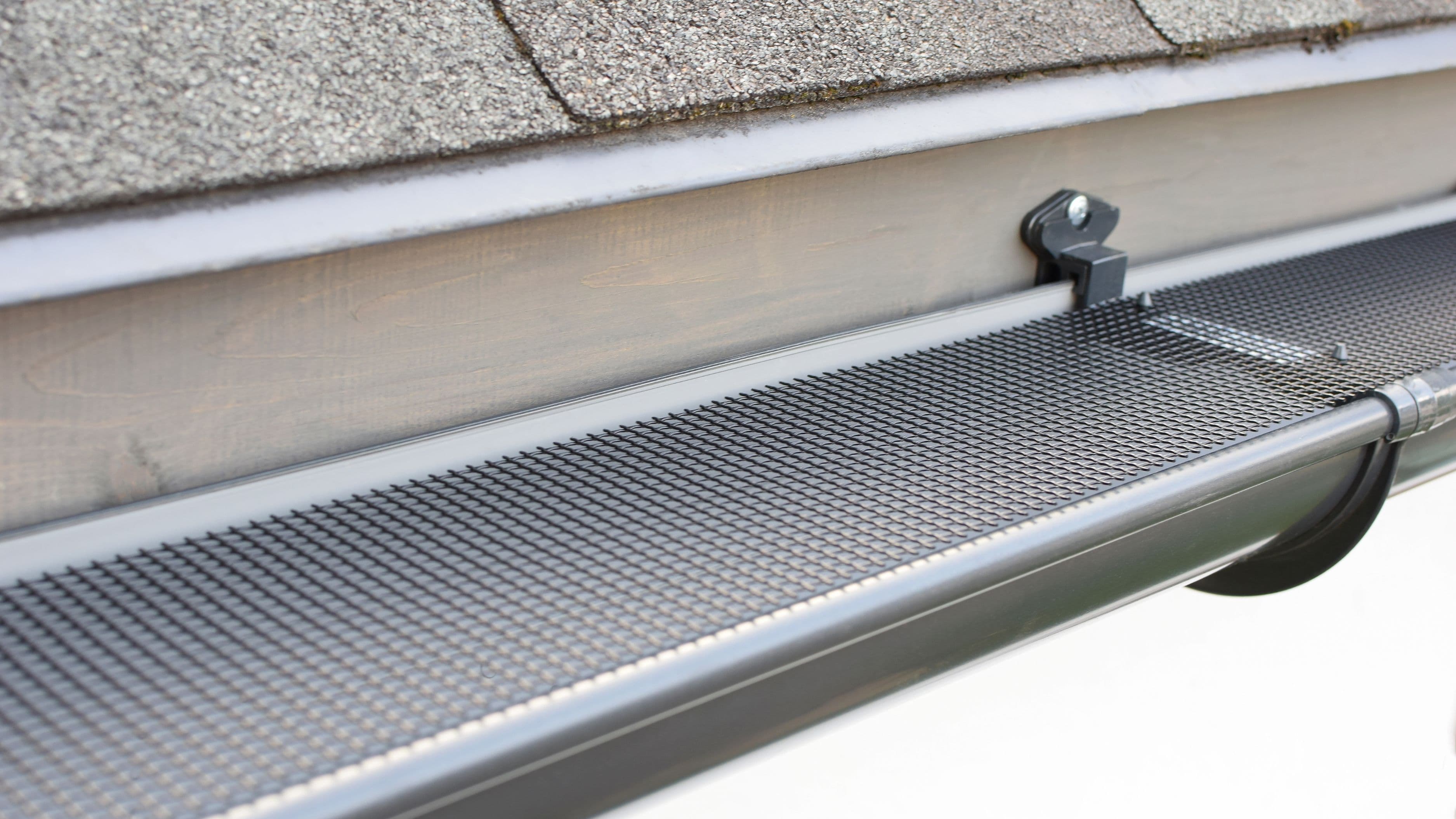
Gutter guards – the mesh, foam, brush, or reverse-curve covers installed over gutters – reduce debris accumulation but don't eliminate it. Fine debris like pine needles, shingle granules, and seed pods still get through most screen-type guards, and any debris that gets in tends to decompose into fine sludge that's harder to remove than fresh leaves. Foam and brush inserts are particularly prone to becoming debris themselves over time as they degrade or host moss growth.
The honest assessment of gutter guards is that they reduce cleaning frequency for most homeowners with moderate debris load, but they don't eliminate it. If you install quality micro-mesh guards on a home with heavy tree coverage, you might go from four cleanings to two. On a home with minimal trees, they may extend a two-cleaning schedule to one, though checking annually is still wise. Don't install guards and then assume the gutters are maintenance-free – that assumption leads to the kind of slow, unnoticed damage that's the most expensive to fix.
Signs Your Gutters Need Cleaning Right Now
You don't always need to be on a schedule to know when your gutters need attention. A few clear indicators suggest it's time regardless of when you last cleaned.
If gutters overflow during rain – even moderate rain – when they're not visibly pulling away from the fascia, they're almost certainly blocked. If you can see plants growing out of your gutters (it happens more often than you'd think), there's enough soil-like decomposed debris in there to support root systems, and that weight and moisture is actively stressing the gutter system. If you notice sagging sections, the weight of wet debris may be pulling the gutter hangers loose. And if you see dark streaks on your siding or exterior paint below the gutter line, that's overflow debris and water consistently spilling over the edge.
What to Avoid
Don't try to clean gutters from the roof by walking along the edge – the combination of slope, slippery debris, and proximity to the edge makes this significantly more dangerous than using a ladder properly. Don't use a pressure washer to clean gutters unless you have specific experience with it; the force can blow water under shingles, damage gutter sealant at joints, and strip paint from siding. And don't push debris toward the downspout when scooping – always work from downspout toward the far end to keep the drain clear.
If you're using a leaf blower attachment to blow debris out of gutters, do it before rain – dry debris blows out cleanly, while wet debris just redistributes and packs down further.
FAQ
How much does professional gutter cleaning cost? Most professional gutter cleaning services charge $100–$250 for a single-family home, depending on home size, gutter linear footage, and how clogged the gutters are. Homes with heavy debris or difficult access typically run toward the higher end. Getting it done once a year by a professional and handling the second cleaning yourself is a reasonable middle-ground approach for homeowners who are uncomfortable on a ladder.
Can I clean gutters from the ground? There are gutter cleaning wand attachments that connect to a garden hose or leaf blower and allow you to work from the ground. They're useful for flushing light debris but less effective at removing heavy, compacted loads. For a thorough cleaning, getting up to gutter level and physically scooping is more reliable. Ground-based tools work best as a supplemental step after a manual clean, or for quick mid-season flushes when debris is light.
How long does gutter cleaning take? For an average single-story ranch home with straightforward gutter access, a thorough cleaning including flushing downspouts takes one to two hours. A two-story home with multiple gutter runs and a complex roofline can take three to four hours. If debris is heavily compacted or downspouts are blocked, add time for clearing those out.
Should I clean gutters before or after it rains? Dry conditions are easier – dry debris is lighter and easier to scoop and remove. That said, after a rain is a useful time to check whether gutters are draining properly, since you can see overflow or slow drainage in real time. Cleaning before an expected rain event and then checking the results during the rain is actually a good combined approach.
The Bottom Line
Twice a year is a reasonable baseline for gutter cleaning, but it's only the right answer if your property supports it. The more tree coverage you have, the more rainfall your area gets, and the more complex your roofline is, the more often you'll need to clean. Pay attention to the signs your gutters give you between cleanings – overflow during rain, sagging sections, visible debris buildup – and treat those as your actual schedule rather than the calendar. A clean gutter system takes a few hours a year to maintain and prevents thousands of dollars in repairs down the road.
📚 Sources
This Old House – How to Clean Gutters: https://www.thisoldhouse.com/gutters/21015114/how-to-clean-gutters
University of Minnesota Extension – Ice Dams: What You Need to Know: https://extension.umn.edu/building-and-energy-systems/ice-dams
Bob Vila – How Often Should You Clean Your Gutters?: https://www.bobvila.com/articles/how-often-to-clean-gutters/
Family Handyman – Gutter Cleaning Tips: https://www.familyhandyman.com/list/gutter-cleaning-tips/
NOAA – Regional Precipitation Data (for verifying high-rainfall area guidance): https://www.ncei.noaa.gov/products/land-based-station/us-climate-normals