
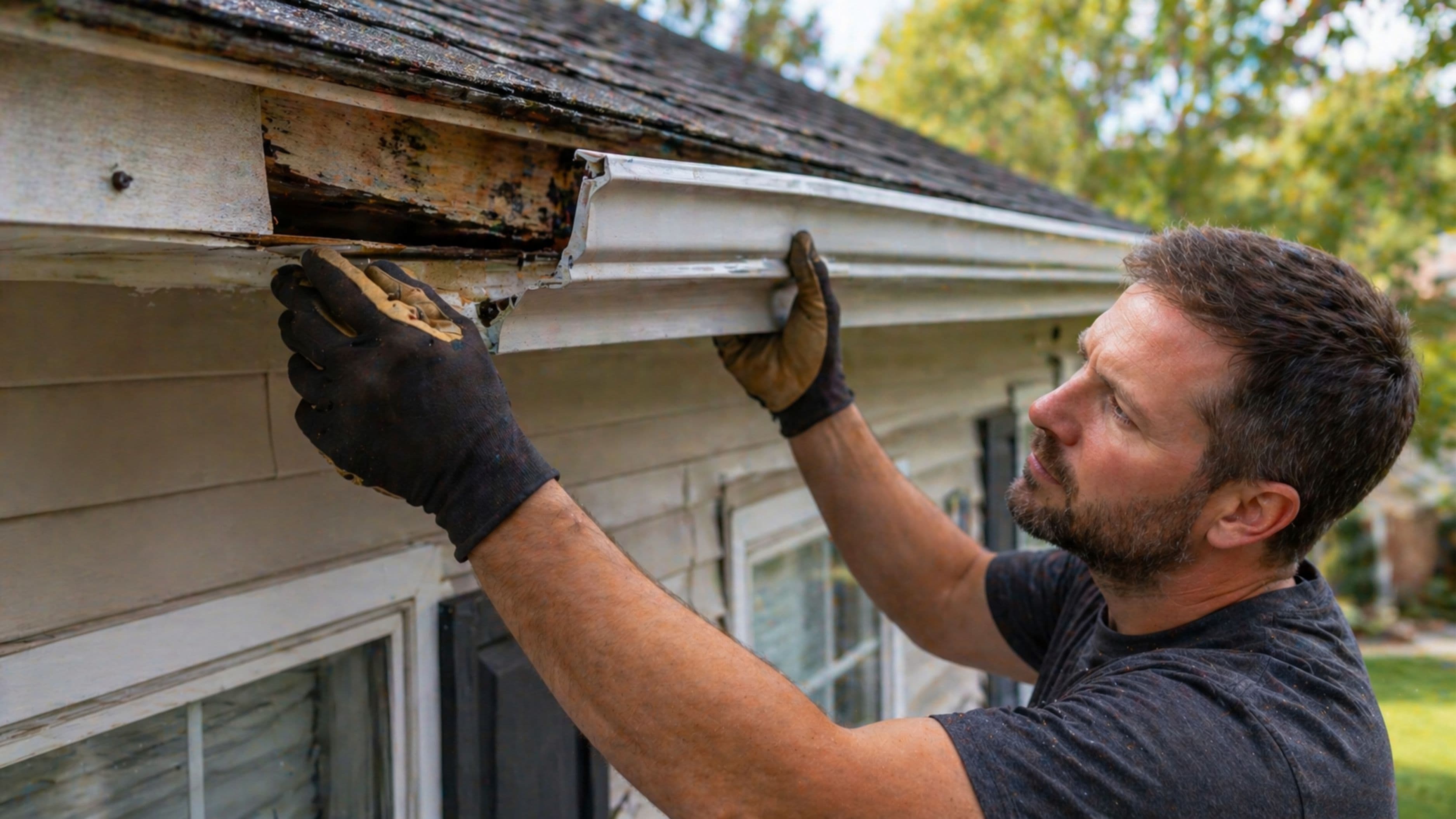
The good news is that most cases of gutters pulling away are fixable by an intermediate DIYer in an afternoon. The key is understanding what caused the separation in the first place, because the cause determines the fix. Rehang a gutter into rotted wood and it'll be back down within a season. Address the root cause first and the repair will last.
Why Gutters Pull Away: The Four Main Causes
Not all gutter separation looks the same, and not all of it has the same origin. Working out which situation you're dealing with before you grab tools saves a lot of frustration.
Worn-out or failed fasteners. The most common cause, especially in homes built before the late 1990s, is the original fasteners simply reaching the end of their useful life. Older gutters were typically secured with long gutter spikes driven through a sleeve and into the fascia and rafter tail. Over time, the wood expands and contracts with seasonal temperature changes, and those spikes gradually work themselves loose. Once they're backing out even slightly, the weight of water and debris in the gutter accelerates the process. You'll see this as a gradual outward tilt along a section of gutter, often with the spike still visibly present but no longer flush.
Rotted or deteriorating fascia board. If the wood the fasteners are anchored into has softened from water damage, no fastener will hold regardless of its quality. Fascia rot typically develops from one of two places – either the gutter itself was overflowing or leaking at a seam and directing water behind it over time, or the drip edge flashing was improperly installed (or missing entirely) and allowed water to wick back onto the fascia from the roof edge. You'll usually spot rotted fascia by pressing on it – it feels soft or spongy – or by seeing dark discoloration and surface degradation even after the gutter is moved aside.
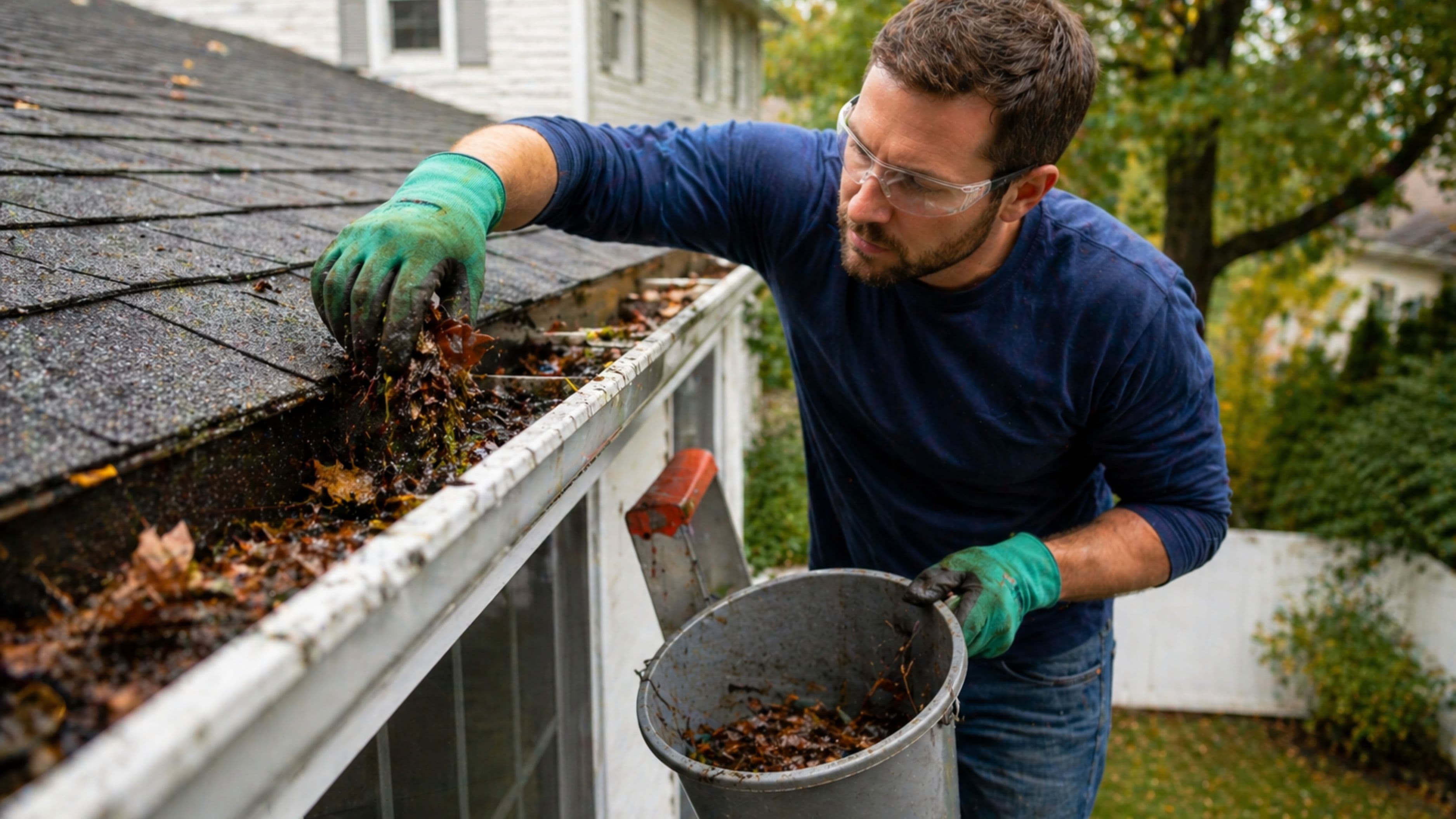
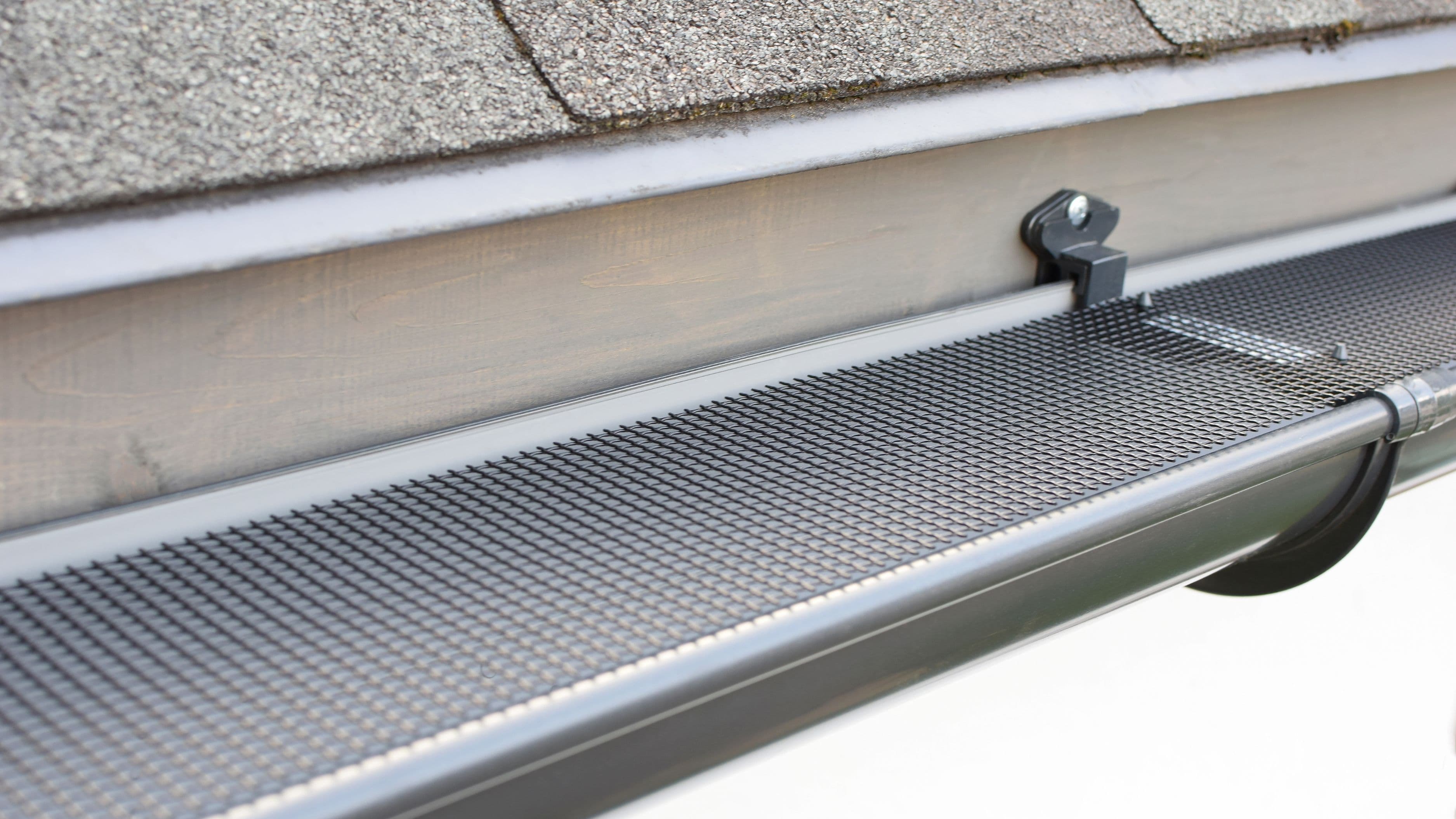
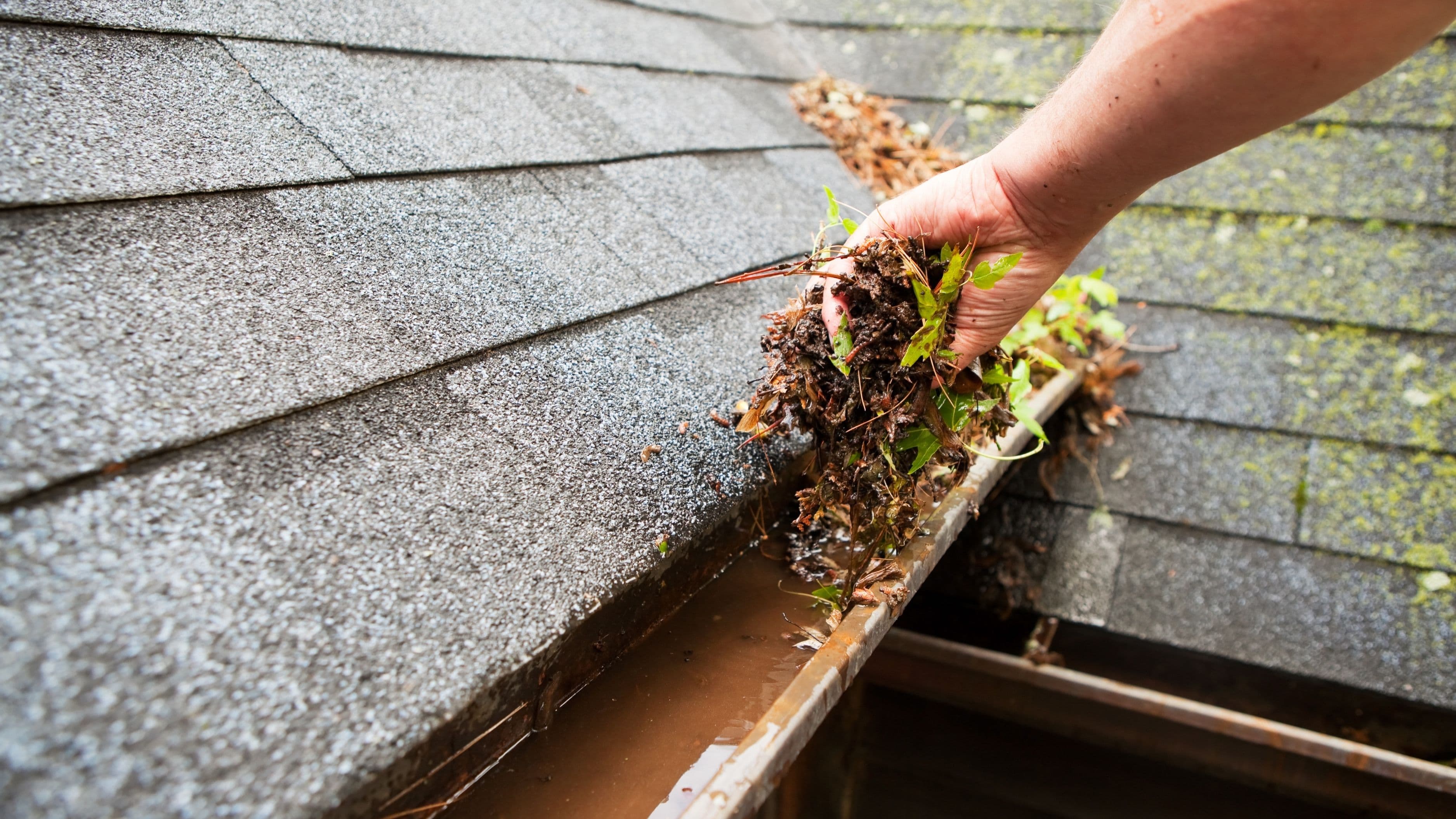
Debris weight and clogged gutters. Gutters full of wet leaves and packed debris weigh significantly more than most people expect. A linear foot of aluminum gutter filled with wet debris can hold several pounds of load the system wasn't designed to sustain. Over time, that sustained weight load pulls hangers away from the fascia even when the wood and fasteners are otherwise sound. This is the most preventable cause – regular cleaning eliminates it entirely.
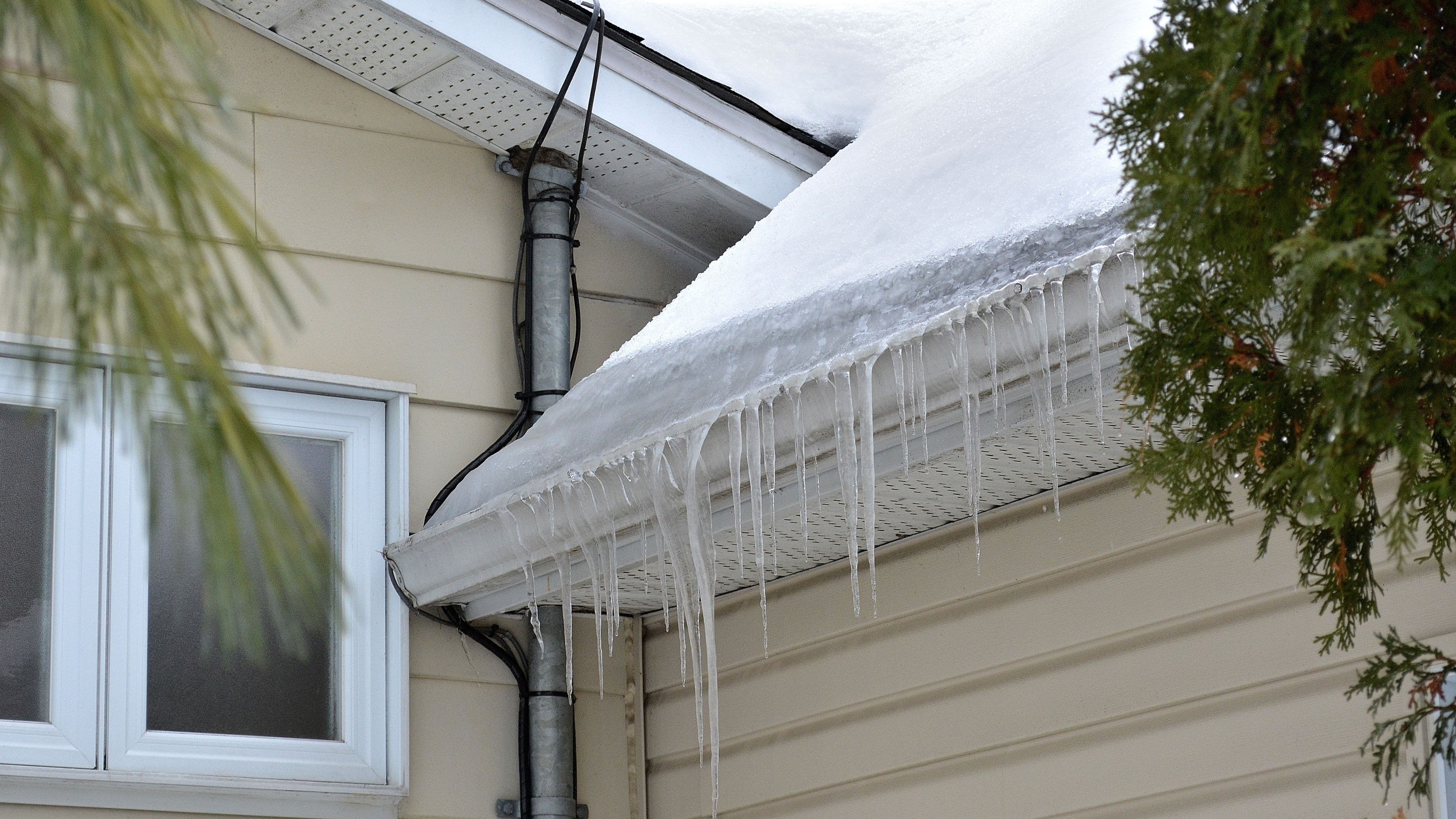
Ice dams in cold climates. In regions with harsh winters, ice formation in gutters creates enormous outward force as the ice expands. A single significant ice dam can bend gutters, tear hangers out of solid wood, and deform the gutter profile in ways that prevent it from re-seating properly even after the ice melts. If you're in a cold climate and your gutter separation started or worsened after a bad winter, ice loading is likely a contributing factor.
Assessing the Damage Before You Start
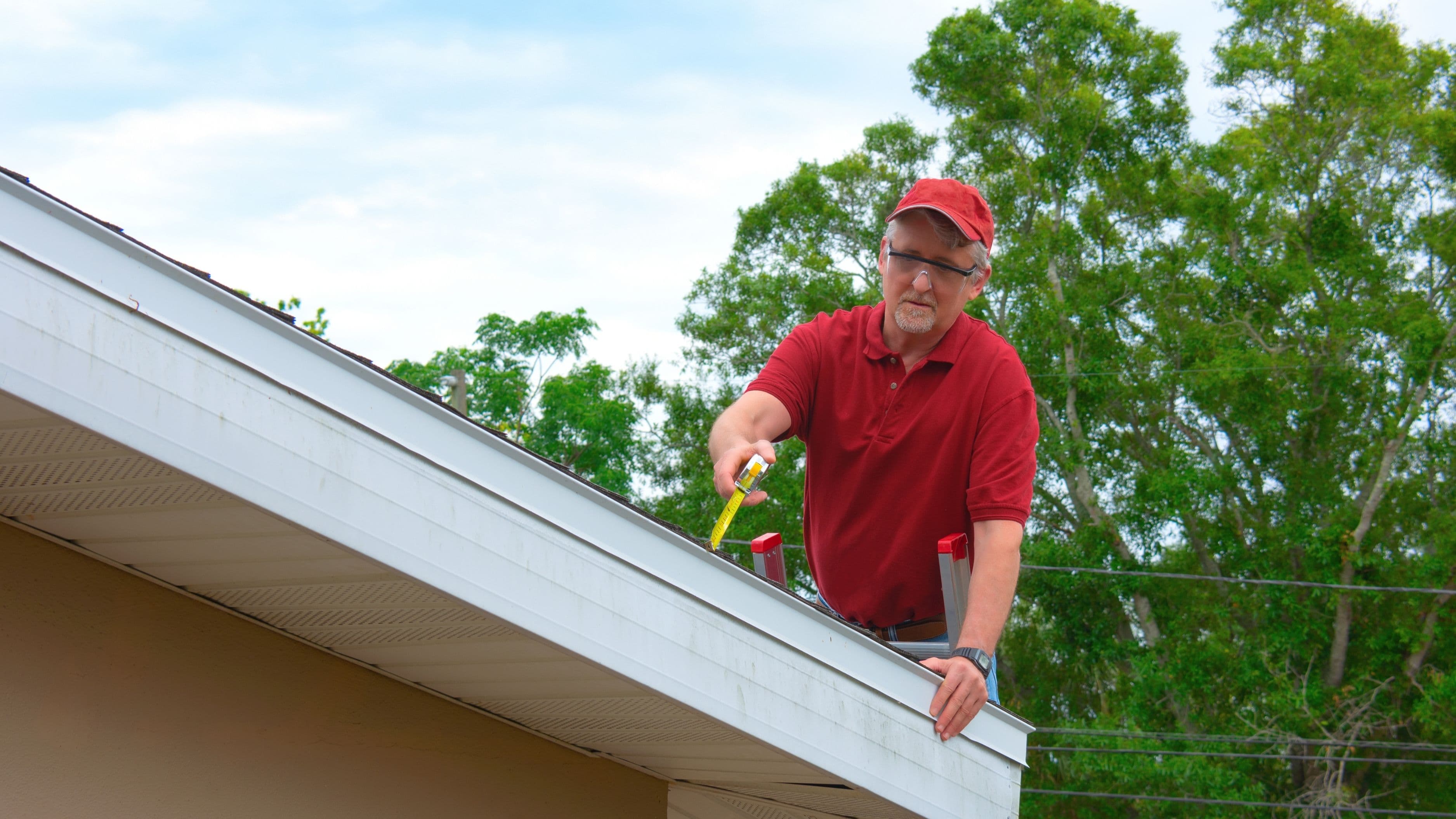
Get a ladder up and take a close look at the situation before buying anything or starting work. What you find will determine your next steps completely.
First, check the fascia board. Press firmly on the wood in the area where the gutter is pulling away. Solid wood resists pressure cleanly. Rotted wood compresses, crumbles, or feels noticeably softer than the surrounding material. Run your finger along the bottom edge of the fascia where it meets the gutter – this is usually the first place rot develops. If the fascia is sound, you're looking at a fastener replacement job, which is straightforward. If the fascia is soft in spots, you'll need to address that before re-hanging, and depending on the extent, that may push this into professional territory.
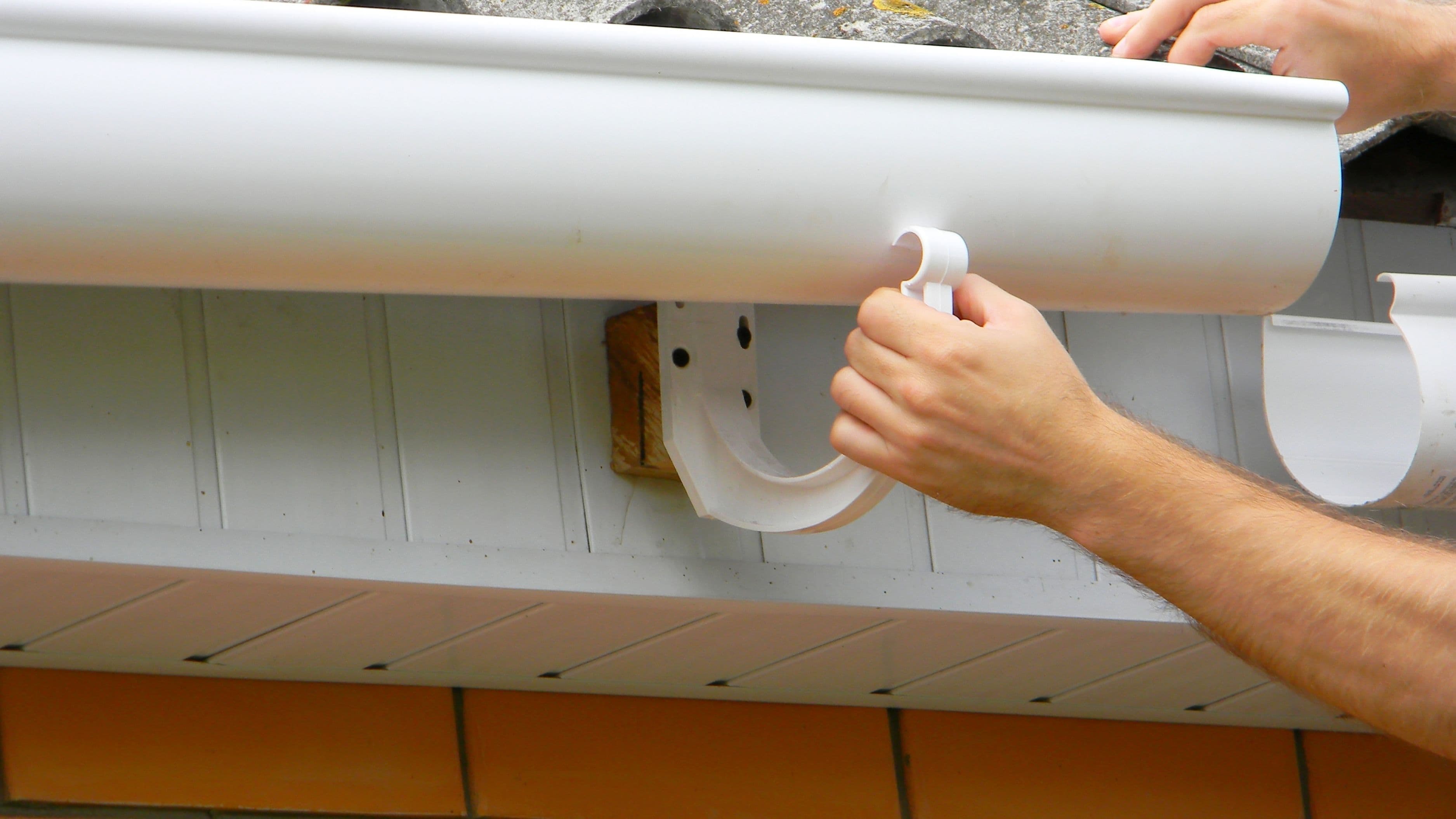
Second, look at the existing fasteners. Are they spikes (long nails with a cylindrical sleeve) or are they hanger brackets screwed into the fascia? Spikes are the old standard and they're exactly what you want to replace with screws. Hanger brackets in good wood that have simply loosened are easier to address – sometimes a stripped screw hole is the only issue, which can be fixed with a longer screw or a dowel-and-screw repair.
Third, check the gutter profile itself. Has the gutter bent or distorted where it's pulling away? Aluminum gutters that have been under load stress sometimes develop a bend or kink at the separation point. Minor distortion can usually be bent back by hand. Significant deformation means that section of gutter may need replacement even if the fascia and fasteners are fine.
The Fix: Replacing Spikes With Gutter Screws
If your fascia is solid and your gutters were originally hung with spikes, replacing them with hex head gutter screws is the correct repair and one of the most durable upgrades you can make to an aging gutter system. Gutter screws are 7-inch hex head screws that thread directly into the fascia and rafter tail, passing through the existing sleeve left by the removed spike. They hold dramatically better than spikes because wood grips threaded fasteners far more securely than smooth nails, and they don't back out over time the way spikes do.
You'll need a drill with a hex driver bit, a pack of 7-inch gutter screws (available at any hardware store, typically around $10–$15 for a box of 50), your ladder, a ladder stabilizer, and work gloves. Plan for roughly one screw every 24–36 inches along each gutter run, replacing every spike you find.
Working from the ladder with the stabilizer in place – not leaning against the gutter – remove the original spike by pulling it out with pliers or a pry bar. The sleeve usually stays in place, which is fine. Drive the gutter screw through the sleeve hole from the outside of the gutter, through the front of the gutter channel, through the sleeve, and into the fascia and rafter tail beyond. Use firm, steady drill pressure. The screw should draw the gutter snugly back against the fascia as it seats – don't overtighten to the point of deforming the gutter profile, but it should be snug with no play.
If you find a location where the spike backed out and the hole in the fascia is stripped or oversized, use a longer 10-inch gutter screw to reach past the damaged wood and into solid material. Alternatively, squirt some wood epoxy filler into the hole, let it cure overnight, and drive the standard screw into the hardened filler the next day.
The Fix: Addressing Rotted Fascia
If you found soft spots in the fascia, the priority shifts to the wood repair before any gutter re-hanging happens. How extensive the repair needs to be depends on how far the rot has spread.
For localized soft spots where the surrounding wood is still solid, a two-part epoxy wood filler (such as Bondo Wood Filler or LiquidWood from Abatron) can consolidate and replace the damaged material without full board replacement. Clean out any truly punky, crumbling wood material, apply a wood hardener to the remaining soft fibers, let it cure, then fill the void with the two-part epoxy and shape it while it's still workable. Once fully cured, it's paintable and accepts screws like solid wood. For a single hanger location, this repair takes about an hour and costs under $25 in materials.
For fascia rot that extends along a significant stretch of board, full fascia replacement is the cleaner and more permanent solution. Fascia boards are typically 1x6 or 1x8 pine or cedar – both are available at any lumber yard. The job involves removing the gutter section, prying off the old fascia, cutting and fitting the new board, priming and painting before installation (critical – bare fascia exposed to rain before painting is how you end up back in the same situation), and re-nailing or screwing it to the rafter tails. This is a full half-day project for a DIYer comfortable on a ladder, and the materials cost $20–$60 per section depending on wood choice and length.
If rot has spread behind the fascia into the rafter tails or soffit framing, that's structural repair territory and worth getting a carpenter's assessment before proceeding on your own.
Re-hanging the Gutter and Checking the Pitch
Whether you've replaced fasteners in sound wood or repaired the fascia first, the final step is confirming the gutter is hanging at the right pitch before you call the job done. Gutters should slope toward the downspout at roughly 1/4 inch of drop per 10 feet of run. Too flat and water pools and stagnates. Too steep and the far end sits visibly low and looks wrong.
Use a level or a string line along the top of the gutter to check the pitch before driving all your screws home. If the section you've been working on has sagged below the correct line, set the first screw at the high end at the correct height, run a string to the downspout end, and use that line to position each subsequent hanger at the right height. It takes an extra few minutes but ensures the gutter actually drains properly after the repair.
What to Avoid
Don't reuse the original spikes. If they backed out once, they'll back out again – possibly faster because the holes are already slightly enlarged. The upgrade to gutter screws costs less than $20 and lasts indefinitely in sound wood.
Don't skip the fascia inspection because it looks fine from a distance. Rot that's only in the layer immediately behind the gutter is invisible until you're close. The few minutes it takes to check before starting a repair can save you from re-doing the job in six months.
Don't drive screws into wood that still feels soft or spongy even after the visible rot is removed. Soft wood won't hold a screw under load. Either do the epoxy consolidation repair first or replace more of the board until you're anchoring into solid material.
When to Call a Pro
If the fascia rot extends to the rafter tails, if the soffit above the fascia shows signs of water damage, or if the gutter separation is happening in multiple locations across the full length of the house, a contractor assessment is worth the investment. These situations can point to a systemic drainage problem – improperly installed drip edge, inadequate gutter sizing for the roof area, or a roof drainage issue that's been directing water against the fascia for years. Fixing the gutters without finding that source means you'll be doing the same repair again.
FAQ
How much does it cost to fix gutters pulling away from the house? For a fastener-only repair using gutter screws, expect to spend $15–$30 in materials per section if you're doing it yourself. If fascia replacement is needed, add $50–$100 in materials for a typical section.
Professional gutter re-hanging runs $150–$400 depending on linear footage and whether fascia work is needed.
Can I just push the gutter back and caulk it to the fascia? No. Caulk or sealant is not a structural fastener. It won't hold the weight of the gutter and will fail within one season. The gutter needs to be mechanically fastened to solid wood.
How do I know if my gutter needs replacing versus just re-hanging? If the gutter profile is significantly bent or kinked at the separation point, if there are multiple cracks or splits in the metal, or if the seams are failing in several locations, replacement is often more cost-effective than repeated repairs. A gutter that's structurally sound but just poorly fastened is always worth re-hanging.
What's the difference between gutter hangers and gutter spikes? Gutter spikes are long nails that pass through a cylindrical sleeve inside the gutter and nail into the fascia – effective initially but prone to backing out. Gutter hangers (or hanger brackets) are hidden clips that attach to the back of the gutter and screw directly into the fascia, providing a stronger and more adjustable connection. Most modern gutter installations use hanger brackets; older homes typically have spikes.
Does homeowner's insurance cover gutter damage? It depends on the cause. Damage from a sudden event like a fallen tree or severe ice storm is often covered under standard homeowner's policies. Damage from gradual deterioration, deferred maintenance, or rot is typically excluded. Check your policy specifics and photograph the damage before beginning repairs if an insurance claim is a possibility.
A gutter pulling away from the fascia is one of those repairs that looks intimidating from the ground but turns out to be very manageable once you're up close with the right tools. In most cases, a box of gutter screws and a Saturday morning is all it takes to fix a problem that's been getting worse with every rainfall. Catch it early and you're looking at a $20 repair. Ignore it long enough and you're looking at fascia replacement, siding repair, and potentially foundation drainage work. The math on acting now is pretty straightforward.
📚 Sources
This Old House – How to Rehang Gutters: https://www.thisoldhouse.com/gutters/21015455/how-to-rehang-gutters
Family Handyman – Gutter Repair: Fix Gutters Yourself: https://www.familyhandyman.com/project/gutter-repair/
Bob Vila – How to Repair Fascia Board: https://www.bobvila.com/articles/how-to-replace-fascia-board/
University of Minnesota Extension – Ice Dams: https://extension.umn.edu/protecting-your-home/ice-dams
Fine Homebuilding – Fascia and Soffit Repair Basics: https://www.finehomebuilding.com/2007/02/01/repairing-fascias-and-soffits
Abatron – LiquidWood and WoodEpox Wood Repair Products: https://www.abatron.com/woodepox