Why This Actually Matters
Beyond the obvious tripping risk, poorly managed cords cause real wear and tear that shortens their life and increases fire risk. A cord that's constantly bent at a sharp angle, pinched under a rolling tool cart, or coiled too tightly develops internal damage long before it looks frayed on the outside. Add sawdust, moisture, and the general chaos of an active workshop, and you've got a setup where a damaged cord is more likely to go unnoticed until it actually fails.
There's also a simple efficiency angle here. A workshop where cords are organized and predictable means less time hunting for the right extension lead buried under a bench, and less frustration mid-project when you have to stop and rearrange cords just to get a tool plugged in.
Step-by-Step: Setting Up a Better System
Step 1: Map your actual power needs. Walk your workshop and note where your main tools live and where the nearest outlets are. This tells you where you genuinely need permanent or semi-permanent extension runs versus where you're just dealing with occasional, movable needs.
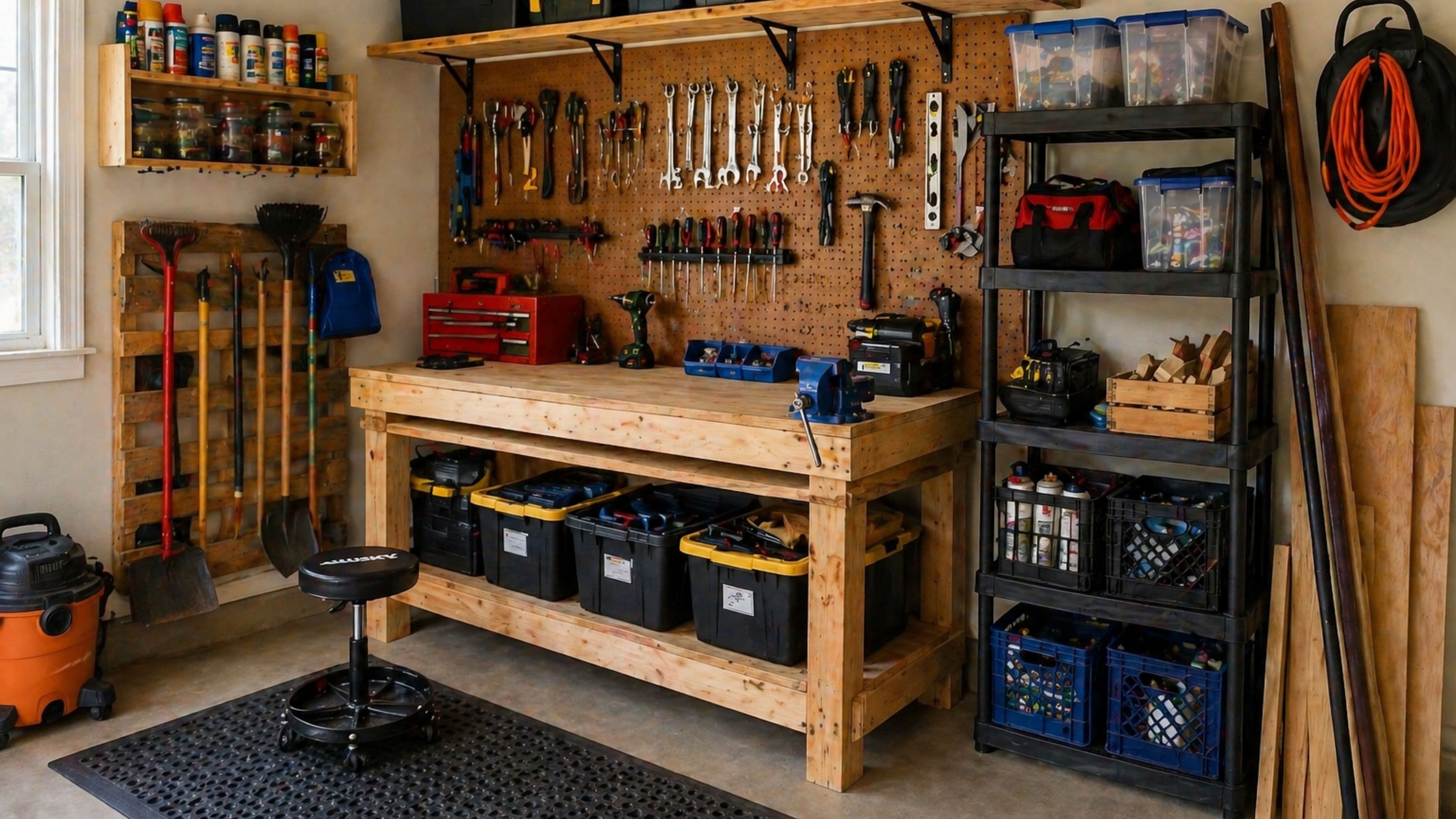
Step 2: Install a power strip or outlet rail at bench height. Mounting a surge-protected power strip along the front edge of your workbench, rather than running cords down to a floor outlet, cuts out a huge number of trip hazards immediately. Many hardware stores carry bench-mount or under-shelf power strips designed exactly for this.
Step 3: Route cords along walls, not across floor paths. Use cable clips or adhesive cord organizers to run extension leads along baseboards or up walls to reach tools, rather than letting them cross open floor space where you or a cart will walk.
Step 4: Use a cord reel for longer or occasional runs. For larger tools that move around (like a shop vac or a portable saw station), a retractable cord reel keeps excess length wound up and out of the way instead of pooling in loops on the floor.
Step 5: Color-code or label cords by circuit or use. If you're running multiple extension leads to different areas, a simple label or colored tape at each end makes it much faster to trace a specific cord back to its outlet, especially useful when troubleshooting a tripped breaker.
Step 6: Store unused cords properly, not just coiled on the floor. A wall-mounted hook, a cord caddy, or even a simple bucket with holes cut in the lid for cords to feed through keeps unused extension leads from becoming clutter or another tripping hazard.
Safety Notes
Never daisy-chain multiple extension cords together to reach a distant outlet – this increases voltage drop and heat buildup, both of which raise fire risk. If a single cord isn't long enough, invest in one properly rated cord of the correct length instead. Also check that any extension cord you're using for shop tools is rated for the amperage those tools draw; a light-duty indoor extension cord isn't built for a table saw or air compressor and can overheat under that load.
Keep cords away from any water sources or areas where sawdust regularly accumulates, since both moisture and fine dust buildup around outlets and plugs increase fire risk over time. If your workshop is in a garage or unfinished space, a cord specifically rated for outdoor or damp-location use adds an extra safety margin.
Common Mistakes to Avoid
Avoid running cords under rugs, mats, or rolling tool carts, where they can be crushed and damaged without any visible warning sign. It's also worth avoiding overloading a single outlet or power strip with too many high-draw tools at once – check the wattage or amperage rating on your power strip against what you're actually plugging in, since exceeding it is a common and underestimated fire risk in home workshops.
Don't ignore small signs of wear, like a warm plug, a slightly melted-looking outlet cover, or a cord that's stiffer or cracked near the ends. These are early warning signs worth addressing immediately rather than waiting for an obvious failure.
When to Call a Professional
If your workshop regularly needs more outlets than your current wiring can handle, or if you're finding that circuits trip frequently under normal use, that's a sign the space may need additional dedicated circuits rather than more extension cords. This is a job for a licensed electrician, since improperly added circuits or overloaded existing wiring are genuine fire hazards that go well beyond what cord management alone can fix.
FAQ
How many extension cords is too many in one workshop? There's no strict number, but if you find yourself relying on more than two or three extension leads regularly for fixed-location tools, it's worth considering adding permanent outlets or a dedicated circuit instead.
Are retractable cord reels safe for shop tools? Yes, as long as the reel is rated for the amperage of the tool you're using and the cord is fully unwound during use – a coiled cord under load can overheat even if the tool itself draws a normal amount of power.
What gauge extension cord do I need for power tools? Heavier-draw tools like table saws or compressors typically need a 12-gauge cord for longer runs, while lighter tools can often use a 14-gauge cord safely. Checking the tool's amperage rating against the cord's rated capacity is the reliable way to confirm.
Bottom Line
Good cord management in a workshop isn't about buying a lot of gear – it's about a handful of deliberate choices: bench-height power access, wall-routed cords instead of floor clutter, proper storage for what's not in use, and a habit of checking for wear before it becomes a real hazard. A weekend spent setting this up properly pays off every single time you walk into the shop afterward.
📚 Sources
U.S. Consumer Product Safety Commission – Extension Cord Safety. cpsc.gov
OSHA – Electrical Safety in the Workplace. osha.gov
National Fire Protection Association – Electrical Safety in the Home. nfpa.org
🔍 Explore Related Topics