
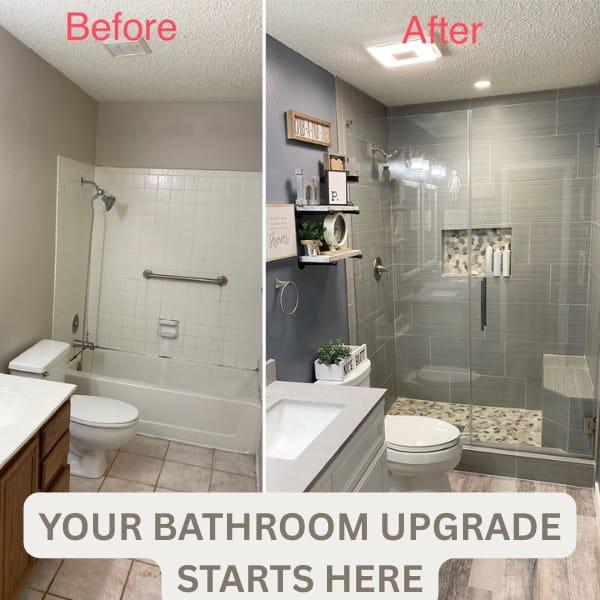
That moment stayed with me. I didn’t need a luxury spa or a massive budget—I just needed a space that felt calm when life felt noisy. What started as a simple update slowly became a lesson in how much our environment shapes our mood, energy, and daily routines.
1. Small spaces can still feel luxurious
At first, I believed a stylish bathroom required endless square footage. But the biggest transformation came from smarter design choices, not extra space. Once I removed bulky storage and simplified the layout, the room immediately felt lighter and more open.
Modern floating vanities, wall-mounted shelves, and frameless glass showers create visual breathing room. The eye moves more freely, making even compact bathrooms feel airy and elegant. Sometimes luxury is less about size and more about how effortlessly the room flows.
2. Lighting changes everything
The old overhead light in my bathroom felt sharp and unforgiving. Every morning started under a glare that drained the room of warmth. Replacing it with layered lighting completely shifted the atmosphere.
Soft wall sconces beside the mirror created a gentle glow, while dimmable lights added flexibility in the evenings. Suddenly, the space felt calm instead of clinical. The warm lighting wrapped around the room like a quiet exhale after a long day.
3. Natural textures bring instant calm
One of the most noticeable improvements came from introducing natural materials. Wood accents, stone textures, and woven baskets softened the room in subtle but powerful ways. The bathroom stopped feeling cold and started feeling grounded.
Natural elements create sensory balance. Smooth wood, cool stone, and soft cotton towels make the room feel layered and comforting. It’s the difference between a space you rush through and one where you actually pause for a moment.
4. Clutter quietly creates stress
I underestimated how much visual clutter affected my mood. Bottles crowded every corner, drawers overflowed, and nothing had a proper place. Even when the bathroom was technically clean, it still felt chaotic.
Hidden storage completely changed that experience. Minimal countertops and organized cabinets created a sense of calm the second I entered the room. Clear space often creates a clearer mind.
5. Walk-in showers feel modern and freeing
Replacing an old shower curtain with a frameless glass shower instantly modernized the space. The room felt brighter because light could travel uninterrupted across the bathroom. That openness made the entire layout feel larger.
Walk-in showers also create a cleaner, spa-inspired look. Large tiles, rainfall showerheads, and seamless glass panels add elegance without overwhelming the design. The result feels polished but still inviting.
6. Neutral colors create emotional breathing room
At one point, I considered bold colors everywhere. But I quickly realized that soft neutrals created the peaceful atmosphere I actually wanted. Shades like warm white, soft gray, beige, and muted earth tones made the space feel calm and timeless.
Neutral palettes reflect light beautifully and reduce visual noise. They create a quiet backdrop that allows textures and details to stand out naturally. Walking into the room began to feel like stepping into stillness.
7. Mirrors do more than reflect
A larger mirror completely transformed the bathroom. It reflected more light, visually doubled the space, and added a sleek modern touch. Suddenly, the room felt more open without changing the footprint at all.
Mirrors also influence mood in subtle ways. A well-placed mirror brightens darker corners and creates softness throughout the room. It’s one of the simplest upgrades with one of the biggest visual impacts.
8. Matte finishes feel surprisingly elegant
Glossy chrome once dominated bathroom design, but switching to matte finishes changed the entire mood of the room. Matte black fixtures added depth, while brushed gold introduced warmth without looking flashy.
These finishes feel softer and more modern to the eye. They create understated sophistication instead of overwhelming shine. Even small details like faucets and towel bars started feeling intentional.
9. Plants make bathrooms feel alive
Adding greenery instantly changed the energy of the room. A small eucalyptus bundle near the shower and a leafy plant on a shelf brought freshness and softness into the space. The bathroom suddenly felt connected to nature.
Plants also improve the sensory experience. The subtle scent of eucalyptus in warm steam creates a spa-like atmosphere that feels deeply calming. Those little touches quietly elevate everyday routines.
10. Heated elements add comfort you didn’t know you needed
I never realized how much cold floors affected my mornings until I experienced heated flooring. Stepping onto warm tile during winter felt unexpectedly comforting. It changed the emotional tone of the space immediately.
Heated towel racks added another layer of comfort. Wrapping yourself in a warm towel after a shower creates a small but memorable luxury. These details make daily routines feel softer and more intentional.
11. Floating vanities create modern flow
Traditional vanities can feel heavy and bulky. Switching to a floating vanity opened up visible floor space and gave the room a cleaner appearance. The bathroom instantly felt more modern and breathable.
That open space underneath creates visual lightness. It also makes cleaning easier and helps smaller bathrooms feel less crowded. Simple changes in structure can dramatically shift how a room feels.
12. Texture matters more than people realize
The most beautiful bathrooms often rely on texture instead of excessive decoration. Soft towels, stone sinks, textured tiles, and matte surfaces create quiet visual depth. The room feels rich without feeling busy.
Layered textures also create warmth. Smooth ceramic against woven baskets or soft fabrics against cool tile adds balance to the design. These subtle contrasts make the space feel complete.
13. Smart storage creates peace
Once every item had a designated place, the room felt calmer almost instantly. Drawer organizers, recessed shelves, and vertical storage eliminated the constant sense of disorder. The bathroom became easier to maintain daily.
Good storage quietly improves your routine. You spend less time searching and more time simply enjoying the space. That efficiency reduces stress in ways that build over time.
14. Statement pieces work best when balanced
At one point, I tried adding too many trendy elements at once. The result felt cluttered rather than stylish. Eventually, I realized that one standout feature works far better than several competing ones.
A dramatic mirror, unique tile wall, or sculptural sink can anchor the entire design. When surrounded by simpler elements, it feels intentional and elegant. Balance often creates more impact than excess.
15. Relaxation should guide every decision
The biggest lesson from the renovation had nothing to do with tile or paint. It was realizing that a bathroom should support how you want to feel. Every choice—from lighting to storage—should contribute to comfort and ease.
When the space finally came together, mornings felt calmer and evenings more restorative. The room stopped being purely functional and became a place to pause, reset, and breathe for a moment.
Conclusion
Looking back, renovating my bathroom wasn’t really about creating something perfect. It was about creating a space that felt lighter, calmer, and more supportive of everyday life.
Modern bathroom design works best when it blends beauty with emotional comfort. Small changes—better lighting, softer textures, smarter storage—can completely shift how a room feels without requiring a massive overhaul.
In the end, the most valuable renovation isn’t always the most dramatic one. Sometimes it’s simply creating a space that helps you feel more at ease every single day.
📚 Sources
Houzz Bathroom Trends Study – Design and Renovation Insights
National Kitchen & Bath Association (NKBA) – Bathroom Design Trends Report
Harvard Joint Center for Housing Studies – Home Remodeling Report
U.S. Department of Energy – Efficient Lighting and Home Upgrade Guide