
This comparison cuts through the overlap and gives you a straight answer on which one makes more sense for your garage, your tools, and your budget.
What Each System Actually Is
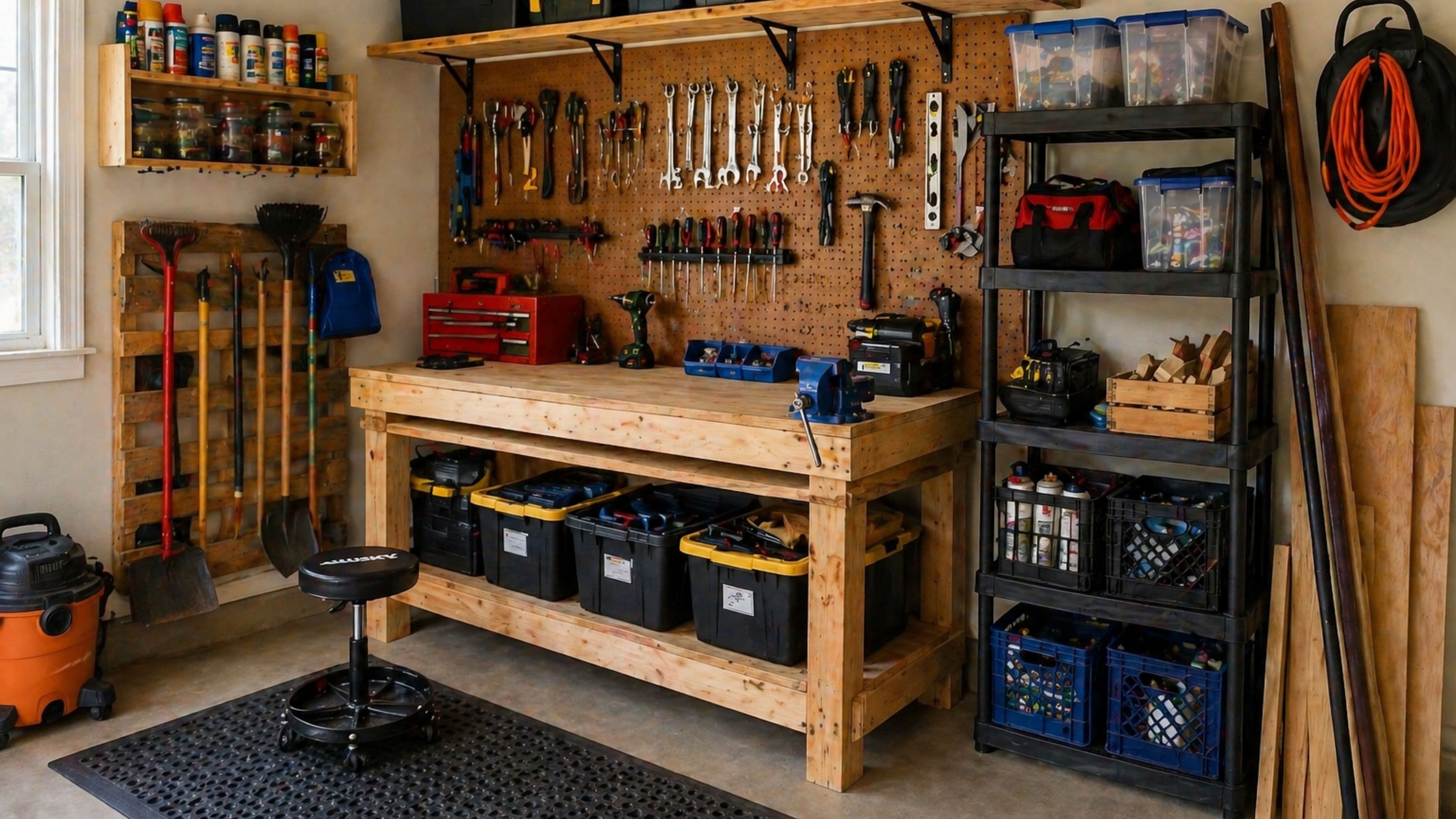
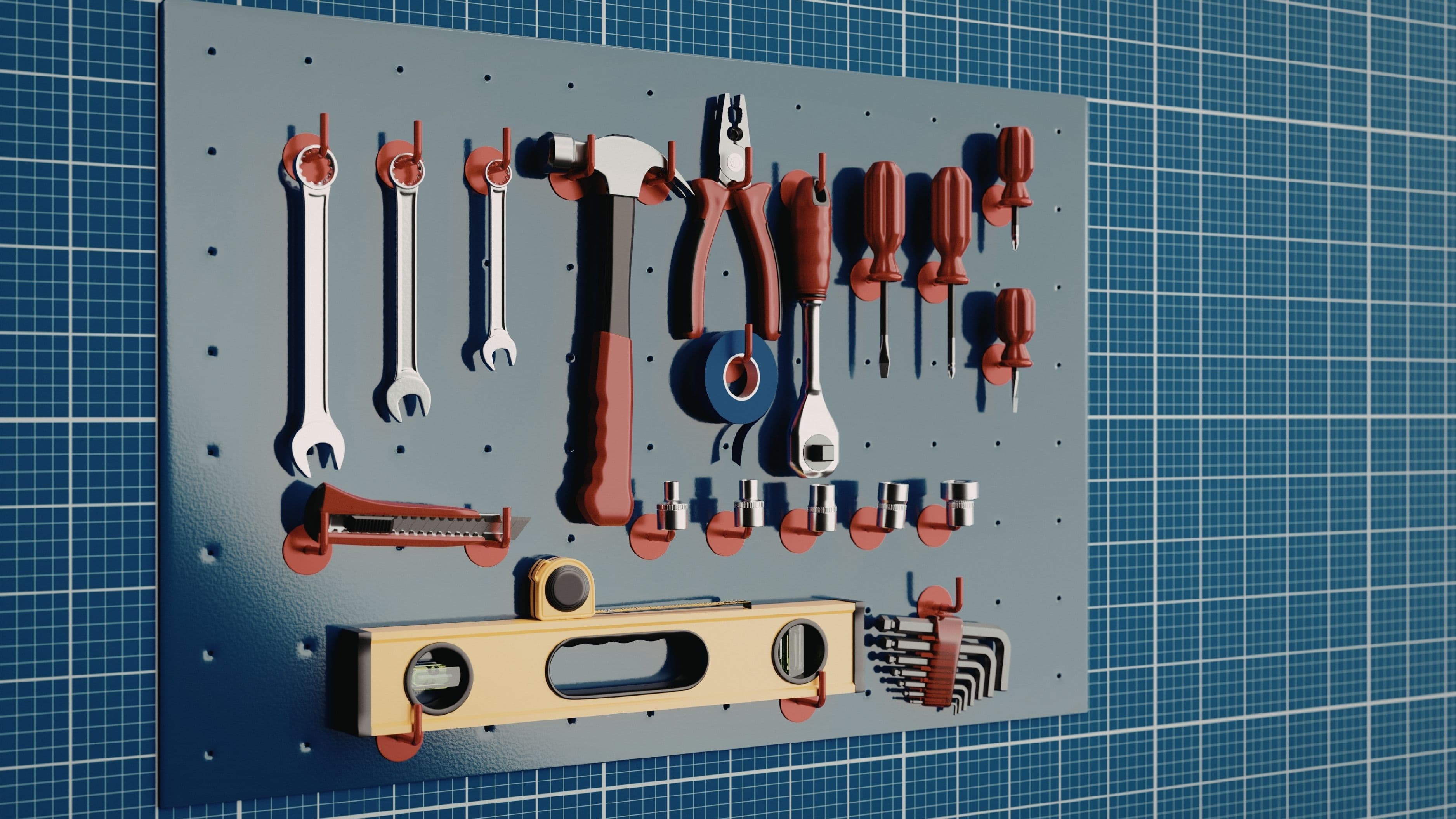
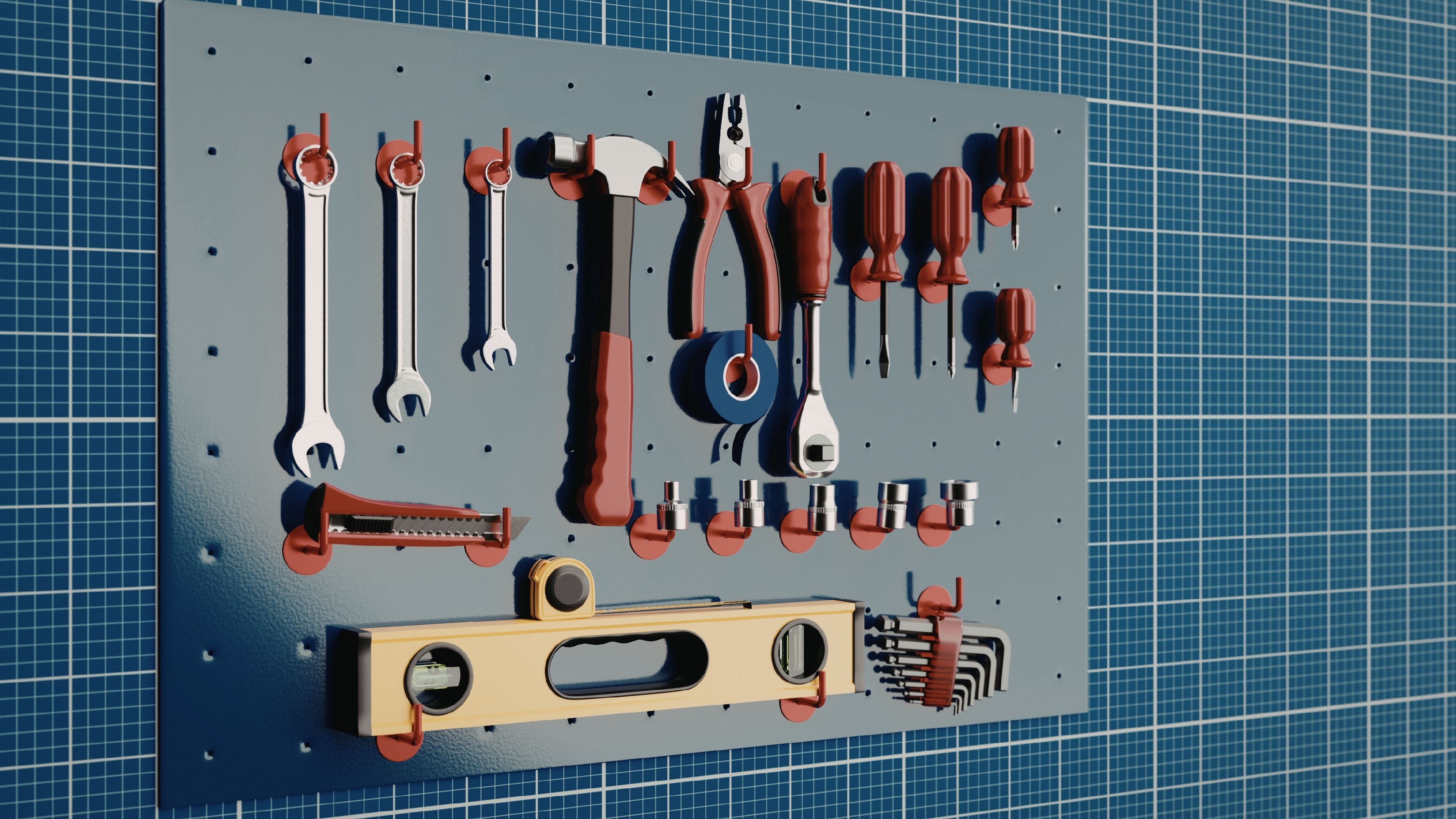
Pegboard is a rigid panel, typically made from hardboard (sometimes MDF or thin plywood), with a grid of evenly spaced holes – usually spaced one inch apart – punched across the surface. Hooks and accessories slot into those holes and lock into place with a small clip or friction fit. It's been around since the 1950s and is one of the most recognizable workshop storage solutions available. A standard 4×4 foot panel at a hardware store costs $10 to $20. The accessories – hooks in various shapes, bins, holders, shelves – are cheap and widely available.
Slatwall is a different animal. It's a panel system made from MDF or PVC with horizontal grooves cut into the surface at regular intervals – typically three to four inches apart. Accessories hook into those grooves and slide horizontally along the panel, which gives them adjustability across the full width of the board. Slatwall panels cost significantly more – typically $30 to $80 per panel for standard 4×4 foot sections, and more for PVC versions. The accessories are also more expensive than pegboard equivalents.
Both systems require wall mounting, and both can hold a similar range of tool storage accessories. That's roughly where the similarity ends.
Pegboard: The Full Picture
Pegboard's biggest advantage is cost and availability. You can walk into any hardware store in the country and pick up pegboard panels and accessories for a fraction of what slatwall costs. For someone setting up a modest tool organization system in a one-car garage, the price difference alone can be $150 to $300 or more. That's a real number.
The hole-grid system is also highly flexible. There are hundreds of pegboard hook styles available – L-hooks, J-hooks, double hooks, flat hooks, multi-prong holders, shelf brackets, bin attachments, magnetic strips that mount to pegboard, and specialized holders for everything from wrenches to spray cans to extension cords. If you need a specific type of hook, it probably exists in a pegboard format, and it probably costs $1 to $3.
The limitation that frustrates people most about pegboard is that hooks move. Unless you use locking clips – small plastic clips that snap onto the back of a hook to hold it in place against the board – hooks shift around or fall out when you remove a tool with any sideways motion. The clips solve this but add a small amount of setup friction. Over time, the holes in standard hardboard pegboard can also wear and enlarge slightly with heavy use, reducing the grip on hooks. This is mostly a concern for heavy tools stored for years; lighter tools and regular accessories hold fine.
Pegboard also requires a gap between the panel and the wall – typically 3/8 to 1/2 inch – so that hook clips can engage the back of the board. If you mount it flat against the wall, the hooks won't work. Most hardware stores sell pegboard mounting hardware that builds this spacer in, or you can use 1×2 lumber furring strips around the perimeter. It's not complicated, but it's a step that catches beginners off guard.
In terms of weight capacity, standard hardboard pegboard can typically support around 100 pounds when properly anchored into studs, distributed across multiple hooks. For most hand tool storage, that's plenty. Heavy power tools or large amounts of weight concentrated in one spot are a different story.
Pegboard works best for: Budget-conscious setups, smaller garages, lighter tool collections, homeowners who like to rearrange their storage layout frequently, and workshops where accessibility and variety of accessories matter more than appearance.
Slatwall: The Full Picture
Slatwall's primary advantage is structural rigidity and hook security. Because accessories slide into grooves rather than poking through holes, they stay locked in place when you pull tools off with a lateral motion. There's no hook drift, no falling out, no need for locking clips. The horizontal groove system means you can position accessories anywhere along the panel width, not just at one-inch grid intervals, which gives you genuinely smooth layout flexibility.
The groove system also allows for heavier-duty accessories. Slatwall brackets and shelves are typically more robust than pegboard equivalents and can support more weight per attachment point. Slatwall panels themselves – particularly the PVC versions – are more moisture-resistant than hardboard pegboard, which matters in garages that see temperature swings, humidity, or occasional water intrusion. Standard hardboard pegboard absorbs moisture over time, which can cause warping and panel degradation in damp conditions.
PVC slatwall, in particular, is the preferred material for finished garages, showroom-quality setups, and spaces where appearance matters. It comes in a range of colors and finishes, holds up to cleaning easily, and won't warp or deteriorate over years of garage use. If you're doing a full garage renovation and want something that still looks good in ten years, PVC slatwall is the more durable long-term investment.
The weight capacity of properly mounted slatwall exceeds pegboard for most configurations. Heavy-duty slatwall panels anchored into studs can hold 50 to 75 pounds per linear foot of wall, making them appropriate for heavier tool sets, power tools, and equipment storage.
The downsides are straightforward: cost and accessory expense. A full slatwall setup for a two-car garage – panels plus accessories – can run $400 to $800 or more for quality materials. The accessories are proprietary in some systems, meaning you're buying from a specific manufacturer's ecosystem rather than picking up universal hooks at your local hardware store for $2 each. If you lose or break an accessory, finding a replacement can require ordering online rather than a quick hardware store run.
Slatwall works best for: Garages with finished walls, heavier tool collections, setups where moisture is a concern, homeowners investing in a long-term organized space, and anyone who wants a cleaner finished appearance.
Side-by-Side Comparison
Cost: Pegboard wins clearly. Standard pegboard panels and accessories cost roughly 30 to 50% of an equivalent slatwall setup. If budget is the deciding factor, pegboard is the answer.
Durability: Slatwall, especially PVC, wins. Standard hardboard pegboard degrades in damp or humid garage conditions. Slatwall handles moisture, cleaning, and heavy use better over the long term.
Appearance: Slatwall wins if aesthetics matter. Pegboard has a utilitarian, workshop look that's fine in a working garage but dated in finished or showroom-style spaces. Slatwall looks cleaner and more finished.
Hook and accessory security: Slatwall wins. Hooks stay in place without clips. Pegboard hooks require locking clips to prevent movement, which adds a minor but real setup step.
Accessory variety and availability: Pegboard wins. The universal hook system means thousands of compatible accessories from dozens of manufacturers, available at any hardware store. Slatwall accessories are more limited in variety and often brand-specific.
Weight capacity: Slatwall wins for heavy loads. Properly mounted slatwall handles heavier per-point loads than standard pegboard.
Ease of installation: Roughly equal. Both require stud mounting for meaningful weight capacity. Pegboard needs wall spacers; slatwall does not. Both are DIY-friendly with basic tools.
Moisture resistance: Slatwall (PVC) wins. Standard hardboard pegboard absorbs moisture; MDF slatwall is moderately better; PVC slatwall is significantly better.
The Hybrid Approach Worth Considering
Many homeowners end up using both, and that's not a bad call. Pegboard is an excellent choice for a workbench wall where you want a dense layout of frequently used tools at low cost and easy rearrangement. Slatwall makes more sense for a larger side wall where you want a cleaner look, heavier storage, or you're organizing bikes, larger equipment, or things that need more robust hook support.
If you're working with a limited budget and setting up your garage for the first time, starting with pegboard is a perfectly sensible decision. You can always add slatwall later for specific areas. The tools and skills used to install one transfer directly to the other.
What to Buy and Where to Start
For pegboard: Start with a 4×8 foot panel of standard hardboard pegboard ($15–$25 at Home Depot or Lowe's). Pick up a pegboard mounting kit or cut your own 1×2 spacers. Buy an assorted hook kit ($20–$30) to start and add specific accessories as you figure out what you need. Budget for locking clips – usually sold in packs of 25 or 50 – if you want hooks that stay put.
For slatwall: Budget more carefully. PVC slatwall panels from brands like NewAge Products, Organized Living, or Triton run $40 to $80 per panel. Plan your layout before buying accessories and buy them as a set. Avoid the cheapest MDF slatwall options for garages with humidity concerns – the price savings disappear quickly if panels warp within a few years.
For either system: Anchor into studs, not just drywall. Use a stud finder before mounting anything, mark your studs, and use appropriate lag screws or structural screws. A tool organization system that pulls off the wall under load is worse than no system at all.
Quick Decision Guide
Choose pegboard if:
You're on a tight budget
You have a basic hand tool collection
You want maximum accessory flexibility
You're okay with a utilitarian look
You rearrange your layout frequently
Choose slatwall if:
Your garage has humidity or moisture issues
You're storing heavier tools or equipment
You want a cleaner, more finished appearance
You're building a long-term organized space
Budget is less of a constraint
FAQ
Can I mount either system on drywall without hitting studs? Technically yes, with appropriate drywall anchors, but it's not recommended for any serious tool storage. Drywall anchors have meaningful weight limits that are easy to exceed with tools, and a panel that pulls out of the wall is a safety hazard. Always mount into studs for a tool storage system.
Does pegboard work in a garage with humidity or temperature swings? Standard hardboard pegboard is susceptible to moisture over time and can warp, swell, or degrade in consistently damp garages. If humidity is a concern, look for moisture-resistant pegboard options (some are available at hardware stores) or consider PVC slatwall instead. In a dry, climate-controlled garage, standard pegboard holds up well for years.
What's the actual installation difficulty for each? Both are genuinely DIY-friendly for someone comfortable with a drill and a stud finder. Pegboard installation takes 30 to 60 minutes for a single panel with spacers. Slatwall installation is similar but may involve more careful alignment of panels when covering a larger area. Neither requires specialized skills beyond basic carpentry.
Can I paint pegboard to match my garage walls? Yes. Painting pegboard is straightforward – a coat of primer and then latex paint works well. Paint before installing and hang tools after the paint is fully cured. Painted pegboard looks cleaner and holds up slightly better than raw hardboard. Avoid filling the holes; paint around them.
Are slatwall accessories interchangeable between brands? Most slatwall systems follow a standard 3-inch groove spacing, which means accessories from different brands are often compatible. That said, some manufacturers use proprietary groove dimensions or hook profiles, so it's worth confirming compatibility before buying accessories from a different brand than your panels. When in doubt, buy accessories from the same manufacturer as the panels.
Both systems work. The question is which one works for your space, your budget, and your tools. For most homeowners doing basic garage organization on a reasonable budget, pegboard gets you 80% of the functionality at 40% of the cost. For a more serious or long-term setup where you want something that holds up over a decade and handles heavier loads cleanly, slatwall is worth the investment.
📚 Sources
Family Handyman. Pegboard Storage Ideas for the Garage. https://www.familyhandyman.com/list/pegboard-storage-ideas/
This Old House. How to Install Pegboard in a Garage. https://www.thisoldhouse.com/garages/21017898/how-to-install-a-pegboard-tool-organizer
The Spruce. Slatwall vs Pegboard for Garage Storage. https://www.thespruce.com/garage-wall-storage-systems-2908609
Bob Vila. Best Garage Wall Storage Systems. https://www.bobvila.com/articles/best-garage-wall-storage/
Popular Mechanics. How to Build the Ultimate Garage Storage Wall. https://www.popularmechanics.com/home/interior-projects/how-to/a6082/how-to-build-the-ultimate-garage-storage-wall/
NewAge Products. Slatwall Panel Installation Guide. https://www.newageproducts.com/garage/slatwall
Home Depot. Garage Storage Buying Guide. https://www.homedepot.com/c/buying_guide/garage-storage-buying-guide/9ba683603be9fa5395fab901f5b4ce1
Fine Homebuilding. Choosing the Right Garage Wall System. https://www.finehomebuilding.com/project-guides/garage/choosing-the-right-garage-wall-system
Lowe's. How to Install Pegboard. https://www.lowes.com/n/how-to/install-pegboard
Consumer Reports. Garage Organization Systems Rated. https://www.consumerreports.org/garage-storage/garage-storage-systems-review/