
The short answer: sometimes yes, often no, and always with the right tools and a strong focus on safety. Here's how to think through it and handle it correctly when removal does make sense.
Before You Do Anything: Assess Whether It's Worth It
The first question isn't "how do I remove the snow" – it's "should I bother?" Solar panels are designed to shed snow on their own. The dark surface of the panel absorbs heat even on cold days, and that small amount of warmth combined with even a modest slope causes most snow to slide off naturally, often within 24–48 hours of the snowfall stopping.
The cases where manual removal makes sense are narrower than most homeowners assume. If you're in the middle of a multi-day snowstorm with no sun in the forecast and you have a ground-mounted system or low-pitch roof panels you can safely reach, clearing them makes sense. If you're on a steep roof in icy conditions trying to rescue two days of partial sun production, the risk isn't worth it. A few days of reduced output won't affect your annual production in any meaningful way – falls from roofs absolutely will.
What You'll Need
For safe snow removal from solar panels, gather these before you start:
A roof rake with a soft foam or rubber head (specifically designed for solar panels or roofing)
A long extension handle – ideally one that lets you work from the ground
Non-slip footwear if you do go onto the roof
Safety harness and roof anchor if you're working on any pitched roof
A spotter on the ground if you're working at height
The single most important tool purchase here is a solar-panel-safe roof rake. Standard metal snow rakes will scratch the anti-reflective coating on your panels and can damage the cells underneath, potentially voiding your warranty and reducing output for the life of the panel. Foam or rubber-edged rakes – there are several models made specifically for this purpose – are what you want. They're widely available online and at home improvement stores for $30–$80.
Step-by-Step: Removing Snow Safely
Step 1: Start from the ground when possible
If your panels have enough slope and are mounted low enough that a roof rake with an extended handle can reach them from the ground, this is always the right approach. You get zero risk of a fall and you can clear most of the snow without going anywhere near the roof.
Position yourself to the side of the fall zone – snow will slide down in sheets once it starts moving, and you don't want to be directly below it.
Work from the bottom of the panel upward using gentle sweeping strokes, pulling the snow toward you rather than pushing it across the panel. Never use the rake edge to chip or scrape – if there's ice bonded to the panel surface, leave it alone and let it melt naturally.
Step 2: If you must go on the roof, treat it like a roof job
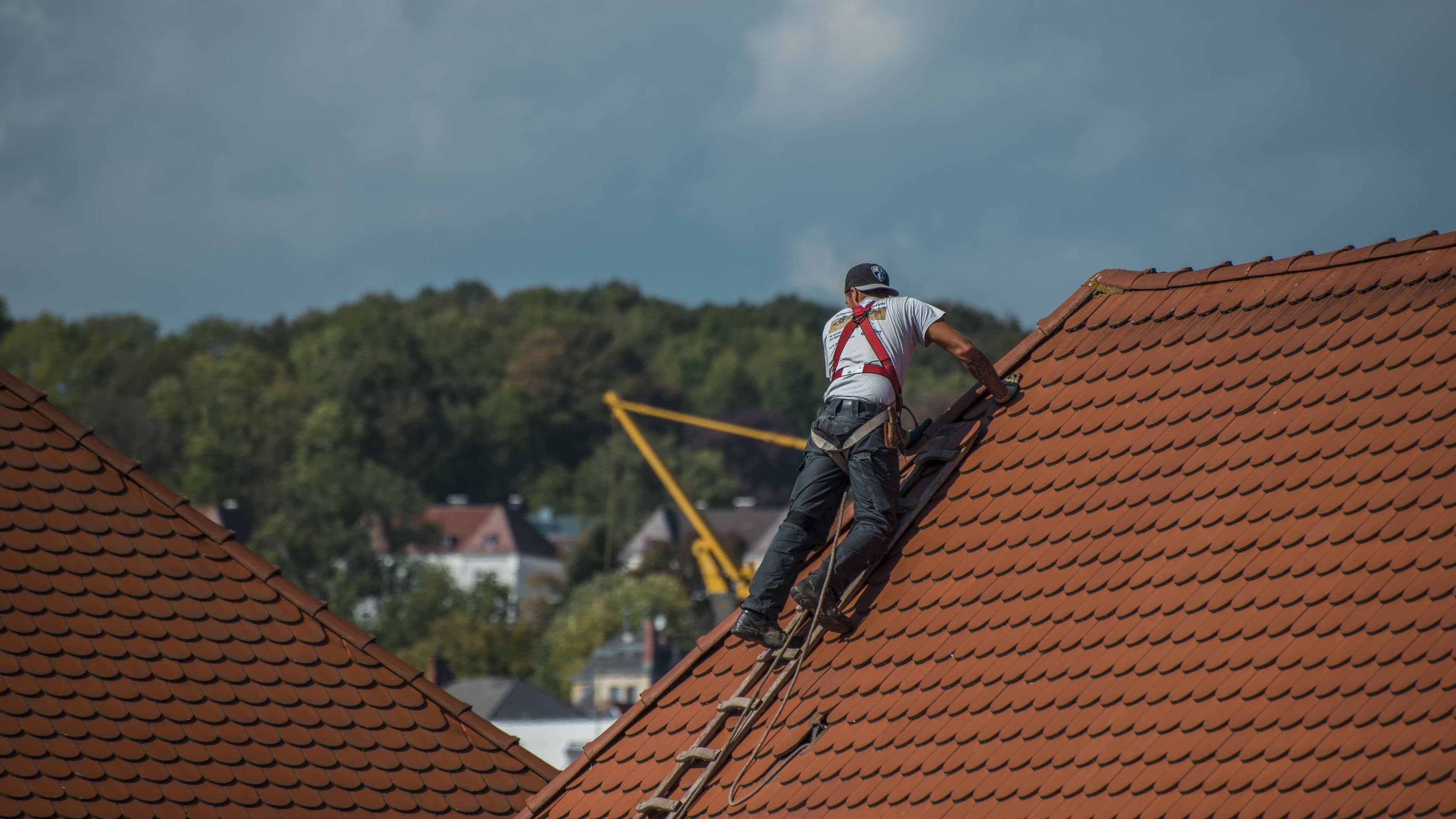
Any time you're on a pitched roof in winter conditions, the roof is the hazard – not the panels. Treat this with full roofing safety protocols. Wear boots with slip-resistant soles. Use a properly anchored safety harness rated for fall arrest. Have someone on the ground who knows where you are. If there's any ice on the roof surface itself, do not go up. Period.
Move deliberately, keep your center of gravity low, and never step on the panels themselves. Solar panels are not designed to support foot traffic and can crack under weight, causing damage that ranges from cosmetic to functionally significant.
Step 3: Use the right removal technique
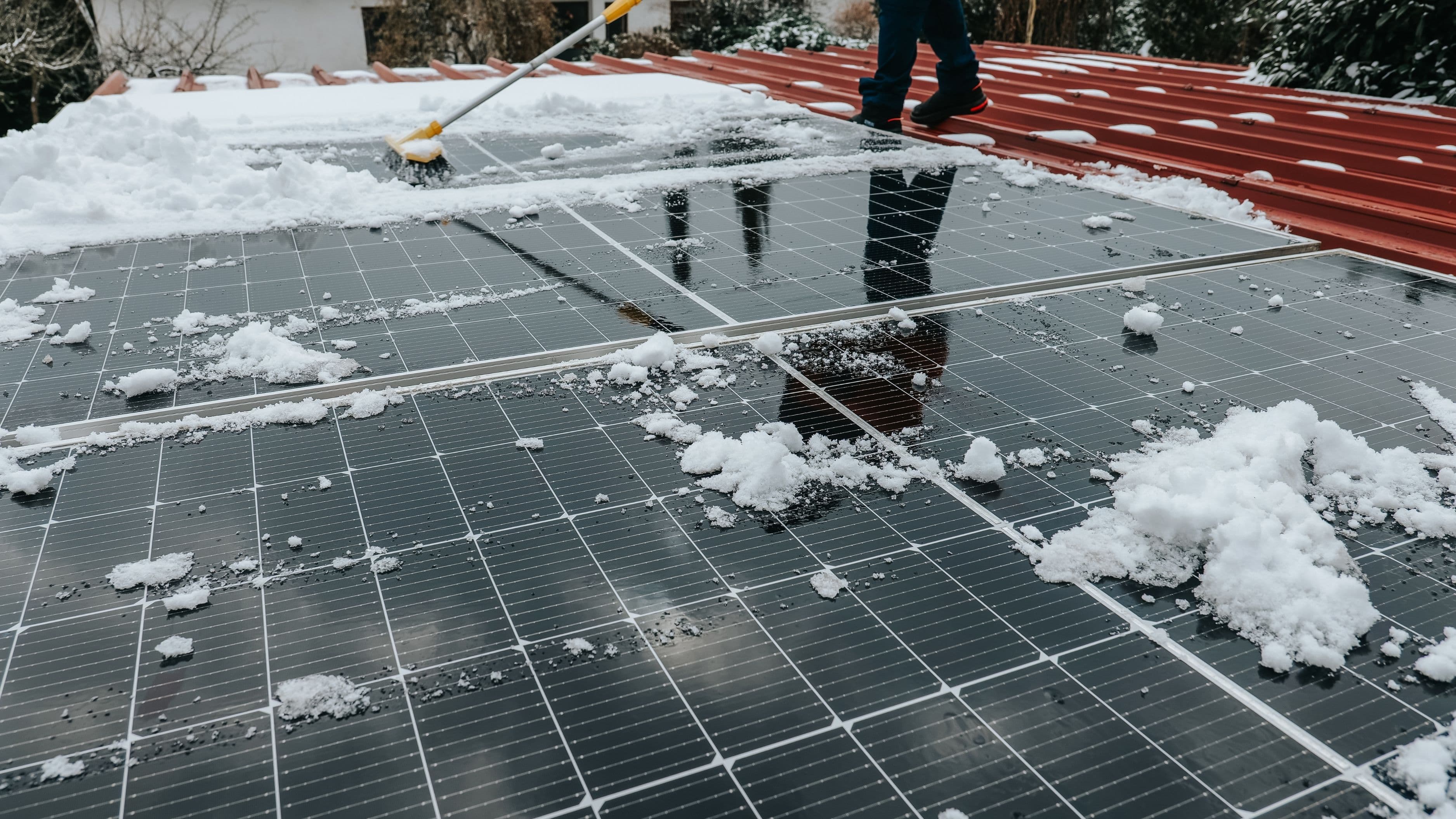
Whether you're using a roof rake from the ground or working on the roof with a soft broom, the technique is the same: gentle, downward strokes that let the snow fall off the lower edge of the panel. Don't scrub, don't chip, and don't use any force on ice. The panel surface – particularly the glass and the anti-reflective coating – is durable against weather but not against mechanical stress from tools.
For panels with a flat or very low pitch, where snow sits and doesn't slide, you may find it easier to clear the area below the panels first so sliding snow has somewhere to go, then work from the lower edge upward.
Step 4: Let partial clearance do the work
You don't need to clear every panel completely. Clearing even the bottom third of a panel breaks the seal between the snow and the surface, allowing solar heating and gravity to handle the rest. A partial clear in the morning on a cold-but-sunny day will often result in fully cleared panels by afternoon without any additional effort.
What Absolutely Not to Do
Some approaches seem logical but will cause damage or injury.
Hot water. Pouring hot water on cold solar panels creates rapid thermal expansion that can crack the tempered glass. Even lukewarm water poured in freezing temperatures may refreeze on contact and create an ice layer that's harder to remove than the original snow.
Salt or chemical deicers. These corrode the frame, degrade the wiring connections, and can leave residue on the panel surface that affects output. Your roof and gutters are also at risk. Don't use them.
Metal scrapers or hard-edged tools. A metal ice scraper that works fine on a car windshield will scratch the anti-reflective coating on a solar panel. Once that coating is scratched, you can't reverse it, and output in that area is permanently reduced.
Pressure washing. Some people assume a pressure washer will efficiently blast snow and ice off panels. At high pressure, it can force water into panel frames and junction boxes, causing corrosion and potentially voiding the manufacturer's warranty.
Going on an icy roof alone. If conditions are icy enough that a regular walk across your roof feels risky, they're too icy to be up there clearing panels. Wait for temperatures to rise slightly, or wait for the sun to do the work.
When to Just Wait It Out
It bears repeating: in most situations, patience is the right call. Studies on solar panel performance in snowy climates consistently show that annual production loss from snow is relatively small – typically 1–5% over the course of a full year for most US climates, concentrated in the short winter months. The math rarely justifies the risk of a roof fall, and it never justifies using tools that damage the panels.
If you're in a region with heavy and persistent snowfall – northern Minnesota, upstate New York, high-elevation mountain regions – and you have a ground-mounted system or panels with safe ground-level access, routine clearing during extended snow events makes economic sense. For most homeowners with roof-mounted systems in moderate climates, letting the snow manage itself while staying safe on the ground is the right approach.
Preventive Steps Before Winter Hits
A few things you can do in fall to make winter easier:
Adjust your panel tilt angle if your system is designed for seasonal adjustment. Steeper winter angles shed snow more effectively and also improve panel output in the lower sun angle of winter months. Not all systems allow this, but if yours does, it's worth setting.
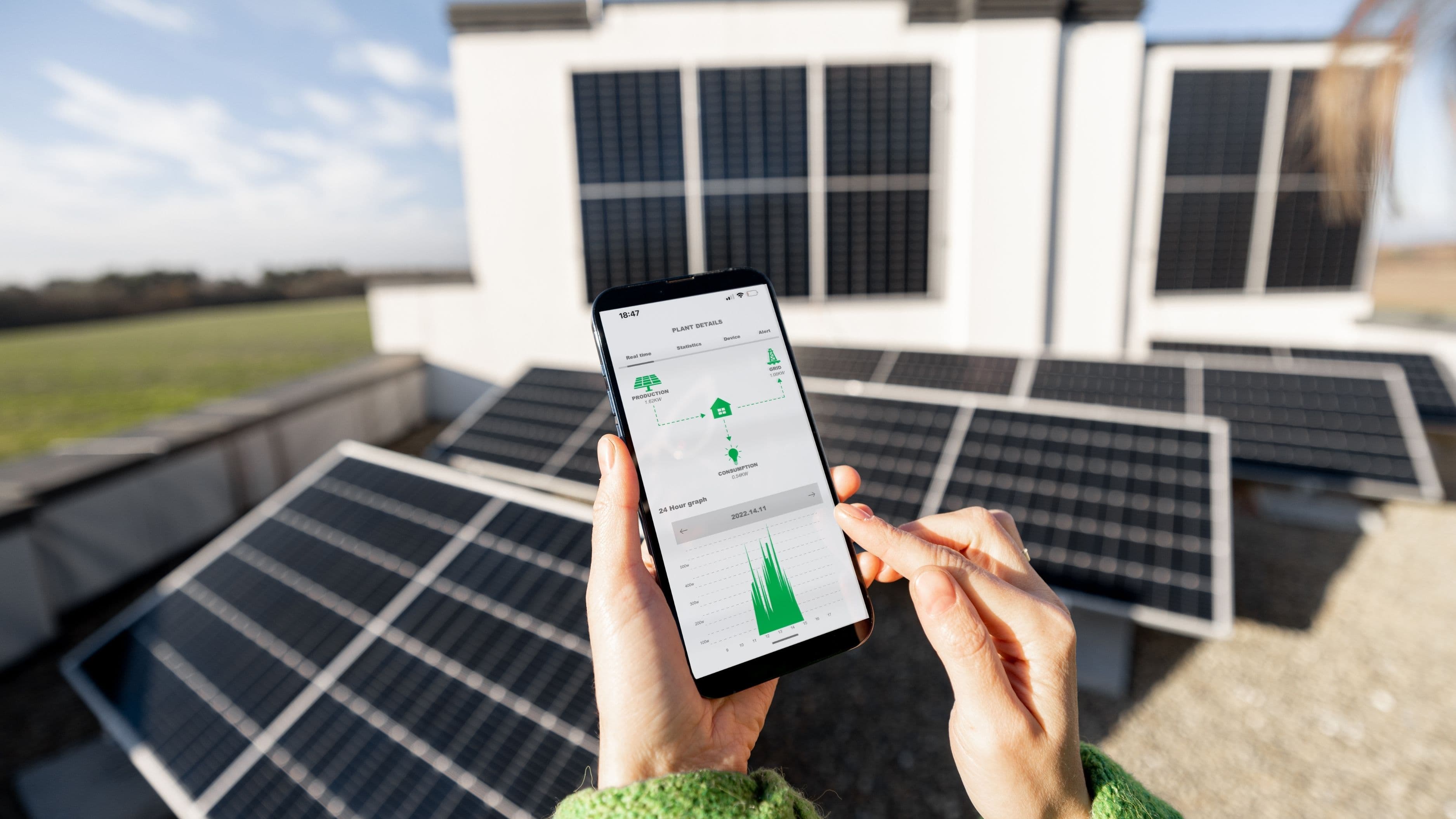
Check that your panel monitoring app is working and giving you live output data. Knowing immediately when panels drop to zero after a snowfall means you can make an informed decision about clearing rather than guessing.
Clear gutters and the area directly below your panels before the first snowfall. Snow clearing panels need somewhere to go, and blocked gutters filled with ice create secondary problems.
Finally, review your system's warranty documentation for any guidance on snow removal. Some manufacturers have specific tool recommendations or cautions. Knowing those before you grab a broom means you're not accidentally voiding coverage.
When to Call a Professional
If you have steep roof panels with no safe access from the ground, call a solar service company or roofing contractor for clearing. Many solar installers offer winter maintenance services, and the cost of a service call is almost always less than the cost of an ER visit or a damaged panel.
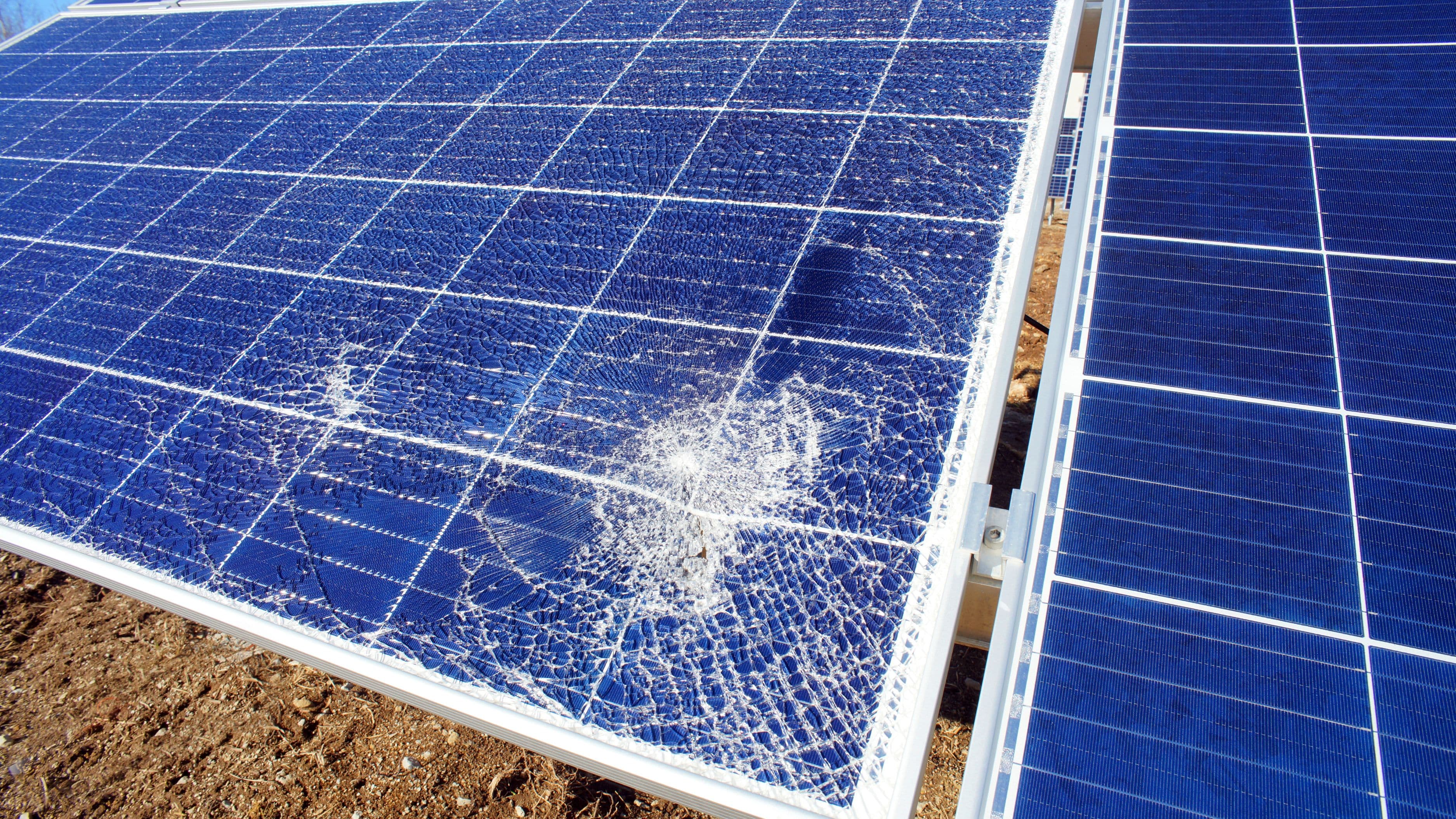
If you notice any physical damage to panels – cracked glass, loose frames, exposed wiring – after a snow or ice event, don't attempt DIY repairs. Contact your solar installer for an inspection. Water intrusion into damaged panels is a real risk, and an electrically compromised panel is not something to troubleshoot on your own.
FAQ
Will snow void my solar panel warranty? Snow itself won't void a warranty. Using the wrong removal tools – metal scrapers, pressure washers, or hard-edged rakes – can void the warranty if they cause physical damage. Check your panel manufacturer's warranty documentation for specific guidance on maintenance.
Do solar panels work at all when covered with snow? Very little to none. Snow blocks light from reaching the cells, effectively shutting down output in the affected panels. Even partial coverage can significantly reduce output because panels in a string are only as productive as the weakest panel in the series.
Should I heat my panels to prevent snow accumulation? Heated panel coatings and heating elements exist but are generally considered unnecessary for most US climates. The cost and complexity rarely justify the benefit when panels naturally shed snow in most conditions. In extreme northern climates with extended snowfall, it's a conversation worth having with your installer.
Can snow damage solar panels? Standard snow loads are within the engineering specs of residential solar panels – most are rated to handle 40–50 pounds per square foot of snow load, which is far more than typical residential snowfall produces. Ice damming at the panel edges over time and freeze-thaw cycles at unsealed frame penetrations are more realistic long-term concerns than snow weight alone.
How do I know if my panels are cleared enough to produce power? Your monitoring app will tell you. Once even a portion of each panel is clear and receiving direct sunlight, you'll see output resume. Full clearance isn't required for production to restart – any unobstructed cell area contributes.
📚 Sources
National Renewable Energy Laboratory – Snow and Ice Effects on PV Systems: https://www.nrel.gov/docs/fy13osti/54551.pdf
Solar Energy Industries Association – Solar Panel Maintenance: https://www.seia.org/initiatives/solar-panel-maintenance
U.S. Department of Energy – Homeowner's Guide to Going Solar: https://www.energy.gov/eere/solar/homeowners-guide-going-solar
OSHA – Roofing Safety: https://www.osha.gov/roofing
Energy Sage – Do Solar Panels Work in Winter?: https://news.energysage.com/do-solar-panels-work-winter-cold-cloudy-weather/