


The right answer depends on a handful of specific factors, and once you understand them, the decision usually becomes pretty clear.
Start With the 50% Rule
The most widely used guideline in appliance repair is straightforward: if the cost of the repair is more than 50% of the cost of a comparable new refrigerator, replacement is almost always the smarter move. This rule exists because older appliances are likely to develop additional problems, and paying for one significant repair rarely buys you much more than temporary peace of mind before the next issue appears.
For a refrigerator over 10 years old, apply this rule but tighten the threshold. At this age, most technicians and consumer advocates suggest that anything over 30–40% of replacement cost warrants serious consideration of replacement instead. The logic is simple: you're paying a significant sum to extend the life of a machine that's already in the second half of its expected lifespan and running on parts that are aging alongside the one you're fixing.
To use this rule, you need two numbers: a firm repair quote and a realistic replacement cost. Don't estimate either. Get the repair quote from a licensed appliance technician before making any decision, and spend 20 minutes checking current prices on a comparable replacement (same cubic footage, configuration, and basic feature set – not an upgrade).
How Long Should a Refrigerator Actually Last?
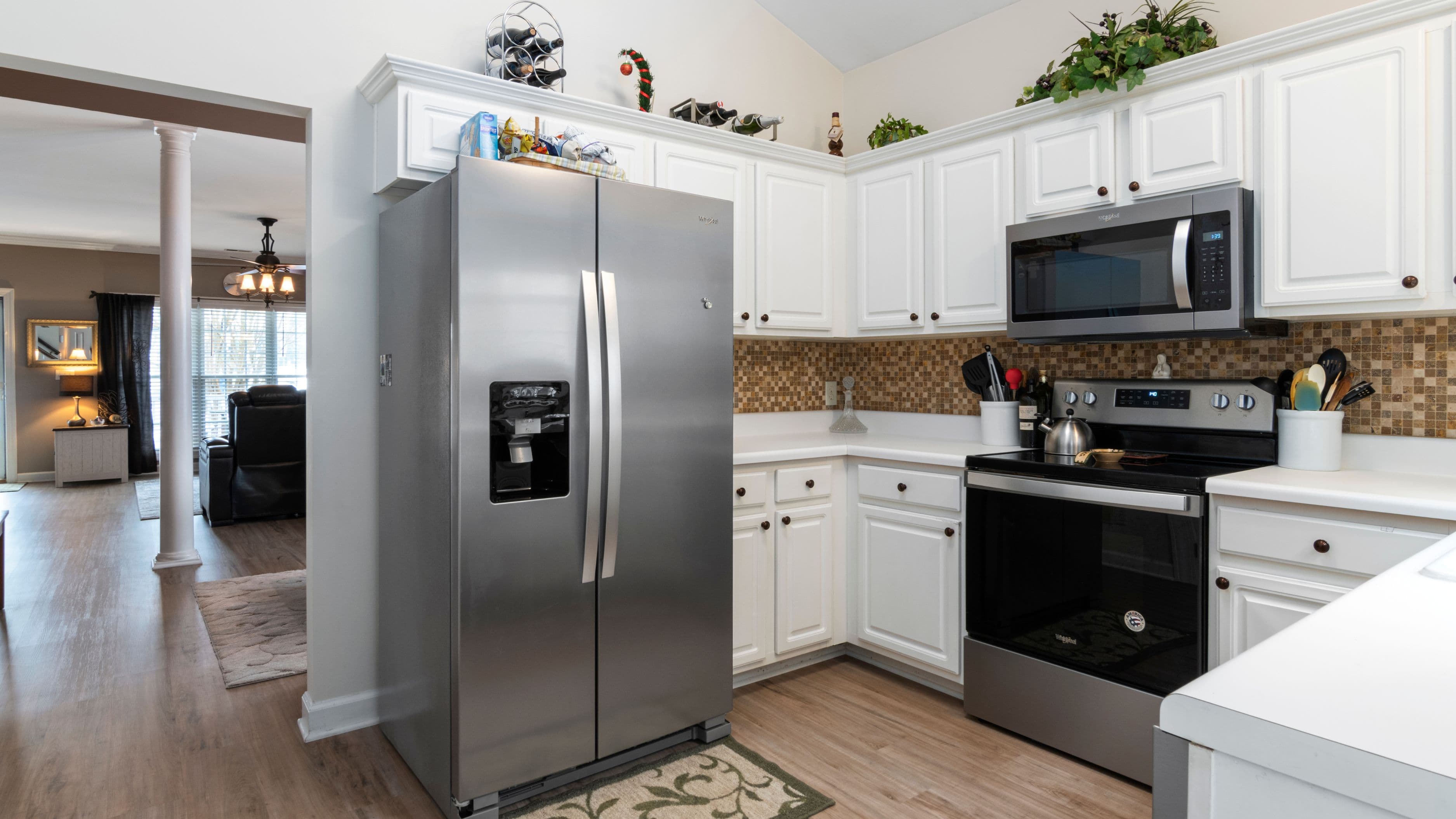
The average refrigerator lifespan is 10–15 years, though this varies significantly by brand, model, and how well it's been maintained. Side-by-side models tend to run on the shorter end of that range – roughly 10–14 years. Top-freezer models, which have simpler mechanics, often reach 15–18 years with reasonable maintenance. French door and bottom-freezer models typically fall in the middle.
At 10 years, your refrigerator is not at the end of its life, but it's solidly in the middle of it. At 12–14 years, you're approaching the range where budgeting for replacement in the next few years makes more financial sense than investing in major repairs. At 15+ years, most major repairs are difficult to justify unless the appliance is in excellent overall condition and the repair is minor.
Age alone doesn't make the decision for you, but it's the backdrop against which every repair estimate should be evaluated.
Repairs That Are Usually Worth It
Not all refrigerator problems are expensive or complicated. Some repairs have a low enough cost and high enough success rate that they make sense even on an older machine.
A faulty door gasket is one of the most common and affordable fixes. The rubber seal around the door can crack or pull away with age, allowing cold air to escape and forcing the compressor to work harder. A replacement gasket typically costs $30–$80 in parts, and installation is usually straightforward enough for a handy homeowner. If your refrigerator is otherwise running well, this repair pays for itself quickly in reduced energy consumption.
A broken ice maker is another reasonable repair on an older unit. Ice makers are modular components, and parts are widely available. Depending on the brand and model, a replacement ice maker module runs $100–$200 in parts, with a service call adding another $75–$150 if you're not comfortable installing it yourself. Given that ice makers fail regularly even in newer refrigerators, this isn't a strong signal of broader aging issues.
A thermostat or temperature control board failure is usually a mid-range repair – parts often run $50–$150, and labor is manageable. If this is the only problem and the refrigerator is otherwise functioning normally, the repair is typically worth considering even at 10–13 years.
Condenser coils clogged with dust are not a repair at all – it's a maintenance task. Dirty coils are a common cause of cooling problems and increased energy use in older refrigerators. Cleaning them yourself takes about 20 minutes with a coil brush and a vacuum. If cleaning the coils resolves your cooling issue, you've avoided a repair entirely.
Repairs That Usually Don't Make Financial Sense
The compressor is the heart of the refrigerator – it circulates refrigerant through the system and is the most expensive single component to replace. Compressor replacement on an older refrigerator typically runs $400–$700 in parts and labor combined, and sometimes higher on models where the compressor is difficult to access. On a refrigerator over 10 years old, this repair is rarely worth it. The compressor is also often a signal that the refrigerator has been running under strain – from dirty coils, poor door seals, or heavy use – meaning other components may follow.
A refrigerant leak is in the same category. Refrigerant doesn't evaporate on its own; if the system is low on refrigerant, there's a leak somewhere. Finding and repairing the leak, then recharging the system, is labor-intensive work that requires an EPA-certified technician. Costs typically start at $200–$300 and can run much higher depending on where the leak is. On an older unit, the repair cost combined with the age risk rarely justifies the investment.
A failed evaporator fan motor or a damaged evaporator coil is another significant repair. The evaporator is the internal coil that actually cools the refrigerator interior; if it's damaged or the fan that circulates air over it has failed, your refrigerator can't cool properly. Parts and labor combined often run $200–$400. On a machine past 12 years, this is a strong candidate for replacement.
Control board failures in modern refrigerators can be particularly frustrating on older units. Electronic control boards can cost $150–$400 in parts alone, and because older models may have discontinued boards, sourcing parts can be difficult and expensive.
The Energy Cost You Might Be Ignoring
Here's an angle that doesn't make it into most repair-or-replace conversations: how much your old refrigerator is actually costing you to run every month. Refrigerators manufactured before 2000 use roughly twice the electricity of a comparably sized modern Energy Star model. Even refrigerators from the early-to-mid 2000s are significantly less efficient than today's models.
A refrigerator manufactured in 2010 or earlier typically uses 500–800 kWh per year. A current Energy Star-certified model of the same size uses 300–450 kWh per year. At the US average electricity rate of around $0.16/kWh, that's a difference of $32–$56 per year – or $160–$280 over five years. If your older refrigerator is running inefficiently due to age or minor issues (a worn door seal, dirty coils, a struggling compressor), actual consumption can be considerably higher.
This doesn't automatically tip the decision toward replacement, but it's a real number that belongs in your calculation. If you're weighing a $300 repair on a 13-year-old refrigerator against a $700–$900 new appliance, the energy savings over the following 5–7 years close that gap meaningfully.
Signs Your Refrigerator Is on Its Last Legs
Beyond specific failed components, there are behavioral signs that suggest a refrigerator is approaching end-of-life rather than experiencing an isolated repair need.
Excessive condensation on the exterior or interior walls – especially if it appears after the door seals have been replaced – can indicate a cooling system working harder than it should, sometimes a sign of compressor strain or refrigerant issues. Frost buildup in the freezer section that recurs quickly after defrosting suggests a problem with the defrost system, which in older units can be a symptom of broader control failures.
Unusual noises are worth paying attention to. A clicking or hard-starting compressor – where you hear it struggling to turn on, cycling rapidly, or running more continuously than it used to – is a classic sign of compressor aging. A well-functioning refrigerator compressor runs in moderate cycles; one that runs almost continuously is working too hard to maintain temperature and is likely nearing failure.
If your food is spoiling faster than it used to, or if you're noticing temperature inconsistency in different parts of the refrigerator despite the thermostat being set correctly, the cooling system's ability to maintain even temperature is degrading. That's a systemic issue, not a single component repair.
What to Do Before Calling a Technician
Before spending money on a diagnostic call, run through a few basic checks yourself. They won't cover every problem, but they'll rule out the most common simple causes and save you a service call if the fix turns out to be minor.
Check that the refrigerator is level. An unlevel unit causes doors to seal improperly and can affect how the compressor and fans operate. Most refrigerators have adjustable leveling feet at the base – use a level to confirm and adjust as needed.
Clean the condenser coils. On most refrigerators, the condenser coils are located either on the back of the unit or beneath it behind a kick plate. Unplug the refrigerator first, then use a coil cleaning brush and vacuum to remove dust buildup. This is the single most common cause of reduced cooling efficiency in older refrigerators, and it's free to fix.
Check the door seals. Close the door on a piece of paper and try to pull it out. If it slides out easily, the seal isn't creating adequate contact and should be replaced. Also inspect the gasket visually for cracks, tears, or sections that have pulled away from the door frame.
Make sure the refrigerator isn't too close to a heat source. Refrigerators need clearance on the sides and back for proper airflow. A unit pushed against a wall or sitting next to an oven can run significantly warmer and strain the compressor. The recommended clearance is typically at least 1 inch on each side and 1–2 inches at the back.
If none of these steps resolve the issue, that's when a diagnostic call from a licensed appliance technician is worth the $75–$100 it typically costs. A good technician will confirm the specific failed component, give you a firm repair estimate, and – if asked directly – give you their honest assessment of whether the repair makes sense given the unit's age and overall condition.
Making the Final Call
Once you have your repair estimate and a clear sense of your refrigerator's age and overall condition, the decision usually comes down to one of three scenarios.
If the repair is under $150 and the refrigerator is otherwise in good shape with no history of other recent repairs, fix it. Low-cost repairs on a functional older unit are almost always worth completing.
If the repair is in the $200–$400 range on a refrigerator between 10–13 years old with no other major issues, it's a judgment call. Factor in how close the repair cost is to the 50% threshold, how well the refrigerator has been running overall, and whether you're likely to need additional repairs in the near future. When in doubt, ask the technician directly what else they'd expect to see on a unit this age.
If the repair exceeds 50% of replacement cost on a refrigerator over 12 years old, or if you're facing a compressor or refrigerant repair at any age past 10 years, replacement is almost certainly the better investment. You're spending serious money to extend the life of a machine that's already showing strain, and the money is better put toward a unit that comes with a new warranty and current energy efficiency.
FAQ
Is a 10-year-old refrigerator considered old? It's squarely middle-aged. The average refrigerator lasts 10–15 years, so at 10 years you have realistic remaining life ahead – but it's no longer a young appliance. Minor repairs still make sense; major repairs require careful evaluation.
What refrigerator repairs can I do myself? Door gasket replacement, condenser coil cleaning, light bulb and LED replacement, water filter replacement, and ice maker module swaps are all within reach for a beginner-to-intermediate DIYer. Any repair involving refrigerant, the compressor, or the sealed refrigerant system requires an EPA-certified technician and should not be attempted as a DIY project.
How do I find a reliable appliance repair technician? Ask neighbors or local community groups for recommendations. Check that the technician is licensed and carries liability insurance. Look for shops that charge a flat diagnostic fee (typically $75–$100) rather than an hourly rate just to assess the problem. Reputable technicians will give you a written estimate before beginning any work.
Does the brand affect whether to repair or replace? Yes, to a degree. Some brands are known for more durable components and better parts availability, which makes repairs more viable on older units. If parts for your specific model are discontinued or backordered, that's an additional factor favoring replacement regardless of cost.
Are extended warranties on new refrigerators worth it? For major appliances, a manufacturer's extended warranty (not a retailer's add-on warranty) is often worth considering, particularly for higher-end models with complex electronics. Read the terms carefully – many exclude the compressor after the first year or add significant deductibles. Consumer Reports and others suggest evaluating each warranty on its specific terms rather than as a category.
The Bottom Line
A refrigerator over 10 years old isn't automatically a lost cause, but it deserves honest evaluation before you sink significant money into it. Small repairs are almost always worth completing. Major repairs – especially to the compressor, refrigerant system, or control boards – deserve careful cost comparison against what a new unit would actually cost, including energy savings. When in doubt, get the diagnostic first, weigh the numbers clearly, and don't let the emotional reluctance to spend money on a new appliance push you toward a repair that won't hold.
📚 Sources
Consumer Reports. (2023). How long do appliances last? – https://www.consumerreports.org/appliances/how-long-do-appliances-last-a1047460139/
U.S. Department of Energy. Refrigerators – https://www.energy.gov/energysaver/refrigerators
ENERGY STAR. Most efficient refrigerators. U.S. Environmental Protection Agency – https://www.energystar.gov/productfinder/product/certified-refrigerators
U.S. Energy Information Administration. (2023). Average U.S. retail electricity price. – https://www.eia.gov/electricity/monthly/epm_table_grapher.php?t=epmt_5_6_a
International Association of Certified Home Inspectors. Refrigerator life expectancy. – https://www.nachi.org/life-expectancy.htm
U.S. Environmental Protection Agency. Section 608 technician certification. – https://www.epa.gov/section608