
Whether you're storing a single drill battery over winter or managing a whole collection of lithium-ion packs across multiple tools, this guide covers everything you need to know to keep your batteries safe, extend their lifespan, and avoid the common mistakes that quietly kill packs well before their time.
Applies to: Lithium-ion (Li-ion) batteries – the type used in virtually all modern cordless power tools from brands like DeWalt, Milwaukee, Ryobi, Makita, Bosch, and others.
Why Battery Storage Matters More Than You Think
A quality lithium-ion battery pack costs $50–$150 or more to replace. Proper storage practices can realistically double or triple the usable lifespan of a battery – meaning the few minutes it takes to store one correctly can save you a significant amount of money over the life of your tools.
Beyond cost, there's a real safety dimension. Lithium-ion batteries store a lot of energy in a small package, and when they're damaged, overcharged, or stored in poor conditions, that energy can release in ways that range from a ruined battery to a garage fire. Thermal runaway – the condition where a lithium-ion cell overheats and triggers a chain reaction – is rare with undamaged batteries stored correctly, but it does happen, and the conditions that cause it are largely avoidable.
The Ideal Storage Conditions
Temperature: The Most Important Variable
Temperature is the single biggest factor in lithium-ion battery longevity and safety. The ideal storage temperature range for lithium-ion batteries is between 50°F and 77°F (10°C to 25°C). This is roughly room temperature – a climate-controlled interior space.
Cold temperatures slow the chemical reactions inside the battery, which is actually protective during storage. A battery stored at 40°F loses capacity more slowly than one stored at 85°F. However, extremely cold storage (below freezing for extended periods) can affect the electrolyte and reduce capacity temporarily. The battery will recover as it warms back up before use, but prolonged deep freezing isn't ideal.
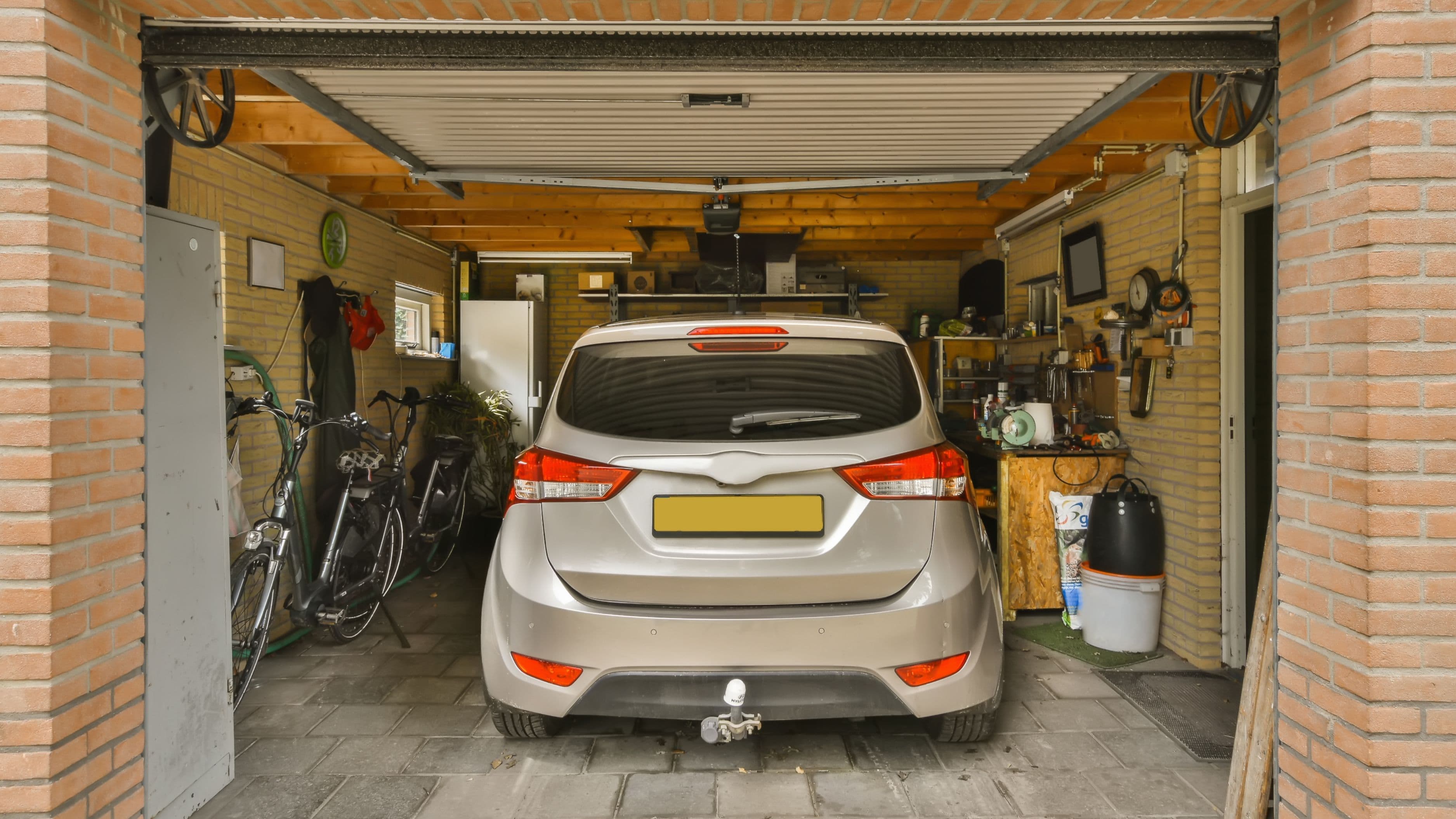
Heat is the more serious concern. Storing batteries in a hot garage – particularly during summer when an unventilated garage can reach 120°F or above – accelerates chemical degradation inside the cells and shortens battery life measurably. A battery stored at consistent high temperatures will lose 20–30% of its capacity in a single season compared to one stored in a cooler environment. For year-round garage storage, this means the hottest months of summer and coldest months of winter are the most damaging if no climate control is in place.
The practical solution for most homeowners: bring batteries inside for storage during temperature extremes. A shelf in a basement, utility room, or climate-controlled space is significantly better for battery health than leaving packs on the charger or in the garage through a hot summer or freezing winter.
Charge Level: Store at Partial Charge
This is the tip most people don't know and it makes a real difference. Lithium-ion batteries should be stored at a partial state of charge – roughly 40–60% – rather than fully charged or fully depleted.
Storing fully charged (100%) puts the cells under elevated chemical stress. Manufacturers design chargers to stop at 100%, but holding at full charge for extended periods (weeks or months) degrades cell chemistry faster than necessary. Many professional-grade batteries from Milwaukee, DeWalt, and Makita now include a "storage mode" that automatically discharges to 50–60% if left on the charger or untouched for a certain period – this is the manufacturer acknowledging that partial charge is better for long-term storage.
Storing fully depleted is equally problematic, and in some cases worse. A deeply discharged lithium-ion battery can fall below its minimum safe voltage threshold, which causes irreversible damage to the cells and may result in the battery being unrecoverable. If you use a battery until the tool shuts off, recharge it to at least 40–50% before putting it into storage.
For practical purposes: run a battery down to roughly half charge before a long storage period, or just use it normally and store it in whatever state it's in as long as it's not nearly dead.
Keep Them Dry
Moisture exposure is a real risk in garages, particularly in humid climates or during seasonal transitions when condensation forms on cool surfaces. Water and lithium-ion batteries are a dangerous combination – corrosion on terminals, internal short circuits, and in severe cases, electrolyte reactions that produce heat and gas.
Store batteries in a dry location, off concrete floors (which can be damp), and away from areas where water pooling, roof leaks, or condensation are possible. A simple shelf at waist height or above is sufficient for most garages. If your garage is genuinely humid, a sealed plastic container with a silica gel packet inside provides good moisture protection for stored packs.
How to Physically Store Batteries
Keep Terminals Protected
The terminals on a battery pack are the metal contacts that connect to the tool or charger. If the terminals are accidentally bridged by a conductive object – a loose screw, a stray piece of wire, foil from a snack wrapper – it can cause a short circuit that generates heat and potentially damages or ruins the battery. In a worst case with a larger pack, it can start a fire.
Keep batteries in their original cases when possible, since most manufacturers design the case to cover the terminal area. If you no longer have the case, terminal caps are available for most common battery platforms. Alternatively, storing batteries individually in a parts bin or drawer where they won't rattle against metal objects is a workable solution.
Never store loose batteries in a toolbox drawer with tools, fasteners, or other metal items. This is the most common way terminal short circuits happen.
Use a Dedicated Battery Organizer or Station
For anyone with multiple batteries across multiple tools, a wall-mounted battery organizer or charging station is genuinely worth the investment. These range from simple pegboard-mounted holders ($15–$30) to purpose-built charging strips with individual slots for each battery ($50–$120). The organizational benefit is real – you always know where every battery is, what state of charge it's in, and whether a pack needs to go on the charger before your next project.
Some charging stations include built-in overcharge protection and will automatically stop charging when full or switch to a maintenance mode. These are worth the extra cost if you tend to leave batteries on the charger for days at a time.
Don't Leave Batteries on the Charger Indefinitely
Modern lithium-ion chargers are smarter than older NiCad chargers and do include automatic shutoff to prevent true overcharging. However, leaving batteries on the charger for weeks or months at a time keeps them at 100% state of charge for extended periods, which is harder on the cells than storing at partial charge. It also keeps the battery at whatever ambient temperature the charger generates during its maintenance cycles.
Charge before use, remove the battery from the charger when it's done, and store it off the charger. That simple habit extends battery life more than most people expect.
Long-Term Storage (Seasonal or Off-Season)
If you're putting batteries away for an extended period – storing a cordless lawnmower battery through the winter, or packing away tools during a move – a few extra steps are worth taking.
Charge each battery to 40–60% before storage. Check each pack for any visible damage – swelling, cracking, discolored casing, or unusual odor are all signs a battery should not be stored and should be recycled. Label each battery with the date it went into storage if you're storing multiple packs; this helps you rotate older batteries into use first.
Store in a location with stable temperature – not a car trunk, not a detached garage that reaches extreme temperatures, and not a shed that will freeze in winter. Check on stored batteries every few months if the storage period extends beyond 90 days, and top up the charge slightly if any pack has dipped below 20%.
Recognizing and Handling a Damaged Battery
Knowing when a battery is beyond safe use is as important as knowing how to store a healthy one. Signs that a lithium-ion battery should be taken out of service immediately include:
A swollen or puffy casing is the most visible warning sign. Lithium-ion cells generate gas during degradation, and a swollen pack indicates internal damage that can lead to thermal runaway. Do not continue using or charging a swollen battery. A cracked or physically damaged casing exposes the internal cells to air and moisture, which accelerates degradation and creates a safety risk. Any battery that becomes unusually hot during normal use (hot enough that you can't hold it comfortably) warrants inspection and possible retirement. A battery that won't hold a charge for more than a few minutes of use may simply be worn out, but if it's accompanied by any of the physical signs above, treat it as a safety issue, not just a performance issue.
Do not throw damaged lithium-ion batteries in household trash or recycling bins. Take them to a hardware store, home improvement center, or municipal hazardous waste facility that accepts lithium-ion batteries for proper disposal. Home Depot, Lowe's, and most Best Buy locations accept old batteries at the service desk at no charge.
Common Mistakes to Avoid
Storing batteries in a hot car or truck. Vehicle interiors can reach 150–160°F in direct sun during summer. This is one of the fastest ways to permanently damage lithium-ion cells and creates a genuine fire risk.
Leaving batteries fully discharged for months. A depleted battery sitting unused will continue to self-discharge slowly, potentially dropping below the minimum safe voltage and causing irreversible damage.
Storing loose batteries in a toolbox or bucket with metal hardware. Terminal shorts from contact with screws, nails, or tools are a common and easily preventable cause of battery damage and heat events.
Ignoring a swollen battery. A puffy pack can look minor but represents a real hazard. Don't set it aside planning to deal with it later – remove it from service and recycle it promptly.
Using the garage floor as default battery storage. Concrete floors collect moisture and stay cold, neither of which is good for battery health. Get batteries up off the floor on a shelf, pegboard mount, or charging station.
FAQ
How long can I store a lithium-ion battery before it goes bad? A properly stored lithium-ion battery at 40–60% charge and room temperature will typically retain 80–90% of its capacity after one year in storage. Stored at high temperatures or fully charged, degradation happens faster. For most homeowners storing seasonal tools, proper storage conditions mean batteries remain fully serviceable after 6–12 months without use.
Is it okay to store batteries in the refrigerator? Technically the cool temperature is good for battery chemistry, but the moisture risk in most refrigerators makes this a bad idea in practice. Condensation when the battery is brought back to room temperature can damage terminals and internal components. A cool, dry interior room is a better choice.
Do I need different storage practices for different battery voltages (12V vs. 18V vs. 60V)? The same principles apply across all lithium-ion voltages. Higher-voltage packs simply contain more cells, which means the consequences of a thermal event are larger – a reason to be more careful, not less, with high-voltage packs like DeWalt FlexVolt 60V or Milwaukee M18 High Output.
Can I store batteries in their chargers as long as the charger has automatic shutoff? For short periods (a few days), yes. For weeks or months at a time, it's better to remove them and store at partial charge. The automatic shutoff prevents true overcharging, but maintenance mode still holds the battery at near-100% state of charge, which isn't ideal for long-term storage.
What's the best way to dispose of an old power tool battery? The easiest options are Home Depot, Lowe's, and Best Buy – all three accept lithium-ion batteries at the customer service desk free of charge. Call2Recycle (call2recycle.org) has a locator tool to find drop-off sites near you. Never put lithium-ion batteries in curbside recycling or household trash.
Outro
Taking care of your power tool batteries is one of those maintenance habits that pays off quietly over time. You won't notice it on the day you put a battery away properly, but you'll notice it a year later when the pack still holds a full charge and the tool runs like it should. Cool temperatures, partial charge, dry storage, and terminals protected from shorts – those four things cover most of what matters. The rest is just not ignoring the warning signs when a battery starts showing its age.
📚 Sources
U.S. Consumer Product Safety Commission – Lithium-Ion Battery Safety: https://www.cpsc.gov/Safety-Education/Safety-Guides/Sports-Fitness-and-Recreation/Bicycle-Helmets/Lithium-ion-Battery-Safety
Call2Recycle – Lithium Battery Recycling Locator: https://www.call2recycle.org/locator
UL Research Institutes – Lithium Battery Safety: https://ulri.ul.org/research/fire-safety/lithium-battery-safety
NFPA – Lithium-Ion Battery Fire Safety: https://www.nfpa.org/education-and-research/home-fire-safety/lithium-ion-batteries