
Understanding why that happens, and what you can actually do about it, will help you get more out of your system without calling a contractor every time a tree grows a few feet taller.
Why Shade Hits Solar Panels Harder Than You'd Think
Solar panels are made up of individual cells, and those cells are typically wired together in series within each panel. When light hits a cell, it generates a small current. When cells are in series, the current that flows through the whole panel is limited by the weakest cell – the one receiving the least light. So if one small corner of a panel is shaded, that single shaded cell can reduce the output of the entire panel, not just proportionally to the shaded area.
It gets more significant at the system level. Most residential solar installations wire multiple panels together into strings. In a traditional string inverter setup, the performance of every panel in the string is pulled down to match the weakest panel. That means one panel losing 50% of its output to shade can reduce the output of ten or fifteen other fully lit panels in the same string. It's like a chain – one weak link affects the whole thing.
This is why a small tree branch casting shade on one corner of your roof can show up as a substantial drop in your monitoring data, even when most of your panels look completely fine from the ground.
The Different Types of Shade – and Why It Matters
Not all shade is the same, and the type your trees are casting affects how much it matters and what you should do about it.
Hard shade is direct, defined shadow – a branch or tree canopy blocking sunlight entirely from a specific panel area. This is the most impactful type. It's static enough that your inverter can't adapt around it, and it affects the same cells at the same time every day the sun is at that angle.
Soft shade or diffuse shade comes from translucent canopies, thin foliage, or light filtering through leaves on a breezy day. It reduces irradiance but less dramatically than hard shade, and it's variable enough that panels can partially recover between patches. Still a meaningful loss over time, but less catastrophic to string output than a solid shadow from a trunk or dense branch.
Morning vs. afternoon shade matters because of when your system produces the most power. Solar panels generate peak output roughly in the middle of the day when the sun is highest. Shade that falls during peak hours – typically 10am to 2pm – has a disproportionately large effect on your daily production compared to shade that only affects early morning or late afternoon output when the sun angle is low anyway.
Trees to the south of your panels (in the northern hemisphere) are the most problematic because they can intercept the high midday sun. Trees to the east affect morning production, trees to the west affect afternoon – both matter, but less so than south-facing obstructions.
How to Check Whether Trees Are Actually Affecting Your Output
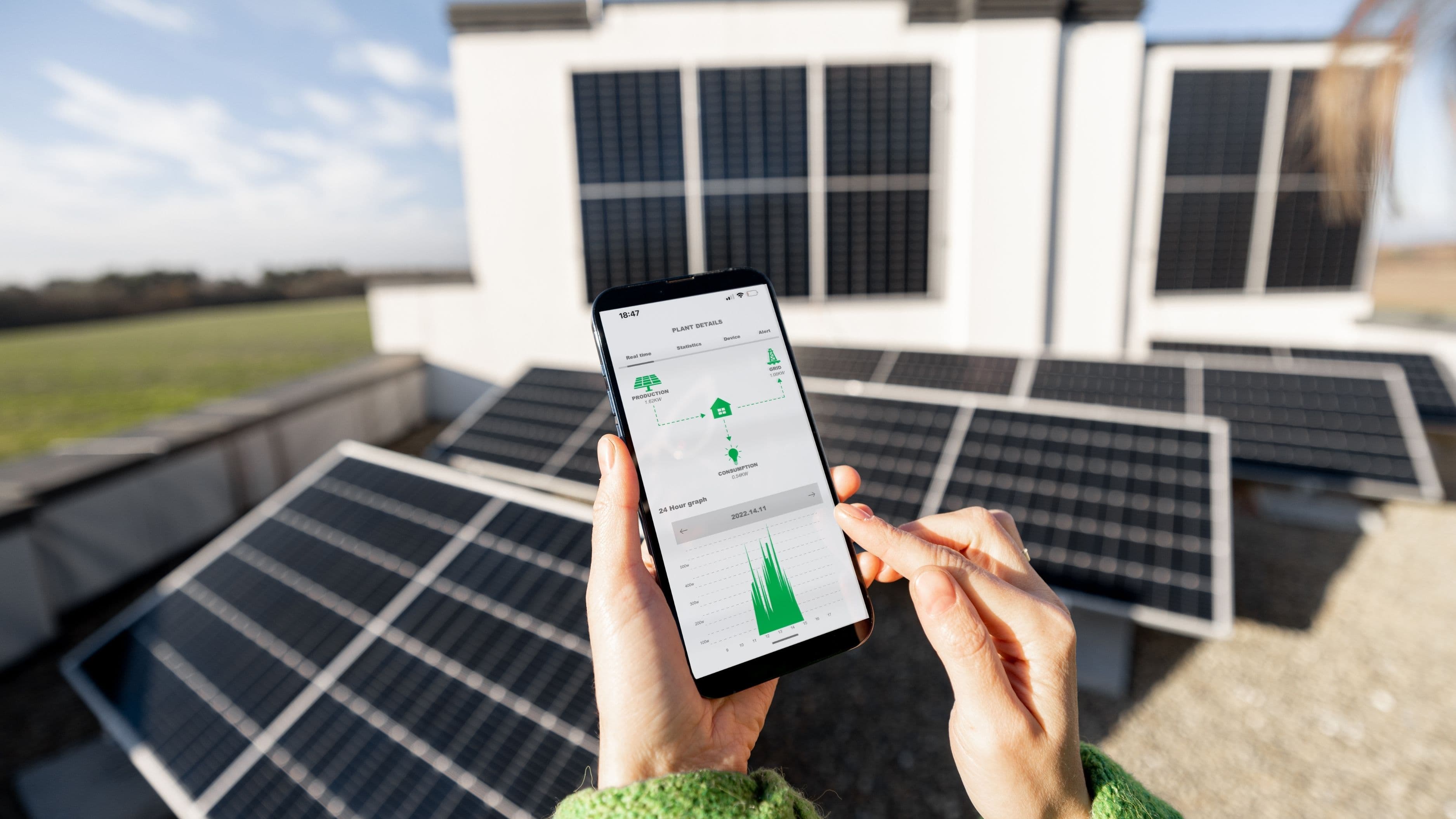
Your solar monitoring system is your best diagnostic tool here. Most inverter manufacturers provide apps that show hourly and daily production data. Here's a simple process for identifying shade impact:
Pull up your production data for a clear, sunny day in summer – a day with no clouds and maximum sun hours. Compare it against a similar clear day earlier in the system's life, or against the production estimate from your original installation quote. If output is noticeably lower than expected on perfect days, shade is a likely contributor.
Next, watch the hourly production curve. A healthy unshaded system produces a smooth bell curve through the day, peaking at solar noon and tapering symmetrically on either side. If your curve has a dip at a specific time – say, output drops sharply at 9am and recovers by 11am – that's a morning shade event, likely from a tree to the east. A mid-afternoon dip points west. A flat, depressed peak in the middle of the day is the worst case and points to something blocking south-facing panels during peak hours.
You can also do a manual visual check. Go outside on a clear day at solar noon (around 12–1pm standard time, or 1–2pm during daylight saving time) and look up at your panels from different angles. Any shadow on any panel at that moment is cutting into your peak production.
Solutions That Actually Help
Once you've confirmed shade is a problem, you have a few options ranging from simple to more involved.
Trim or Remove the Offending Tree
The most direct solution is also the most obvious one. If a specific branch or tree is causing defined shade on your panels during peak hours, removing that obstruction solves the problem permanently. For a single branch, this is straightforward DIY or a simple job for an arborist. For a full tree removal, factor in the cost ($300–$1,500 depending on size and access) against the value of the recovered production over time.
Before cutting anything, check local regulations. Some municipalities have tree removal ordinances, and if the tree is on a neighbor's property, you'll need a conversation before a chainsaw. Many homeowners are surprised to learn they may have legal rights to trim branches that overhang their property line, but full removal of a neighbor's tree requires their cooperation.
Upgrade to Microinverters or Power Optimizers
If trimming isn't possible – the tree is a neighbor's, it's protected, or you value it enough to keep it – the next best move is addressing the wiring problem. Traditional string inverters are what make shade so damaging at the system level. Two technologies solve this:
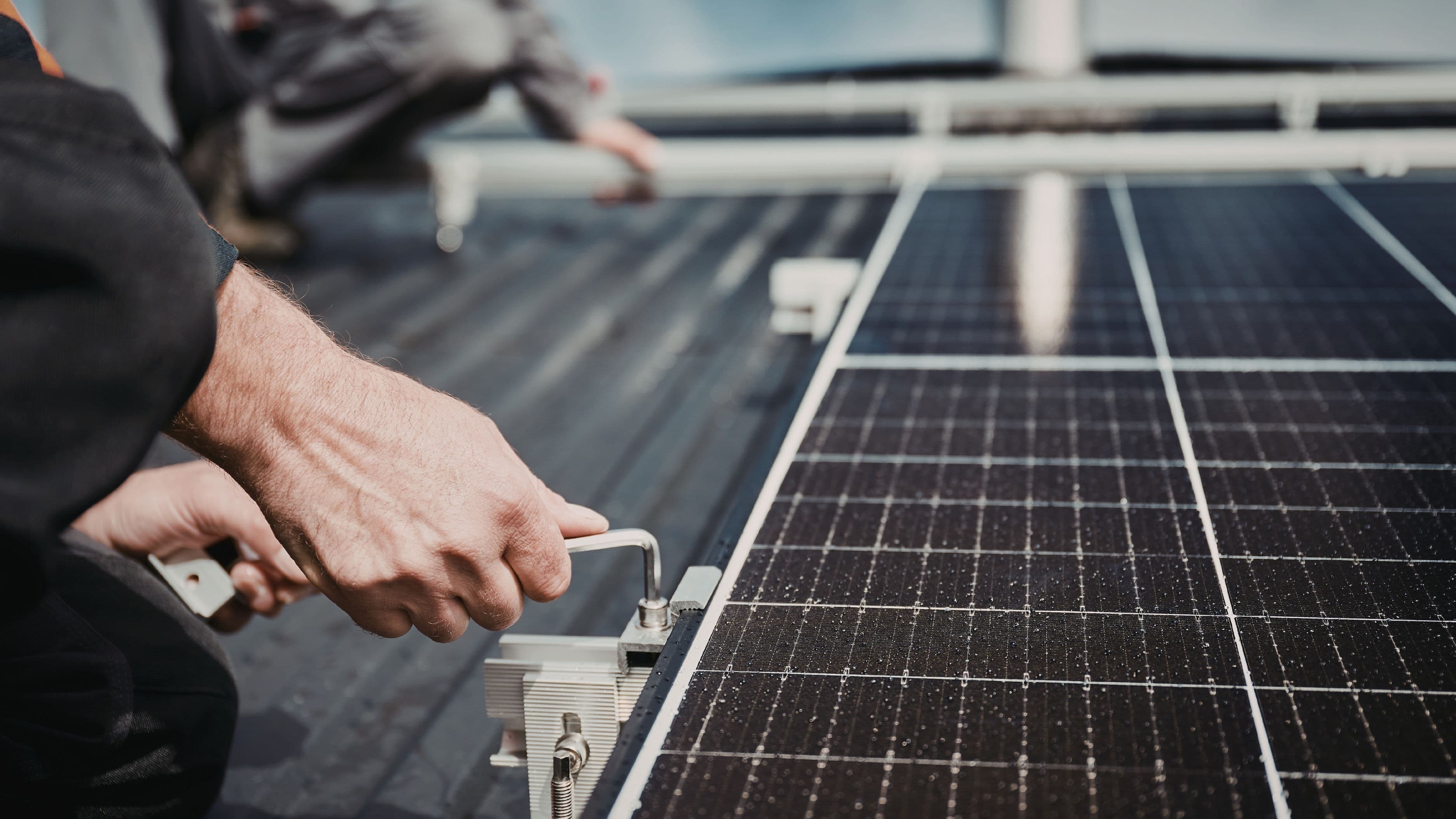
Microinverters replace the single string inverter with a small inverter attached directly to each panel. Each panel now operates independently, so a shaded panel only loses its own output rather than dragging down the whole string. Enphase is the dominant brand in residential microinverters and has a strong track record. Retrofitting an existing system with microinverters is possible but requires rewiring – it's a professional job typically costing $1,500–$3,000+ depending on system size.
Power optimizers (SolarEdge is the main brand) are panel-level devices that don't fully invert the power at each panel but do allow each panel to operate at its own maximum power point independently. The string inverter is still present but the optimizers decouple panel performance, significantly reducing the shading impact. Adding optimizers to an existing SolarEdge-compatible system is less expensive than a full microinverter retrofit.
If you're installing a new system and you have any shade concerns at all, specifying microinverters or power optimizers from the start is strongly recommended.
Reposition or Add Panels to Unshaded Areas
If your roof has a mix of shaded and unshaded sections, one option is to work with a solar installer to move panels away from the shaded areas or add capacity to sections that receive full sun. This requires a site assessment to confirm available unshaded roof area, structural capacity, and wiring feasibility. Not always practical, but worth exploring if a large portion of your existing array is chronically underperforming.
What Shade Does to Your Energy Production Numbers
To give you a sense of the practical stakes: a study published by the National Renewable Energy Laboratory found that shading losses in residential systems commonly range from 10% to 25% of potential annual output, with heavily shaded systems losing even more. For a typical 8kW system generating roughly 10,000 kWh per year, a 15% shading loss is 1,500 kWh – worth $150–$300 annually at average US electricity rates, and more in high-cost states like California or New York.
That's a meaningful number, and it compounds over the 25-year life of a solar system. A shading problem that reduces your annual production by 15% costs you the equivalent of several thousand dollars in lost generation over the system's lifetime – enough to justify the cost of an arborist, a microinverter retrofit, or both.
Mistakes Homeowners Make Around Trees and Solar
A few common missteps worth knowing before you make decisions:
Underestimating how fast trees grow. A tree that poses no shade problem at installation time can become a significant issue within five to ten years. Young trees planted near your panels at the time of installation are worth monitoring. If you're designing a landscape from scratch, keep trees to the north of your panels rather than south, east, or west.
Assuming shade monitoring apps show the full picture. Most monitoring apps show total system output, not panel-level output. A string inverter setup showing 85% of expected production might have one string running at 60% due to shade while the rest runs fine. Panel-level monitoring (available with microinverters and SolarEdge systems) gives you much better diagnostic resolution.
Skipping the seasonal check. The sun angle changes dramatically between summer and winter. A tree that causes no shade issues in July can cast long shadows across your panels in December when the sun is much lower in the sky. Check your production data across seasons – winter underperformance relative to seasonal norms can often be traced to shade that wasn't present at the time of the summer installation assessment.
When to Call a Solar Professional
If your system is showing unexplained underperformance and you've confirmed through your monitoring data that shade is a factor, a solar service company can do a proper shade analysis using tools like Solmetric SunEye or the Solar Pathfinder. These give precise measurements of shade impact at every hour of the day across all seasons, and they'll tell you exactly which panels are affected and by how much.
This is worth doing before committing to a microinverter retrofit or significant tree removal, because it removes guesswork from the cost-benefit calculation. A shade analysis typically costs $100–$300 and pays for itself quickly in clarity.
FAQ
How much shade is too much for solar panels? There's no universal threshold, but shade that falls on panels during peak sun hours (10am–2pm) has the most impact. Even partial shading covering 10–20% of a panel can cause disproportionate losses in a string inverter system. If you're losing more than 10–15% of expected annual output to shade, it's worth addressing.
Will trimming a tree really make a noticeable difference? Yes, if that tree is casting hard shade on panels during peak hours. Removing a single branch that shadows one panel in mid-morning can recover meaningful daily production, especially in a string inverter system where that one shaded panel was suppressing others.
Can I plant trees near my solar panels if I'm careful about placement? Absolutely. Trees to the north of your panels (in the northern hemisphere) cast shadows away from the panels throughout the day and pose minimal risk. Shade trees on the north side of your home can also reduce cooling loads in summer, a net positive. The problems come from trees planted to the south, east, or west where they intercept direct sunlight on the panels.
Do microinverters completely eliminate shade losses? They significantly reduce shade losses but don't eliminate them entirely. A fully shaded panel still produces nothing regardless of inverter type – microinverters prevent that panel's poor performance from dragging down adjacent panels, but the shaded panel itself is still compromised. The goal of microinverters is to isolate losses, not prevent them entirely.
My system came with a string inverter – is it worth upgrading just for shade? It depends on the extent of your shade problem. If shade is causing more than 10–15% annual production loss, the math often supports a retrofit over the remaining life of the system. A solar installer can run the numbers for your specific situation. If your shade problem is minor or only affects off-peak hours, the upgrade may not be cost-effective.
📚 Sources
National Renewable Energy Laboratory – Shading Losses in Residential Photovoltaic Systems: https://www.nrel.gov/docs/fy14osti/60896.pdf
U.S. Department of Energy – Homeowner's Guide to Going Solar: https://www.energy.gov/eere/solar/homeowners-guide-going-solar
EnergySage – Microinverters vs String Inverters: https://news.energysage.com/microinverters-vs-string-inverters/
SolarEdge – How Power Optimizers Work: https://www.solaredge.com/en/products/power-optimizers
Enphase Energy – Microinverter Technology Overview: https://enphase.com/homeowners/microinverters